
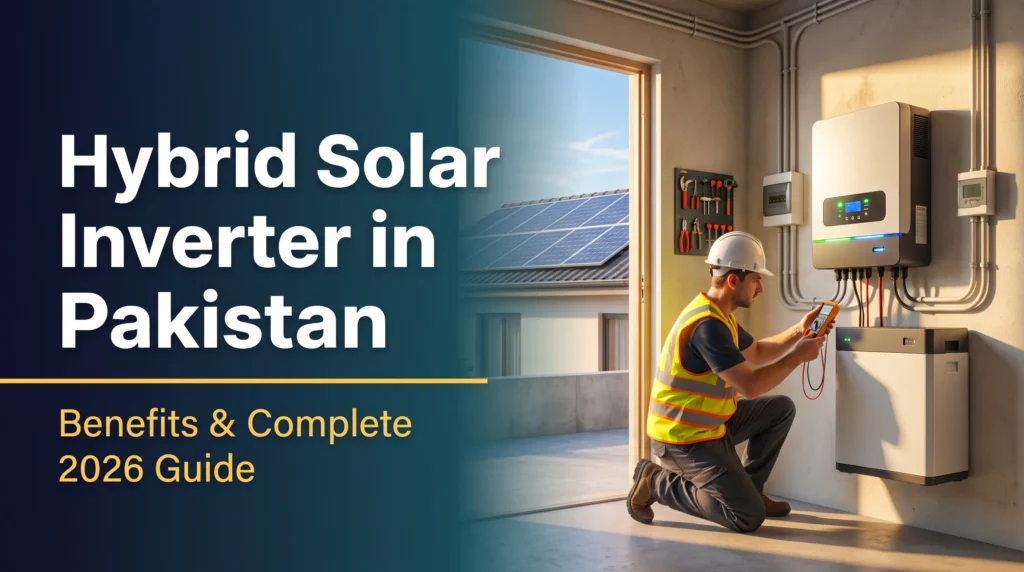
A hybrid solar inverter can manage solar generation, compatible battery storage and grid power. Choosing one requires checking the exact model’s continuous output, backup output, battery voltage and approved operating modes.
Check Backup Capability Before Buying
Ask the supplier which circuits remain powered during an outage and what equipment enables that operation. Compare backup power in kW with battery energy in kWh. Confirm the manufacturer’s approved battery list and whether communication, commissioning and protection equipment are included in the installed quote.
What Is a Hybrid Solar Inverter?
A hybrid solar inverter manages electricity from multiple sources, typically solar panels, batteries, and the utility grid. Unlike a basic grid-tied inverter, a hybrid system can work with battery storage, making it possible to use stored solar energy when solar generation is low or grid electricity is unavailable.
A typical system works like this:
Solar panels → Hybrid inverter → Home loads + Battery + Grid
The inverter controls how available electricity is distributed according to the system configuration and programmed settings.
How Does a Hybrid Inverter Work in Pakistan?
1. Solar Power Runs Your Loads
During daylight hours, solar panels generate DC electricity. The hybrid inverter converts this electricity into AC electricity that household appliances can use.
If solar production is higher than your immediate demand, the remaining energy can be directed toward battery charging, depending on the system configuration.
2. Excess Solar Charges the Battery
A major advantage of a hybrid system is that unused solar electricity can be stored in a battery.
For example, if your solar system is producing more electricity than your home is consuming at midday, the inverter can send the surplus toward battery charging instead of allowing all of it to go unused.
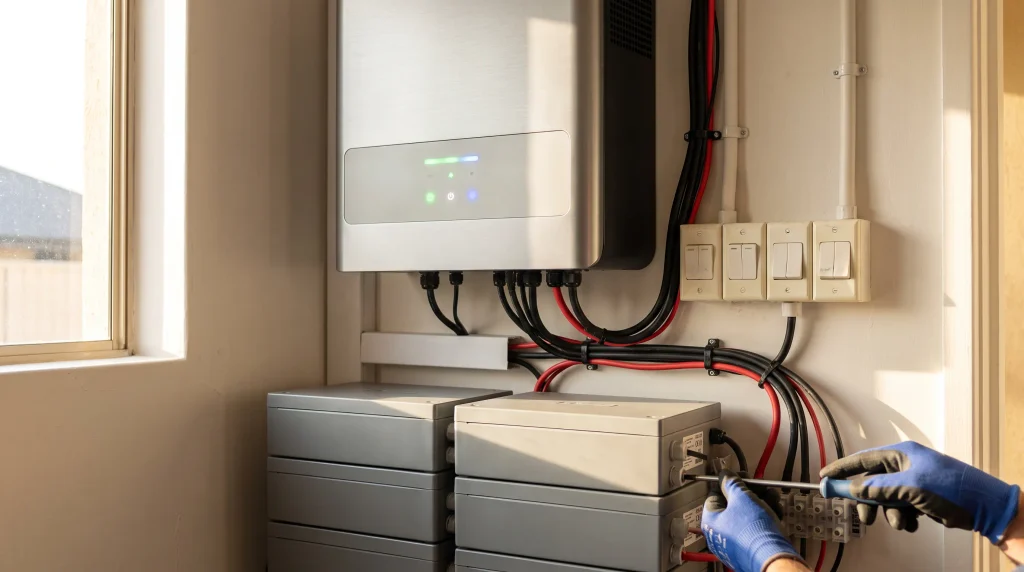
3. The Battery Supplies Power Later
When solar production falls in the evening, the hybrid inverter can draw electricity from the battery.
This can reduce dependence on grid electricity during periods when your household is still using lights, fans, appliances, or other loads.
4. The Grid Can Provide Backup Energy
When solar and battery power are insufficient, the inverter can use grid electricity, depending on its operating mode and configuration.
This gives the system multiple energy sources rather than relying exclusively on solar generation.
What Are the Benefits of a Hybrid Solar Inverter in Pakistan?
1. Battery Backup During Power Outages
Battery backup is one of the biggest reasons homeowners choose hybrid systems.
When the grid goes down, a properly configured hybrid inverter can continue supplying designated backup loads from the battery and solar panels.
The actual backup duration depends on battery capacity and electricity consumption. A larger battery can generally provide longer backup for the same load.
2. Better Use of Solar Energy
Instead of using solar electricity only when panels are producing it, a hybrid system can store surplus generation for later use.
This makes the system particularly useful for households that consume significant electricity after sunset.
3. Multiple Operating Modes
Many modern hybrid inverters support different operating strategies, such as:
- Solar-first operation
- Battery-first operation
- Grid-first operation
- Backup/reserve battery operation
- Time-of-use charging and discharging
- Solar plus battery operation
The available modes vary by inverter manufacturer and model, so the manufacturer’s manual should be checked before installation.
4. Reduced Dependence on Grid Electricity
A properly sized solar-plus-storage system can provide a significant portion of a home’s electricity needs from solar generation.
However, the amount of grid electricity saved depends on system capacity, weather, household consumption, battery capacity, and operating settings.

5. Flexible System Expansion
Some hybrid inverter systems can be configured for larger solar arrays or additional batteries.
Before buying, check the inverter’s maximum PV input, battery voltage range, maximum charging/discharging current, and supported battery capacity.
Hybrid vs. On-Grid vs. Off-Grid Inverter
| Feature | Hybrid Inverter | On-Grid Inverter | Off-Grid Inverter |
|---|---|---|---|
| Solar panels | Yes | Yes | Yes |
| Battery support | Yes | Usually no | Yes |
| Grid connection | Yes, depending on the model. | Yes | Usually no |
| Backup during outage | Possible | Normally unavailable | Yes |
| Excess solar storage | Yes | No battery storage | Yes |
| Suitable for backup | High | Low | High |
| System flexibility | High | Moderate | High |
The important difference is battery integration: a hybrid inverter is designed to coordinate solar, battery, and grid power within one system.
What Size Hybrid Inverter Do You Need?
The correct inverter size should be based on your actual electrical load and solar-generation plan, not simply the number of solar panels.
For example, a home with a large number of appliances may require a different inverter configuration from a home with only basic lighting, fans, a refrigerator, and a television load.
Before selecting an inverter, calculate:
- Maximum simultaneous load
- Average daily electricity consumption
- Solar-panel capacity
- Battery capacity
- Starting surge of motors and compressors
- Essential backup loads
- Future expansion requirements
Example
Suppose your essential backup appliances require approximately 3 kW when operating simultaneously.
A suitable inverter must be capable of handling that continuous load and any relevant startup surge from appliances such as refrigerators, pumps, or air conditioners.
The final specification should be confirmed against the manufacturer’s technical datasheet.

How Much Battery Capacity Do You Need?
Battery sizing depends on how much power you want to use and how long you want backup to last.
A simple planning calculation is:
Required battery energy ≈ Load × Backup hours ÷ Usable battery efficiency
For example, if essential loads average 1,000 watts and you want approximately 5 hours of backup:
1 kW × 5 hours = 5 kWh
You would then need to account for the battery’s usable capacity, inverter losses, reserve settings, and the battery manufacturer’s recommended operating limits.
Lithium vs. Lead-Acid Batteries
Lithium Batteries
Lithium batteries are widely used in modern solar-storage systems because they can provide high usable capacity and typically offer sophisticated battery-management systems.
Many modern hybrid inverters support lithium iron phosphate (LiFePO₄) batteries, but compatibility must be confirmed for the exact inverter and battery combination.
Lead-Acid Batteries
Lead-acid batteries remain an option for some solar installations, but their usable capacity, charging requirements, cycle characteristics, and maintenance requirements differ from lithium systems.
Do not choose a battery solely by its advertised kWh capacity. Compare usable capacity, cycle rating, warranty, charging requirements, and inverter compatibility.
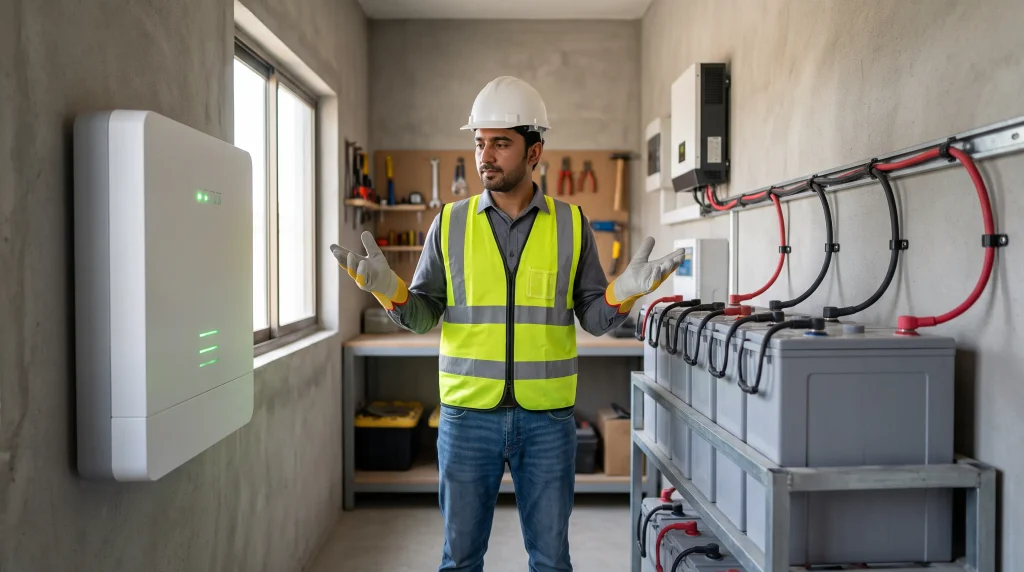
What Should You Check Before Buying a Hybrid Inverter in Pakistan?
1. Maximum PV Input
Check how much solar-panel capacity the inverter can accept.
An inverter’s maximum PV voltage, current, and total recommended PV capacity must be compatible with your planned solar array.
2. Battery Compatibility
Confirm:
- Battery voltage
- Battery chemistry
- Supported battery brands
- Communication protocol
- Maximum charging current
- Maximum discharge current
3. Backup Power Capacity
Check the inverter’s continuous output rating and surge capability.
This is especially important if you intend to operate air conditioners, water pumps, refrigerators, or other motor-driven equipment during an outage.
4. Warranty
Ask for the manufacturer’s official warranty documentation rather than relying only on the installer’s verbal warranty.
Check:
- Warranty duration
- Covered components
- Registration requirements
- Local service arrangements
- Warranty claim process
5. Monitoring
A good monitoring system can show:
- Solar generation
- Household consumption
- Battery state of charge
- Grid import/export
- Inverter status
- Historical energy data
This makes it easier to identify abnormal system performance.
Is a Hybrid Inverter Worth It in Pakistan in 2026?
A hybrid inverter can make sense when you want solar generation plus battery backup and flexible energy management.
It is particularly relevant for households that experience power interruptions or consume substantial electricity outside daylight hours.
However, the economics depend on the complete system cost. Compare the inverter, panels, batteries, installation, protection equipment, maintenance, and expected electricity savings as one package rather than evaluating the inverter alone.
Hybrid Inverter and Pakistan’s Grid Rules
If your system will remain connected to the electricity grid or export electricity, check the current rules and requirements applicable to your connection before installation.
Pakistan’s regulatory framework has been changing, including the NEPRA Prosumer Regulations, 2026, so consumers should verify current requirements rather than relying on older net-metering information.
Source: NEPRA’s official legal and regulatory publications should be used to verify the rules applicable at the time of installation.
Common Mistakes to Avoid
Choosing an Inverter Only by Price
The cheapest inverter is not necessarily the lowest-cost system over its operating life.
Compare the inverter’s specifications, warranty, monitoring, service support, battery compatibility, and installation requirements.
Installing an Oversized Battery Without Enough Solar
A large battery can increase the initial system cost without providing its full potential if the solar array cannot adequately recharge it.
Ignoring Surge Loads
A refrigerator, pump, or air conditioner may have a higher startup demand than its normal running consumption.
Check the inverter’s surge specification before connecting such appliances to the backup circuit.
Mixing Incompatible Equipment
Not every battery works with every hybrid inverter.
Confirm compatibility using the manufacturers’ documentation before purchasing.
Frequently Asked Questions
What is a hybrid solar inverter?
A hybrid solar inverter manages electricity from solar panels, batteries, and the grid, allowing solar energy to be used directly, stored for later use, or supplemented with grid electricity depending on system settings.
Can a hybrid inverter work without the grid?
Yes, many hybrid inverters can operate in backup or off-grid configurations, but the exact capability depends on the model, battery system, and installation design.
Can a hybrid inverter provide backup during load shedding?
Yes, when the inverter is designed and configured for backup operation and has a suitable battery. The backup duration depends on the battery’s usable capacity and the connected electrical load.
Is a hybrid inverter better than an on-grid inverter?
They serve different purposes. An on-grid inverter is primarily designed for solar generation connected to the utility grid, while a hybrid inverter adds battery storage and backup capabilities. The appropriate choice depends on whether you need energy storage and backup.
How many batteries do I need for a hybrid solar system?
There is no single number because battery requirements depend on your backup load, desired backup duration, battery capacity, usable depth of discharge, and inverter specifications.
One Response