
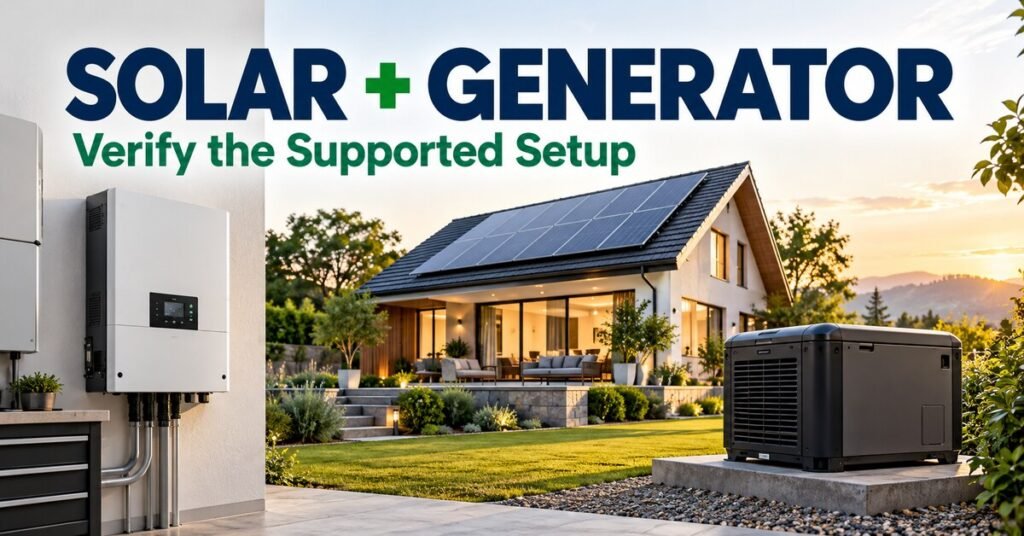
Hybrid inverter generator compatibility requires a documented system arrangement. A hybrid label does not mean every generator can be connected to every input or used in every operating mode. Before purchasing, verify the exact models, permitted sources, charging limits and switching design with a qualified installer.
Identify the intended generator role
Decide whether the generator should supply selected loads, charge storage, support an off-grid installation or serve another documented function. These roles can require different arrangements. Write down when the generator is expected to operate and what other sources may be present.
Our off-grid system guide helps frame standalone requirements. A grid-connected hybrid installation is not automatically equivalent to an off-grid inverter-charger system. Ask the designer to identify the supported architecture rather than copy a connection from an unrelated product.
Verify the exact inverter documentation
Check whether the specified model supports a generator input or another approved arrangement. Identify the permitted input, operating mode and any required accessories. A spare terminal or a menu label is not sufficient evidence of a supported connection.
Use our hybrid inverter guide to compare product functions. Manufacturer limits for voltage, frequency, current and the relevant operating arrangement should be considered. Do not transfer figures from a different model simply because its brand or power rating looks similar.
Check generator output and operating capacity
The generator needs assessment for the intended load and charging duty. Rated apparent power, usable real power and the applicable operating conditions may differ. Voltage and frequency behaviour under changing load can affect whether the inverter accepts the source.
Ask for the generator’s exact specifications and service condition. A successful no-load demonstration does not prove suitability while appliances operate and storage charges. The assessment should consider the actual duty and supported limits, not just whether the engine starts.
Combine loads and charging demand
If the generator serves loads while charging batteries, both demands must be included within the supported arrangement. Charger settings, battery limits and the inverter’s input capability affect the combined requirement. Increasing charging demand without reviewing the source can change operation.
Suppose hypothetical loads need 2 kW while charging uses another 1.5 kW. The combined real-power demand is approximately 3.5 kW before other relevant allowances. This illustrates load accounting; it does not select a generator or establish acceptable operation for any specific system.
Design source separation and switching
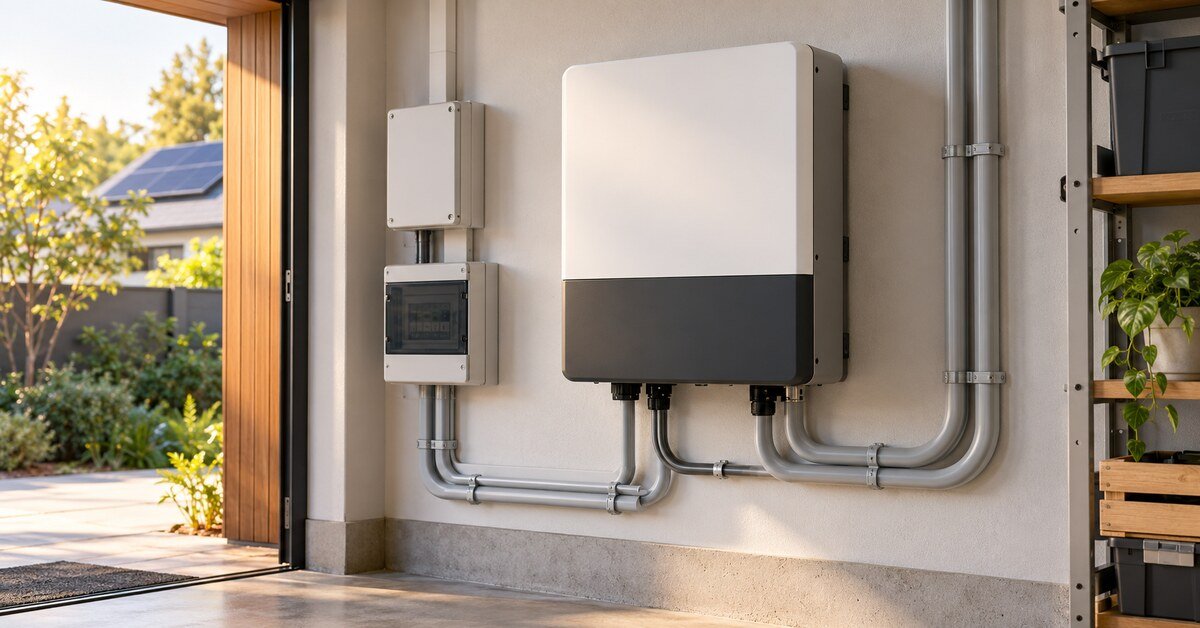
A qualified professional should establish the approved switching, protection and earthing arrangement. Multiple sources require coordinated design to prevent unintended interactions. Homeowners should not improvise connections to sockets or bypass isolation to make the generator appear available to the inverter.
The installation quotation checklist helps record the required switchgear and installation scope. Confirm which equipment is included and who verifies it. A quote for a generator-compatible inverter may omit the work needed to implement the supported complete system.
Review battery charging compatibility
Check the battery’s permitted charge voltage, current and control requirements. The BMS and charging sources should follow the manufacturer’s supported arrangement. A generator source does not remove the need for appropriate battery protection and communication.
Our battery backup guide helps distinguish energy capacity from operating limits. Agree on the reserve and charging objective so generator operation serves the planned need. Avoid assuming that the highest available charge setting is always the most suitable one.
Plan location, fuel and servicing
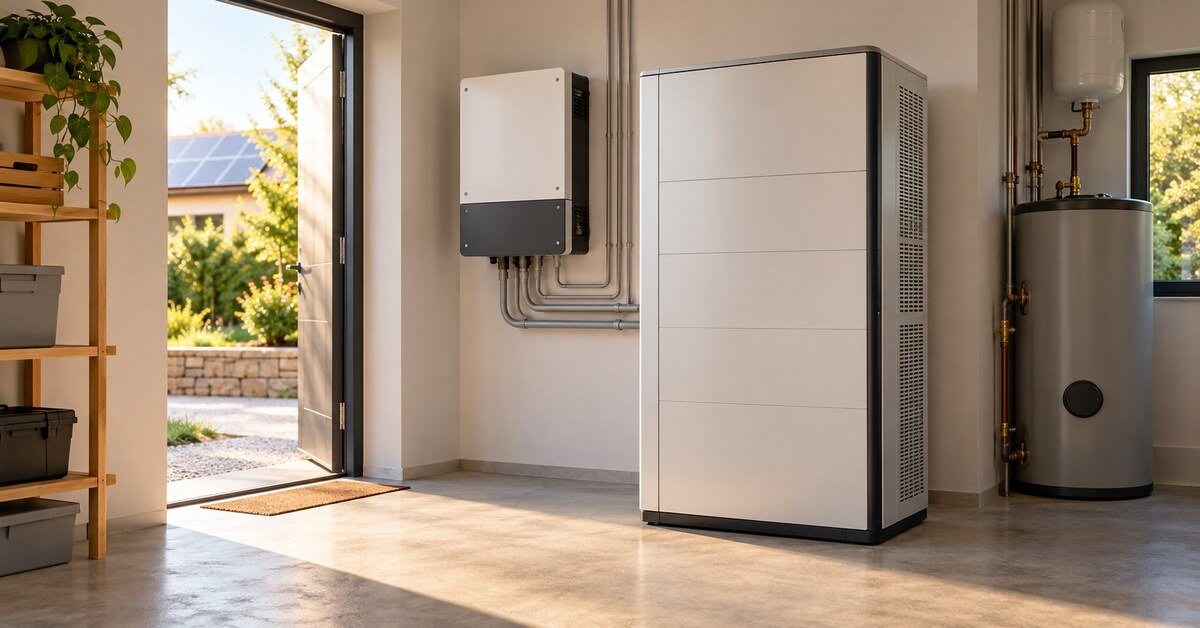
Generator placement must address exhaust, ventilation, heat, noise and access according to the product and applicable requirements. Exhaust must not enter occupied spaces. The installation should be assessed by qualified personnel, including safe fuel handling and maintenance arrangements.
Record operating costs and service needs when comparing the backup strategy. A generator can provide useful contingency within a supported design, but its fuel and maintenance burden should be visible. Do not describe generator-assisted backup as a cost-free extension of solar energy.
Test the supported operating sequence
During commissioning, request an appropriate demonstration under representative load and charging conditions. Confirm how the source is accepted, how loads are supplied and what happens when the generator stops or becomes unsuitable. The procedure should follow the equipment instructions.
Retain the settings and results. If automatic start or stop is included, identify the compatible control interface and tested conditions. Automatic operation also needs a safe installation and clear service responsibility; a relay connection alone does not establish the full function.
Questions for the supplier
- Does the exact inverter support the proposed generator arrangement?
- Which input, operating mode and accessories are required?
- How were combined appliance and charging demands assessed?
- Which source limits and battery limits apply?
- What switching and protection are included?
- What happens if generator output becomes unsuitable?
- Which operating checks and owner instructions will be provided?
Compare complete supported designs, including generator condition and ongoing operation. Resolving compatibility before purchase is more useful than troubleshooting an unsupported combination after installation.
Frequently asked questions
Can every hybrid inverter charge from a generator?
No universal assumption is justified. Consult the exact model’s documentation and approved system arrangement. A hybrid name alone cannot establish the function.
Is matching the inverter’s kW rating sufficient?
No. Input characteristics, simultaneous loads, charging demand and generator operating capability also matter. Request a complete assessment with stated assumptions.
Should I change input limits to force acceptance?
Do not alter limits blindly. Record the symptoms and seek supported diagnosis. An unacceptable source or configuration issue should be resolved without defeating protective
Hybrid inverter and generator compatibility lives in the fine print — voltage windows, frequency limits and transfer behaviour. Verify each of those against both manuals before you wire them together.