
What is solar power? Solar power is energy from sunlight converted into electricity or useful heat. For homes in Pakistan, the usual rooftop system uses photovoltaic modules to produce DC electricity and an inverter to supply suitable AC loads. The equipment and design determine whether the system can also charge batteries or export electricity.
Solar power definition and the photovoltaic process
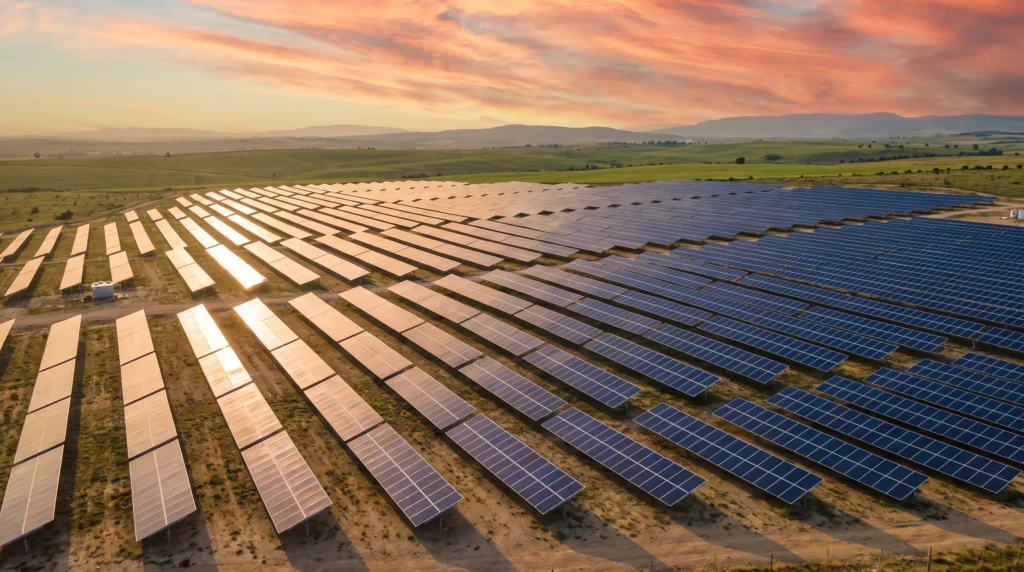
Photovoltaic cells convert part of the sunlight reaching them into electrical energy. Cells are connected into modules, and modules form the array. Rated panel wattage is measured under defined test conditions; it is not continuous production throughout the day. Clouds, orientation, shading and equipment losses change actual output.
The terms solar panel types describe overlapping characteristics. Monocrystalline refers to silicon crystal structure; N-type refers to semiconductor doping; TOPCon and back-contact refer to cell architecture; bifacial refers to the module’s ability to use rear illumination. These descriptions should not be treated as mutually exclusive categories.
What is a solar cell and how does it work?
A solar cell is the semiconductor device within a photovoltaic panel. Incoming light can release charge carriers, and the cell’s structure allows current to flow through an external circuit. A home needs the complete array, wiring, protection and conversion equipment to use that output. One cell or panel by itself is not a complete household power system.
Main components of a solar power system
- Panels provide the DC generation capacity, expressed in watts or kWp.
- The inverter converts and manages power within its voltage, current and output limits.
- Mounting supports the array and must suit the roof and local exposure.
- Cables, isolators and protective devices support safe operation and servicing.
- Batteries, when supplied, store energy for specified later-use or backup loads.
- Monitoring helps distinguish expected variation from faults or losses.
Read the solar inverter guide and battery selection guide before assuming an equipment package includes every required function.
On-grid, hybrid and off-grid arrangements
An on-grid installation operates with the electricity network and ordinarily cannot provide normal household supply during a grid outage through a conventional grid-following inverter. Hybrid equipment may manage storage and designated backup circuits, depending on the model and wiring. An off-grid installation must cover its specified demand without relying on routine grid supply.
Export requires the applicable electricity-company approvals. Our application guide explains the documents and questions to prepare; an inverter’s advertised grid capability is not an authorisation to connect.
How to estimate a home’s requirement
Review electricity consumption over several months and identify when appliances run. Energy in kWh and simultaneous demand in kW answer different design questions. Use the system-sizing guide to estimate array capacity, then the panel-count method to translate it into a provisional module quantity.
For example, a hypothetical 1kWp array with 4.5 peak-sun-hours and a 0.8 derating factor produces 3.6kWh in the illustrative day. That calculation is not a location-specific forecast. A site survey should account for shading, roof area, orientation and system losses.
Benefits, limits and a sensible next step
Solar can reduce electricity bought from the grid when production is used effectively. Its value depends on installed cost, the load profile, tariff and any eligible export credits. Production varies with weather, and storage has power and energy limits. Use itemised quotations rather than a promised zero bill or universal payback period.
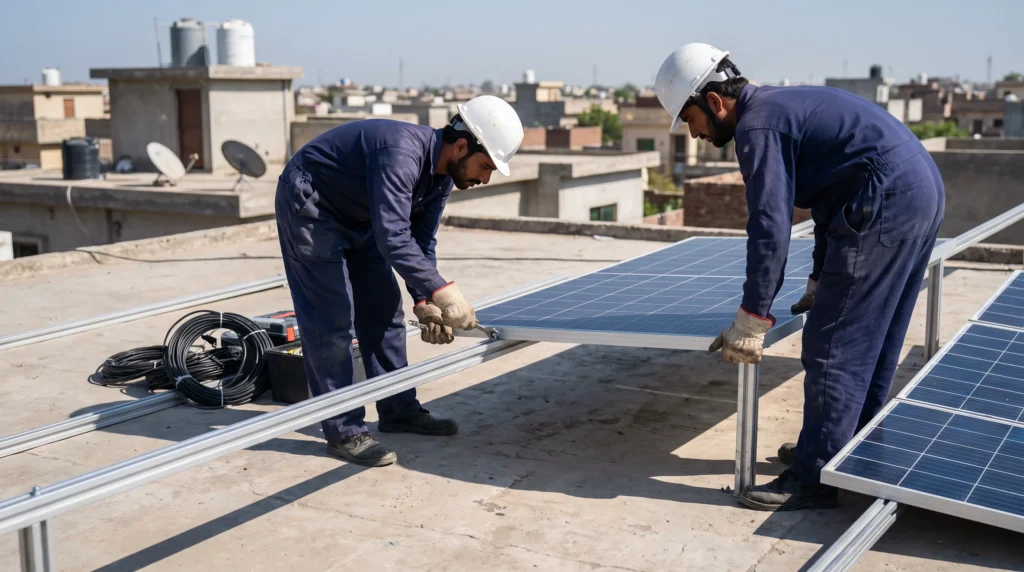
Start with consumption records, a roof assessment and clear backup expectations. Compare specific equipment using the quotation checklist, then plan safe maintenance and monitoring from the beginning.
Frequently asked questions
Does solar energy work at night?
Photovoltaic panels need light. Nighttime supply comes from the grid, compatible stored energy or another designed source, rather than ongoing daytime-style panel production.
Is solar panel efficiency the same as household savings?
No. Efficiency describes conversion under specified conditions. Savings depend on the complete system, production timing, consumption, costs and applicable electricity arrangements.
Related guides: plan the next step
- Types of Solar Panels in Pakistan: Technology Explained
- How to Calculate Solar System Size in Pakistan
- Solar Inverter Price in Pakistan: Types & Buying Guide
- Solar Batteries in Pakistan: Capacity & Buying Guide
- Off-Grid Solar Systems in Pakistan: Sizing & Cost Guide
- Smart Solar Energy Management in Pakistan: Practical Guide
- CM Punjab Free Solar Panel Scheme: Eligibility & Official Status
Content reviewed: 12 October 2026. Calculation examples are illustrative. Solar Price Pak publishes independent information and does not supply or install equipment.