Types of Solar Panels in Pakistan (2026 Guide)
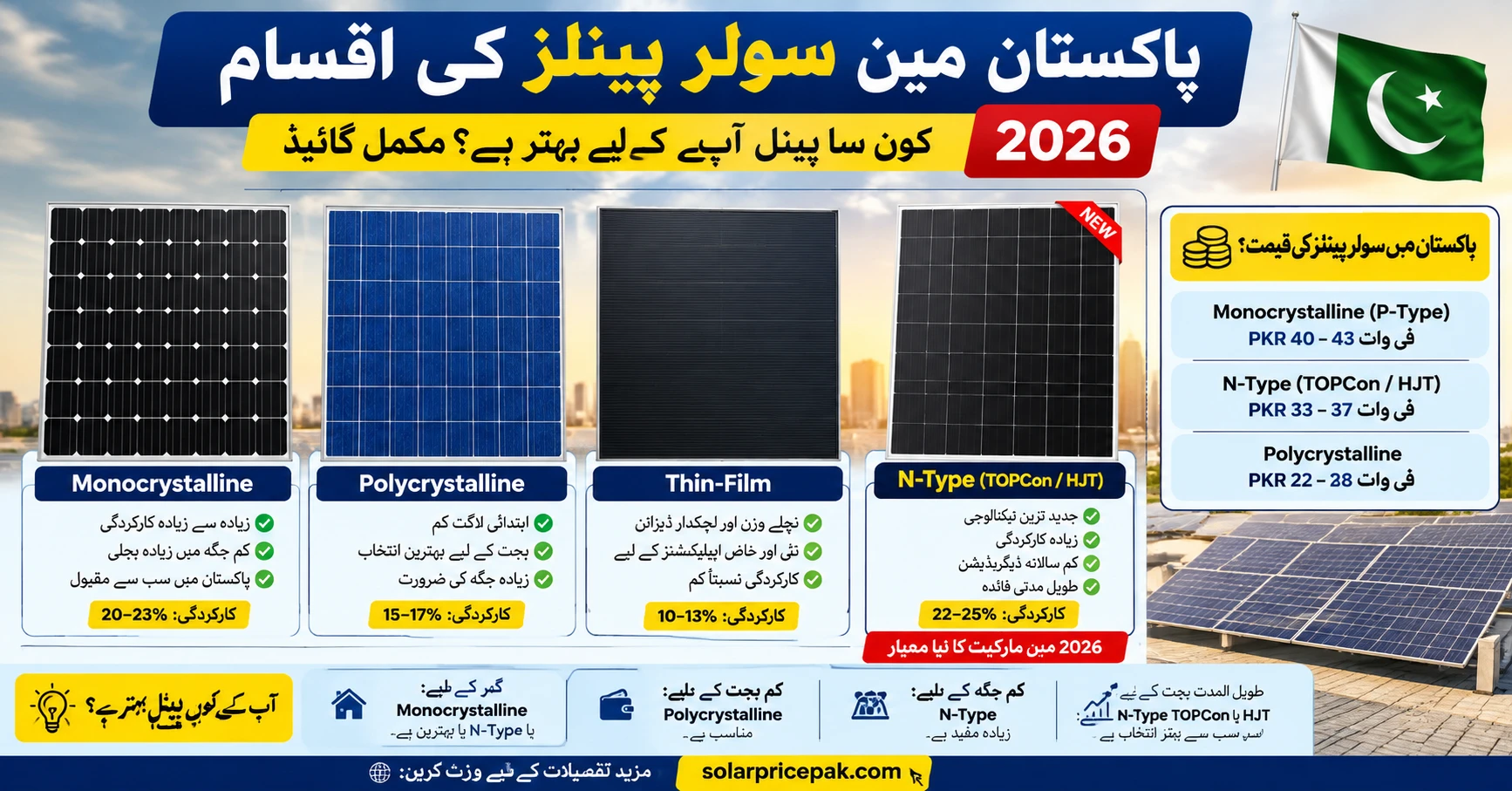
There are mainly three types of solar panels available in the market in Pakistan, which are monocrystalline, polycrystalline, and thin-film. Monocrystalline panels are the most common choice for residential rooftops because they provide the most power for the least amount of roof space; polycrystalline panels are favoured by buyers who want low initial costs; and thin-film panels are used for niche applications with flexible surfaces.
In 2026, a fourth category, N-type panels with TOPCon and HJT cell technology, has moved from “advanced” to mainstream in the Pakistani market and greatly impacts the way most new systems are specified.
This guide details all the types of solar panels sold in Pakistan today, their cost per watt, which one suits your roof and budget, and how the transition from net metering to net billing in February 2026 affects the calculation for anyone buying now.
What Are the 3 Main Types of Solar Panels?
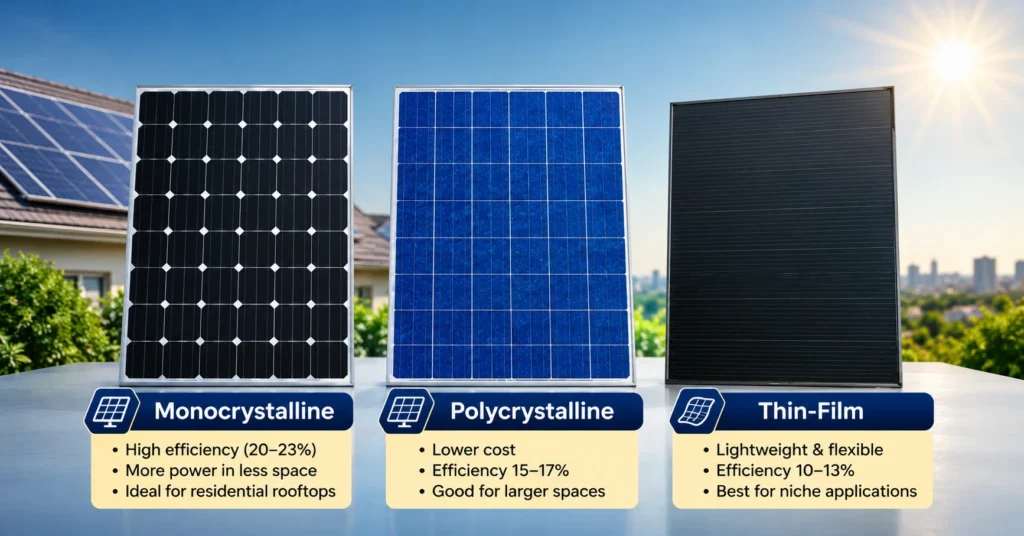
There are three main types of solar panels. Monocrystalline, polycrystalline, and thin film. The difference between the three has to do with the processing of the silicon. They are cut from a single silicon crystal, which means monocrystalline cells have the highest efficiency (around 20 to 23 per cent) – and the highest price. Polycrystalline cells are produced by casting melted silicon fragments, and they have a lower efficiency (about 15–17%) and lower cost. Thin-film panels use a much thinner layer of photovoltaic material deposited on a substrate, giving up efficiency (10-13%) for flexibility and light weight.
For the average home or business in Pakistan, the actual decision in 2026 will be not “which of the three” but rather which generation of monocrystalline technology to buy. P-type and N-type mono panels now reside at very different price points and performance levels.
Monocrystalline Solar Panels: The Standard Choice for Pakistani Homes
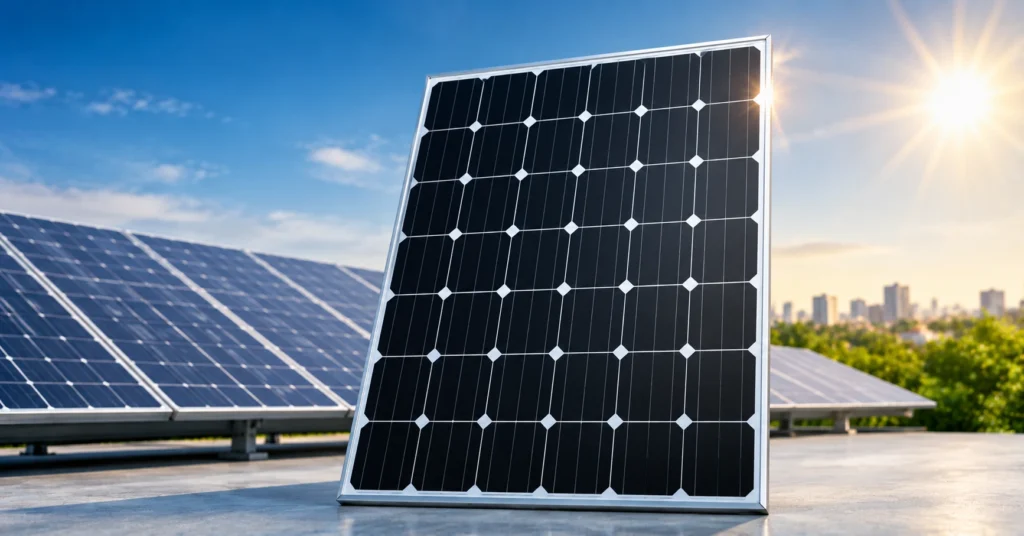
Monocrystalline panels are made of a single continuous silicon crystal that gives the cells their uniform black colour and rounded-corner appearance. The silicon lattice is unbroken, so electrons can move through it with less resistance. This is why mono panels are more efficient at converting sunlight to electricity than any other mainstream type.
Why they’re the default for Pakistani rooftops:
The highest efficiency among the mainstream panel types means fewer panels are needed to reach a target system size, which is important on the smaller roof areas typical of urban houses in Lahore, Karachi, and Islamabad.
- Polycrystalline performs better than monocrystalline in the hot summer months in Pakistan, but all silicon panels lose some output as temperatures rise.
- All major brands active in the country have mono lines available – LONGi, Jinko, Canadian Solar, JA Solar, Trina, and Astronergy all sell mono lines locally.
- 10–25 year standard warranties from Tier-1 manufacturers, with real degradation rates now published by brand and model
The tradeoff: Mono panels cost more per watt than polycrystalline, but that gap has shrunk considerably as manufacturing scale has grown.
P-Type vs. N-Type Monocrystalline: The Distinction That Matters in 2026
Almost every monocrystalline panel sold in Pakistan today falls into one of two silicon categories:
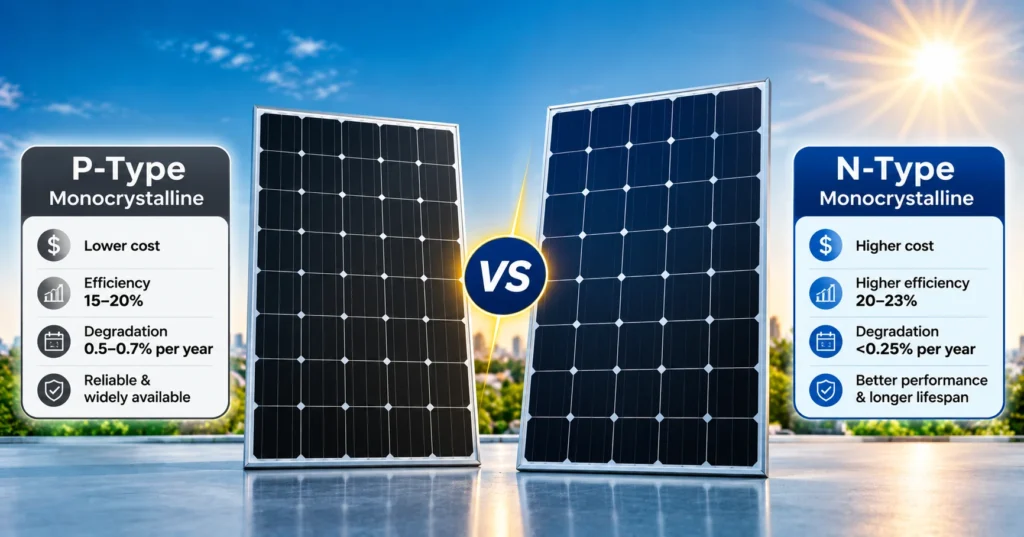
- P-type mono panels are the older, more established technology – cheaper per watt, reliable, but degrading a little quicker over a 15-20 year lifespan. This is the mono option for budget-conscious buyers.
- N-type mono panels, built on TOPCon or HJT cell architecture, use a different base silicon that gives slightly higher efficiency and a lower annual degradation rate (often under 0.25% per year, compared to closer to 0.5-0.7% for P-type). These are more expensive to buy initially but generally make up that difference over the panel’s lifetime, which is more important in Pakistan’s hot climate, where heat-related efficiency loss is a real factor.
By 2026, N-type TOPCon panels from brands like Astronergy and Trina Solar have become common in the Pakistani market, typically priced around PKR 33–37 per watt — a premium over standard P-type mono, but no longer the exotic, hard-to-source option they were a couple of years earlier.
Polycrystalline Solar Panels: The Budget Option
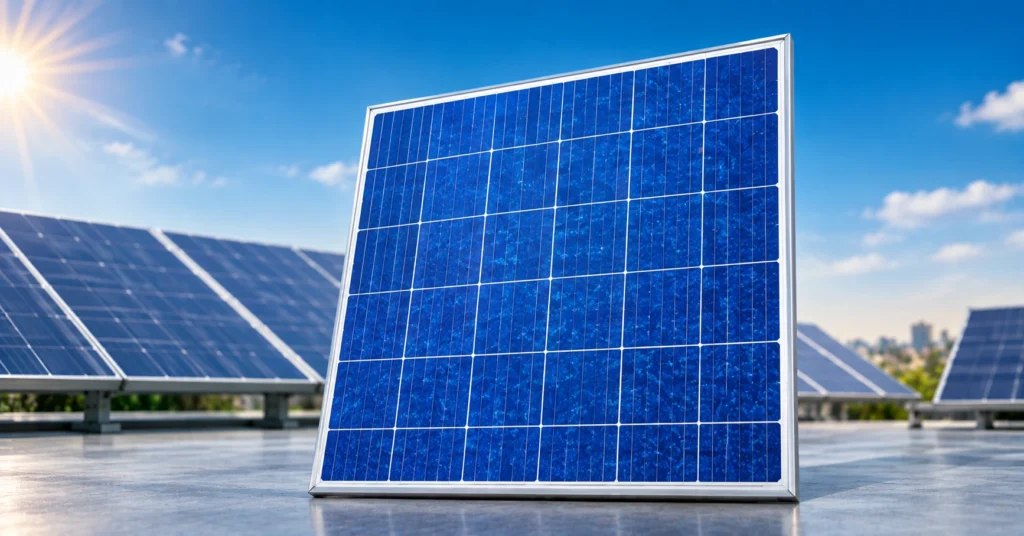
Polycrystalline (or multi-crystalline) panels are produced by melting several silicon fragments together in a mould, rather than growing a single crystal. So it is a cheaper and faster way to manufacture, which is why poly panels are cheaper, but the cell structure is less uniform, so electrons have more resistance and efficiency drops to about 15-17%.
Polycrystalline panels are easy to spot, as they are blue and speckled, with square-cut cells (mono is a uniform black with clipped corners).
Polycrystalline panels still make sense in Pakistan when:
- Roof space isn’t a constraint, and you can fit a larger array to compensate for lower efficiency
- Budget is the primary driver, and the extra roof area needed for poly panels isn’t a problem
- The installation is a ground-mounted or commercial-scale system where per-panel efficiency matters less than total installed cost
The main downside beyond lower efficiency is that polycrystalline cells are more sensitive to high temperatures than monocrystalline, which can mean a steeper output dip during Pakistan’s peak summer months.
Thin-Film Solar Panels: Built for Special Applications, Not Rooftops
Thin-film panels are constructed by applying one or more layers of photovoltaic material, such as amorphous silicon, cadmium telluride (CdTe), or copper indium gallium selenide (CIGS), to a substrate, such as glass or metal. The active layer is usually a few micrometres thick, unlike the much thicker wafers used in crystalline panels.
This design makes thin-film panels light and sometimes flexible enough to bend around a surface. But efficiency, at the low end of the mainstream types, is usually 7 to 13 per cent, so a thin-film array has to be a lot bigger to produce the same output as a crystalline system.
In Pakistan, thin-film panels show up mainly in:
- Portable and off-grid solar chargers, camping kits, and small backup setups
- Building-integrated photovoltaics (BIPV), such as solar-tinted windows or curved architectural surfaces
- Boats, RVs, or vehicles where weight and flexibility outweigh raw efficiency
- Research and niche industrial applications, including early-stage cadmium telluride and biohybrid cells
For a standard home or commercial rooftop installation, thin-film is rarely the right call — the space penalty is too large relative to what mono or poly panels deliver in the same footprint.
Monocrystalline vs. Polycrystalline vs. Thin Film: Quick Comparison
| Feature | Monocrystalline | Polycrystalline | Thin-Film |
|---|---|---|---|
| Efficiency | ~20–23% | ~15–17% | ~7–13% |
| Appearance | Uniform black, rounded-corner cells | Blue, speckled, square cells | Dark, flexible sheet |
| Cost per watt | Highest | Lower | Lowest per panel, but more panels needed |
| Space needed for a given output | Least | More | Most |
| Heat performance | Best among the three | More sensitive to heat | Least affected by heat |
| Typical lifespan | 25–30 years | 20–25 years | Shorter, fewer warranty years |
| Best for | Urban rooftops, limited roof space | Larger roofs, budget installs | Off-grid, portable, curved or BIPV surfaces |
Bifacial, PERC, TOPCon, and HJT: The Technologies Layered on Top
These aren’t separate “types” of solar panels in the generational sense — they’re enhancements applied mostly to monocrystalline cells, and Pakistani suppliers now market them heavily alongside standard mono and poly options:
- PERC (Passivated Emitter and Rear Cell): adds a reflective layer to the back of the cell so light that isn’t absorbed on the first pass gets bounced back through the silicon for a second chance at conversion. This modestly raises efficiency over standard mono cells at a relatively small cost increase.
- TOPCon (Tunnel Oxide Passivated Contact): an N-type cell design that reduces electron recombination losses, pushing efficiency and low-light performance higher than PERC. This is now the most common “premium” panel type sold in Pakistan.
- HJT (Heterojunction): combines crystalline and amorphous silicon layers for even higher efficiency and better heat tolerance, though it remains a smaller share of the Pakistani market and commands a higher price.
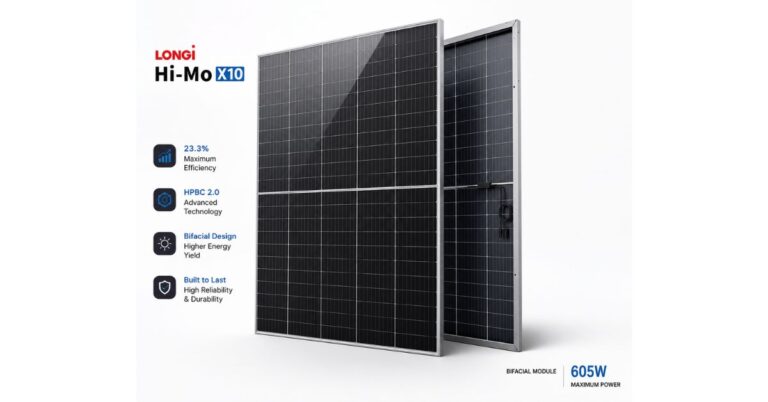
- Bifacial panels: capture light on both the front and rear surfaces, picking up reflected light off a rooftop, ground surface, or light-coloured surroundings. They generate meaningfully more total output than an equivalent monofacial panel, which is why installers increasingly recommend them for commercial and open-ground installs where reflected light is available.
Which Type of Solar Panel Is Best for Your Roof in Pakistan?
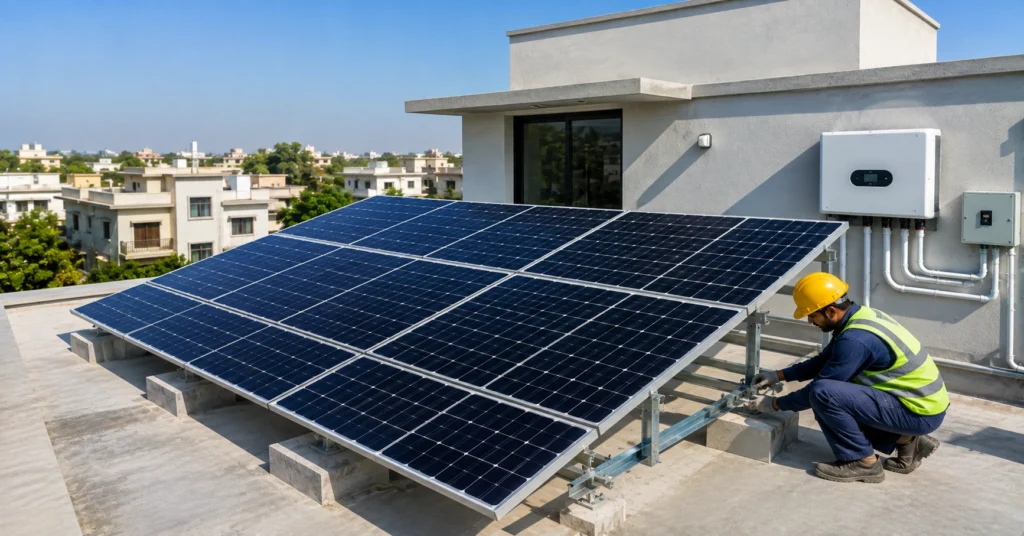
The right panel depends less on brand marketing and more on three practical factors: how much roof space you have, your budget per watt, and what your system needs to do (grid-tied self-consumption, off-grid backup, or a hybrid setup).
- Small or shaded urban roof (typical Lahore, Karachi, or Islamabad house): monocrystalline, ideally N-type or PERC/TOPCon, to maximise output from limited space.
- Large rooftop or ground-mounted commercial site: polycrystalline or standard monofacial mono panels can be a cost-effective choice when space allows a larger array.
- Open ground-mount or commercial installation with reflective surroundings: bifacial panels, to capture the rear-side gain.
- Portable, off-grid, or curved-surface application: thin-film.
- Hot regions with strong year-round sun (Sindh, southern Punjab): N-type mono panels are worth the premium, since their lower temperature-related degradation compounds over a 25-year lifespan.
Types of Solar Panels for Off-Grid Systems in Pakistan
Off-grid solar in Pakistan is typically paired with battery storage rather than a grid connection, so panel choice leans toward maximising output per rupee and per square metre of available mounting space, since there’s no export credit to offset an underbuilt system:
- Monocrystalline panels are the most common choice for off-grid home and small-commercial systems because they deliver the most watts for the mounting space available, which matters when every panel also has to be matched to inverter and battery capacity.
- Polycrystalline panels work for off-grid setups with generous roof or ground space, such as tube wells, agricultural pumps, or rural properties where land isn’t the constraint.
- Thin-film panels fit portable or vehicle-mounted off-grid kits — solar generators, camping systems, and small backup chargers — where flexibility and weight matter more than raw efficiency.
Because off-grid systems must generate everything they use rather than drawing on the grid to fill gaps, installers generally recommend oversizing the array by 20–30% versus a comparable grid-tied system and pairing it with a hybrid inverter capable of managing both solar input and battery charge/discharge.
Solar Panel Prices in Pakistan (2026)
Panel prices in Pakistan move regularly with import costs, currency movement, and taxation, but as of mid-to-late 2026, the broad market bands look like this:
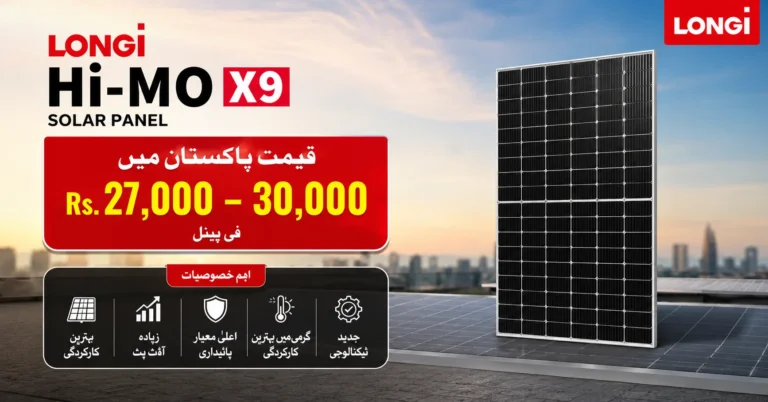
- Standard P-type monocrystalline or polycrystalline (A-grade, Tier-1): roughly PKR 27–38 per watt
- N-type TOPCon monocrystalline: roughly PKR 33–37 per watt
- N-type bifacial (higher-wattage, 585W–720W panels): roughly PKR 30,500–35,000 per panel
- Entry-level or smaller-wattage panels (150W–200W): roughly PKR 10,000–15,000 per panel, common for small backup or off-grid kits
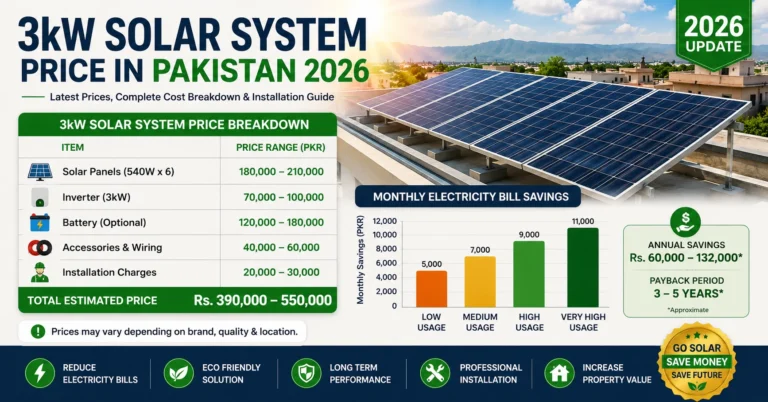
Depends a lot on inverter type, battery inclusion & installation labour on top of panel cost, but a full system quote (a basic 2 kW grid-tied system) is typically in the low hundreds of thousands of rupees installed, while a 10 kW residential or small-commercial system is generally in the PKR 1.5-2.2 million range, including panels, inverter, mounting structure, and labour. Import costs and taxes vary during the course of a year. So it’s worth checking for an up-to-date quote rather than a set figure.
How the 2026 Net Metering Changes Affect Your Panel Choice
In February 2026, NEPRA replaced Pakistan’s decade-old net metering framework with new Prosumer Regulations, shifting solar producers from “net metering” to “net billing”. Under the old system, exported units were credited at almost the same rate as imported electricity. The new rules have reduced the buyback rate of exported solar power drastically, often cited as Rs 11 per unit against the previous Rs 25-26 per unit. Existing net metering users will continue with their terms for the rest of their contract.
This policy shift changes what “the right solar panel” means in practice:
- Self-consumption now matters more than export. A system that closely matches your daytime usage pattern earns back its cost faster than one built mainly to export surplus units.
- Hybrid systems with battery storage have become more attractive, since storing surplus daytime generation for evening use is now worth more than exporting it at the reduced net billing rate.
- Panel efficiency and low-light performance (favouring N-type mono or TOPCon panels) carry more weight, because getting more usable power out of a fixed roof area directly improves self-consumption rather than relying on grid credit to smooth things out.
If you’re sizing a system in 2026, it’s worth designing around your actual daytime load rather than maximising total capacity for export, and discussing hybrid inverter and battery options with your installer before finalising panel type and system size.
Best Solar Panel Brands Available in Pakistan
Several Tier-1 international manufacturers have strong distribution in Pakistan, each with slightly different technology focus:
- LONGi Solar — widely trusted, strong efficiency ratings (up to ~25% on top models), popular Hi-Mo series
- Jinko Solar — competitively priced, well known for its Tiger Neo N-type line
- Canadian Solar — strong field reliability record, active in TOPCon and HJT technology
- JA Solar — popular for affordable, high-efficiency panels using Deep Blue and MBB half-cell technology
- Trina Solar — widely used in standard residential installs, also active in N-type TOPCon
- Astronergy — one of the brands leading N-type TOPCon adoption in the Pakistani market
When comparing brands, check the panel’s grade (A-grade Tier-1), cell type (P-type vs. N-type), and manufacturer warranty length (10–25 years is standard) rather than relying on wattage or price alone — two panels at the same price point can have meaningfully different long-term output.
FAQs:
What are the 3 types of solar panels?
The three main types are monocrystalline, polycrystalline, and thin-film. Monocrystalline offers the highest efficiency and cost, polycrystalline is a mid-efficiency budget option, and thin-film trades efficiency for flexibility and light weight.
Which type of solar panel is best for home use in Pakistan?
Monocrystalline panels, particularly N-type TOPCon or PERC variants, are generally best for Pakistani homes because they deliver the most output from limited rooftop space and hold up better in high summer temperatures.
What is the difference between monocrystalline and polycrystalline solar panels?
Monocrystalline panels are cut from a single silicon crystal and reach roughly 20–23% efficiency, while polycrystalline panels are cast from melted silicon fragments and reach roughly 15–17% efficiency. Mono costs more per watt but needs less roof space for the same output.
Are N-type solar panels worth it in Pakistan?
Yes, for most buyers. N-type panels (TOPCon or HJT) cost more upfront than standard P-type mono panels but degrade more slowly and perform better in high heat, which tends to pay off over a 20–25 year lifespan in Pakistan’s climate.
What type of solar panel is best for off-grid systems in Pakistan?
Monocrystalline panels are the most common choice for off-grid home systems because of their higher output per square metre, though polycrystalline works well where land or roof space isn’t limited, such as agricultural or rural installations.
How much do solar panels cost in Pakistan in 2026?
Standard A-grade monocrystalline or polycrystalline panels generally run PKR 27–38 per watt, while N-type TOPCon panels run closer to PKR 33–37 per watt, with the final system cost depending on the inverter, battery, and installation.
Does the 2026 net metering change affect which solar panel I should buy?
Yes. With export rates reduced under the new net billing rules, systems designed around self-consumption and paired with battery storage now offer better returns than systems built mainly to export surplus power, making higher-efficiency N-type panels more worthwhile.
Ready to Choose the Right Solar Panel?
Panel type is only one part of a solar decision that also depends on your roof orientation, daily usage pattern, and whether you’re building for grid-tied, hybrid, or off-grid use. Talk to a licensed local installer for a site-specific system design and an up-to-date quote before committing to a panel type or brand.