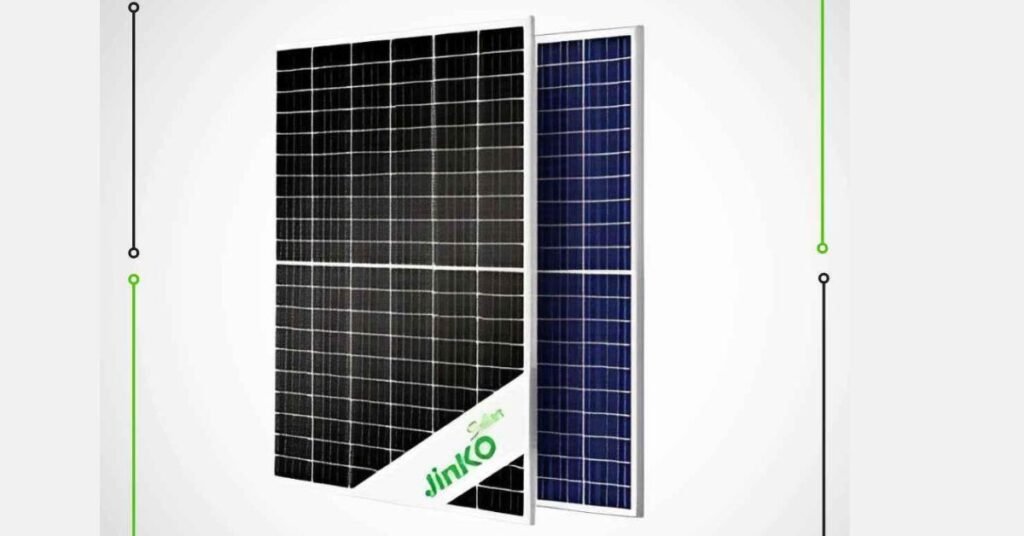
For a Jinko 585W quotation, confirm the full module code and whether the product is monofacial or bifacial. The same wattage label can appear on different series or revisions with different dimensions, electrical limits and warranties.
Match the Quotation to a Datasheet
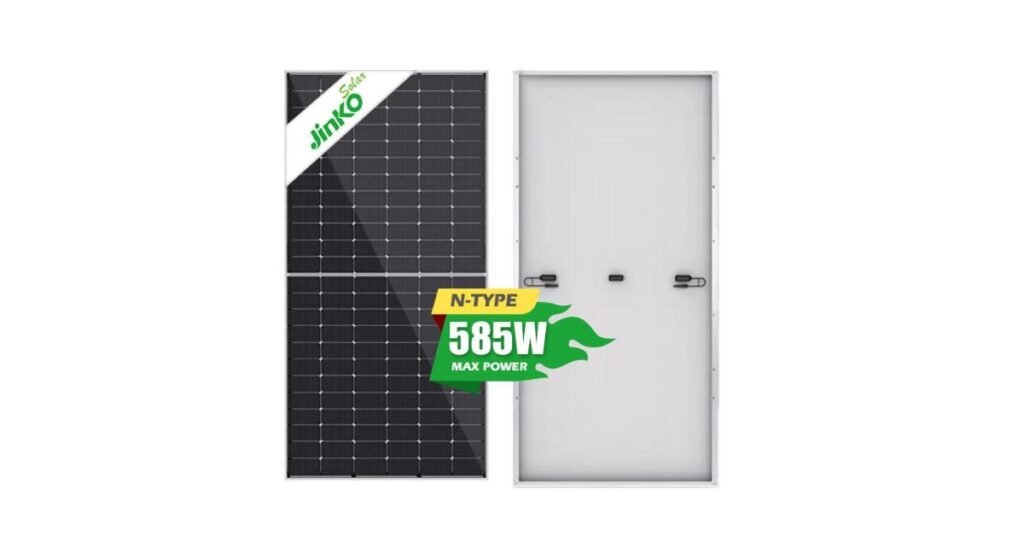
Request a photograph of the module label and compare its code with Jinko’s official datasheet. For example, JKM585N-72HL4 is documented in the manufacturer’s 565–585W Tiger Neo monofacial datasheet. Do not transfer its specifications to another 585W panel without confirming the matching document.
Price context: Numerical prices elsewhere in this article are previously published indicative estimates. They have not been independently reverified as live supplier quotations during this content review. Confirm a dated quote for the exact model, quantity, tax, delivery and warranty before buying. Solar Price Pak publishes information and does not sell or install equipment.
Use the model checks and price context below before comparing quotations.
🔋 Check Latest Solar Panel Prices in Pakistan
Get daily updated prices of Jinko, Longi, JA Solar, Trina, Canadian Solar and more.
View Latest Solar Prices →Key Takeaways
- The Jinko 585W panel costs Rs. 19,500–22,000 per panel (P-Type) and Rs. 20,500–23,000 (N-Type Bifacial) as of June 2026 (solarpricepak.com, June 2026).
- Per-watt rate runs Rs. 33–40 for P-Type and Rs. 35–44 for N-Type across Pakistani dealers.
- Pakistan’s distributed solar generated 51 TWh in FY25 — equal to 46% of grid supply — proving these panels are delivering real-world results (Renewables First, 2026).
- Always verify your panel’s serial number on Jinko’s official portal before purchase.
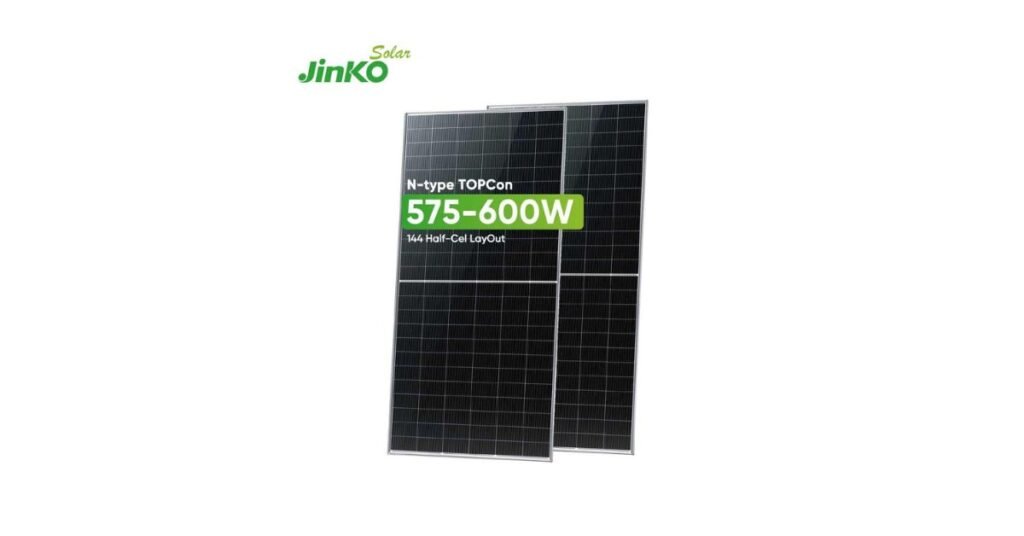
The Actual Price You’ll Pay
The Jinko Solar Panel 585 Watt Price in Pakistan is sitting somewhere between Rs. 19,500 and Rs. 25,740 per panel depending on which variant you’re looking at. That’s for June 2026. By the time you read this, it might be different. Everything moves with the exchange rate, shipping costs, and how much stock dealers are actually sitting on.
If you break it down per watt, you’re looking at roughly Rs. 33 to Rs. 44 per watt. The cheaper end is the standard P-Type model, single glass, nothing fancy. The pricier end is the N-Type Bifacial with the black frame, the stuff Jinko calls Tiger Neo.
Here’s the actual breakdown by model:
Standard P-Type (Single Glass) Rs. 19,300 to Rs. 22,200 per panel. The workhorse option. Gets the job done. Plenty of people choose this and don’t regret it.
P-Type Bifacial Rs. 21,000 to Rs. 23,400 per panel. Slightly more expensive, catches light off the back of the panel too. Helps if your roof surface is reflective, which… let’s be honest, a lot of Pakistani roofs are white-painted cement.
Tiger Neo N-Type Bifacial Rs. 20,500 to Rs. 25,740 per panel. This is the premium stuff. It’s got better efficiency, degrades more slowly, and holds up better in extreme heat. The extra money doesn’t go anywhere.
Tiger Neo Black Frame (Premium) Rs. 22,200 to Rs. 25,740 per panel. Same as Tiger Neo but it looks nicer if that matters to you. It doesn’t really.
These prices shift constantly. The Pakistani rupee moves against the Chinese yuan week to week. Shipping costs from China fluctuate. Dealer margins vary wildly. One shop in Karachi might charge you Rs. 20,000 per panel while another wants Rs. 23,000 for literally the same thing.ices are market estimates; confirm with your local dealer before purchase.
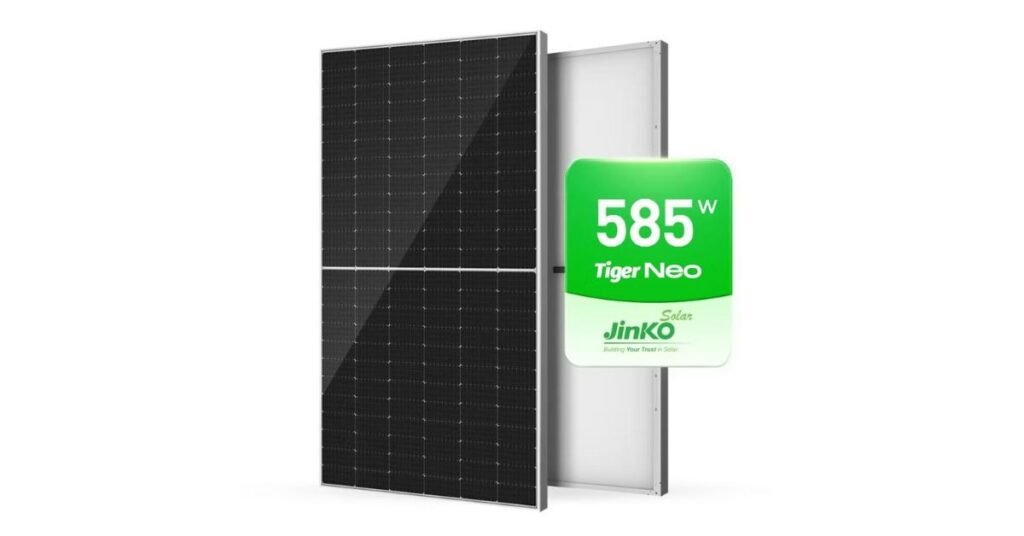
Price Differences Across Pakistan’s Cities
Where you live actually changes what Jinko Solar Panel 585 Watt Price in Pakistan means for your wallet. Karachi’s prices tend to be lowest because that’s where the ships actually dock. Everything else gets expensive as it moves inland.
Karachi: Rs. 20,475 to Rs. 22,500 for the Tiger Neo. Closest to import, shortest supply chain.
Lahore: Rs. 21,000 to Rs. 23,500. Competitive market keeps margins reasonable. Tons of solar shops, so dealers undercut each other.
Islamabad/Rawalpindi: Rs. 21,500 to Rs. 24,000. Transport costs add up. Not as many dealers competing.
Faisalabad: Rs. 21,000 to Rs. 23,000. Active solar market here, prices stay reasonable.
Multan/Hyderabad: Rs. 21,500 to Rs. 24,500. Less competition, logistics overhead.
Peshawar/Quetta: Rs. 22,000 to Rs. 25,000. Furthest from ports. You’re paying for the distance.
The lesson: if you live in Quetta and find a dealer quoting you Rs. 25,000, that’s not necessarily robbery. That’s reality. But get three quotes anyway because sometimes dealers are just greedy. Three quotes before committing.
Why People Keep Buying Jinko Specifically
You could ask why Jinko gets recommended so much instead of other brands. The answer’s partly price, partly because the panels actually work in Pakistan’s heat, partly because Jinko’s been around long enough that dealers know them.
The Tiger Neo N-Type sits at 22.65% efficiency. That’s not the highest on the market, but it’s solid. Most conventional panels sit around 19 to 20%. So with Jinko you’re getting a bit more juice per panel.
The temperature coefficient is minus 0.29% per degree Celsius. What does that mean? It means when your rooftop gets to 60 degrees in July, the panel doesn’t lose as much output as a panel with a worse coefficient would. In Pakistan, that matters. Your summers are brutal. A panel that holds up better in heat is a panel that produces more electricity when you actually need it most.
Annual degradation is 0.40%. Standard panels degrade at 0.55 to 0.70% per year. Over 25 years, that compounds. A Jinko will still be producing reasonably well. A cheap panel might be barely worth keeping by then.
The performance warranty is 30 years. Most panels do 25. Jinko’s saying they’re confident enough to back it for 30. Whether that means anything is up to you.
P-Type Versus N-Type: Does the Extra Cost Matter?
This is where people get confused, so let’s be direct. P-Type is cheaper. N-Type costs more. The question is whether N-Type is worth the difference.
P-Type: Rs. 2,000 to Rs. 3,000 cheaper per panel. Efficiency around 19 to 21%. Degrades at maybe 0.55 to 0.60% annually. Product warranty is 10 to 12 years typically.
N-Type: Costs the Rs. 2,000 to 3,000 extra. Efficiency at 22.65%. Degradation at just 0.40% annually. 30-year warranty.
For a 10kW system you’d be using roughly 17 panels. The difference between P-Type and N-Type is about Rs. 34,000 to Rs. 51,000 more upfront for going N-Type.
Over 25 years, that extra money adds up to slightly higher output, less degradation, meaning more power production over time, and better performance during Pakistan’s intense summer months. Whether Rs. 34,000 to 51,000 today is worth that long-term gain is your call, but for most people it is. You’re already investing heavily in solar. Another Rs. 50,000 doesn’t seem crazy in that context.
How Many Panels Do You Actually Need?
The Jinko Solar Panel 585 Watt Price in Pakistan matters less if you’re buying way too many or way too few panels.
A single 585W panel under solid sun produces roughly 2.5 to 3.5 kilowatt-hours daily during summer months. That’s about 3 units of electricity on a clear day.
For a 5kW system: about 9 panels. That’s a one or two bedroom flat basically.
For a 6kW system: about 11 panels. Three bedroom house, normal use.
For an 8kW system: about 14 panels. Bigger house, air conditioning running sometimes.
For a 10kW system: about 17 panels. Most middle-class Pakistani homes fall here. Covers electricity for the whole month for a typical family.
For a 15kW system: about 26 panels. You’re getting into commercial territory now.
The math is simple: take your system size, divide by 0.585, and that’s roughly how many panels you need. A certified installer will fine-tune it based on your specific roof, how much shade you have, which direction it faces, all that stuff.
Why Pakistan’s Solar Market Exploded
This matters for understanding prices and availability. In 2026 Pakistan has roughly 51 gigawatts of total solar capacity deployed. That’s enormous. Three years ago it was way less.
Why? Grid power got expensive. Electricity tariffs roughly doubled between 2021 and 2024. When grid power costs double, suddenly solar math works. A homeowner can install a 10kW system and break even in 4 to 6 years. That’s not a crazy investment anymore.
Also panel prices crashed. Chinese solar manufacturers were overproducing massively. Too many panels, not enough buyers, prices plummeted. A high-quality panel that cost Rs. 55 to 65 per watt in 2021 costs Rs. 33 to 44 now. That’s huge.
And reliability. The 2022 and 2025 floods knocked grid power offline for weeks in some places. People with solar on their roofs kept their lights on. Word got around. That converted a lot of skeptics.
How to Know You’re Not Getting Scammed
Fake Jinko panels exist. Someone slaps “Jinko 585W” on a panel that actually produces 400 to 450 watts and sells it at a market stall. This happens. Here’s how to protect yourself.
Check the serial number. Every real Jinko panel has a QR code on the back. Scan it. Or enter the serial number on Jinko’s official verification website. If it doesn’t exist in their system, you’ve got a fake.
Ask for import documents. Legitimate panels came through proper customs channels. There should be PSI (Pre-Shipment Inspection) certificates and COC (Certificate of Conformity) paperwork. Actually look at these documents.
Buy from known dealers. Power House Express, Subhan Electronics, Solar Trade, dealers like that have actual reputations to protect. Buying from some random guy at a market stall is gambling.
Watch the price floor. If someone’s selling Jinko Solar Panel 585 Watt Price in Pakistan at Rs. 6 to 10 per watt below market, something’s wrong. Tier-1 panels don’t sell that cheap unless the dealer’s cutting corners somewhere.
Test it after installation. A genuine 585W panel should produce close to 585 watts under direct noon sun if you test it with a meter. If you’re getting 470W on a clear day, that’s a problem. Talk to your dealer immediately.
City-Wise Dealer Landscape
Knowing where to actually buy this stuff matters.
Lahore has the most competitive market. Hafeez Centre, Main Boulevard, Canal Road all have multiple shops. Competition keeps prices honest. Authorized distributors have real stock.
Karachi has the most options overall but also the most random pricing. Different shops want wildly different amounts for the same panel. Get at least three quotes.
Islamabad has fewer dealers but the ones there are mostly legit. Less haggling needed.
Faisalabad has become surprisingly good for solar. Active market, reasonable prices.
Multan and Hyderabad have fewer options, higher prices typically.
Peshawar and Quetta have limited dealer networks. Prices go up because there’s less competition.
When you’re looking for Jinko Solar Panel 585 Watt Price in Pakistan in your city, always get at least three quotes from three different dealers. The difference can be Rs. 2,000 to 5,000 per panel depending on where you shop.
The System Sizing Thing
How many panels you actually need depends on your roof and your electricity usage. This is where people often go wrong. They think in panel counts instead of thinking about what they actually use.
If you’re running air conditioning most of the day, you need more capacity than someone who just wants to cover baseline power. If your roof gets partial shade in afternoons, you need more panels than someone with full sun all day. If you’re in Balochistan or southern Punjab, sunny days are frequent so you can do more with fewer panels. If you’re in Punjab and it’s dusty or hazy a lot, you might need extra capacity.
A certified installer should do a load calculation. They’ll ask you how much you actually spend on electricity, look at your usage patterns, calculate how much the sun hits your roof at your latitude and orientation, and then tell you what size system makes sense.
Don’t just say “I want 10 kilowatts.” Say “I spend X rupees on grid power per month” and let them figure out what that means in panel count.
Warranty and Guarantees
The Jinko Solar Panel 585 Watt Price in Pakistan includes a product warranty. Usually 12 years for the physical panel, sometimes up to 15 for premium models. That covers manufacturing defects.
The performance warranty is 30 years. That means Jinko promises the panel will still produce at least 80% of rated output after 25 years. After 30 years it’s basically off the hook, but panels usually outlast that anyway.
Get this in writing. If your dealer says “oh yeah, 25-year warranty” but can’t show you paperwork, that’s a red flag. Real warranty papers exist, and they matter.
NEPRA Net Metering Situation
Pakistan’s NEPRA net metering program is how you sell excess power back to the grid. If you’re thinking about this, know that the rules changed recently.
Jinko panels are all NEPRA compliant. They work with the program. But the model changed from unit-for-unit (one unit of your solar power equals one unit of grid credit) to net billing, where the rates are different. Your installer should know this. If they don’t, find a different installer.
Payback depends on the complete installed cost, generation, on-site use, applicable tariff, maintenance and replacement equipment. Calculate a scenario using actual quotations and your load profile; no fixed recovery period or decades of free electricity can be promised. Use the solar calculator for an illustration with explicit assumptions.
Frequently Asked Questions
What’s the actual Jinko Solar Panel 585 Watt Price in Pakistan in the examples below?
June 2026, P-Type is Rs. 19,500 to 22,000 per panel. N-Type Bifacial is Rs. 20,500 to 25,740. Per watt, you’re at Rs. 33 to 44. Prices move constantly with exchange rates.
Is N-Type actually better than P-Type for Pakistani summers?
Yeah. Better efficiency, lower degradation, holds up better in heat. The Rs. 2,000 to 3,000 extra per panel usually pays back over time.
How many panels for a typical house?
Most middle-class Pakistani homes need around 10 to 12 kilowatts, which is roughly 17 to 20 panels. Could be less if you use less power; could be more if you want to charge an electric car or run heavy air conditioning.
Can I trust the serial number verification?
Honestly, yes. Jinko’s website actually works. If the serial doesn’t show up, don’t buy. It’s one of the few reliable defenses against counterfeits.
Where should I buy in Lahore?
Hafeez Centre has multiple dealers. Main Boulevard too. Get three quotes before deciding. Authorized distributors like Power House Express have real credibility.
What if the panel doesn’t produce rated output?
Contact your dealer immediately with proof. Either demand a replacement or a refund. If they refuse, escalate to the authorized distributor. If it’s genuinely fake, you might have legal options, though they’re messy.
Final Take
The Jinko Solar Panel 585 Watt Price in Pakistan sits at a reasonable sweet spot for 2026. It’s not the cheapest, but it’s not the most expensive either. The quality is genuine tier-1. It actually works in Pakistan’s climate. The warranties are solid.
If you’re installing solar this year, a 10kW system with Jinko 585W panels costs you roughly Rs. 200,000 to 250,000 just for the panels themselves. Add maybe another Rs. 200,000 to 300,000 for a decent inverter, structure, wiring, and labor. You’re at Rs. 400,000 to 550,000 total for a quality 10kW system.
That’s real money. But it’s also real electricity for 25 years. With grid tariffs going nowhere but up, the math still works.
Get multiple quotes. Verify serial numbers. Buy from authorized dealers. Don’t overpay for looks you don’t need. Check the warranty paperwork before signing anything. That’s the checklist.
One Response