Best Solar Panel Brands in Pakistan 2026 — Longi vs JA Solar vs Canadian Solar
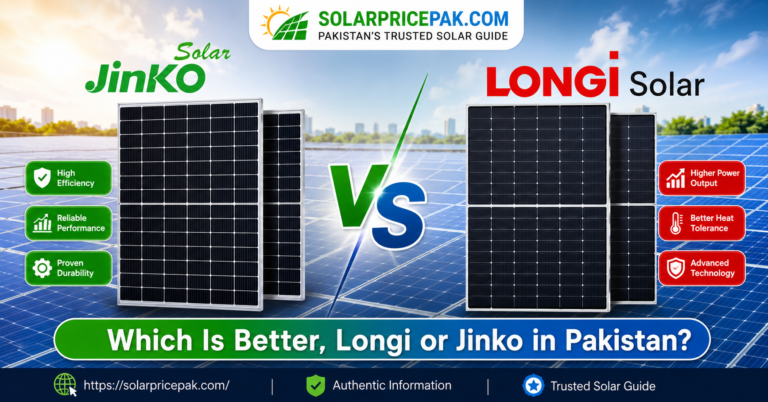
Walk into any solar shop in Lahore, and someone’s going to push Longi. Karachi? Same thing. Islamabad? You’ll get Longi, JA Solar, or maybe Canadian Solar depending on who you talk to.
Three years ago this wasn’t even the conversation. People cared about inverters, asked weird questions about warranty terms they didn’t understand, got confused about wattage. Now everybody’s obsessed with one thing: which panel won’t die when it’s sitting on a roof in 50+ degree heat for six months straight.
So I looked into it.
Why You Actually Can’t Just Buy the Cheapest Panel
Here’s the thing nobody tells you when you’re comparing quotes. You’re making a 25-year decision today. The panel going up in 2026 is still supposed to work reasonably well in 2051. That’s bananas. That’s longer than most people keep a car.
Which means the actual manufacturer matters. Their warranty practices matter. Their track record in hot places matters. Whether they disappear next year matters.
And heat? Pakistan’s rooftops are brutal for solar panels. Not just warm, actually brutal. Sindh and Punjab rooftops regularly get to 60, 65, even 70 degrees Celsius in peak summer. A panel sitting on black tin? Could be hotter. The manufacturers know this and they bury a number on the datasheet called the temperature coefficient. -0.29%, -0.35%, whatever it says, that’s how much output your panel loses for every degree above 25°C.
In most markets that’s fine. In Pakistan it’s basically the most important number on the sheet.
Longi Solar: The Market Leader in Pakistan
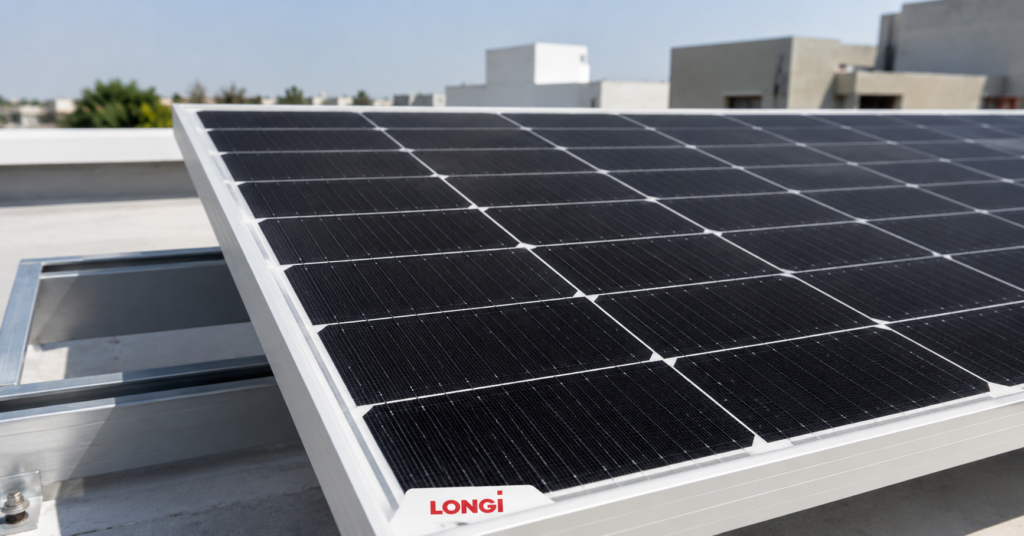
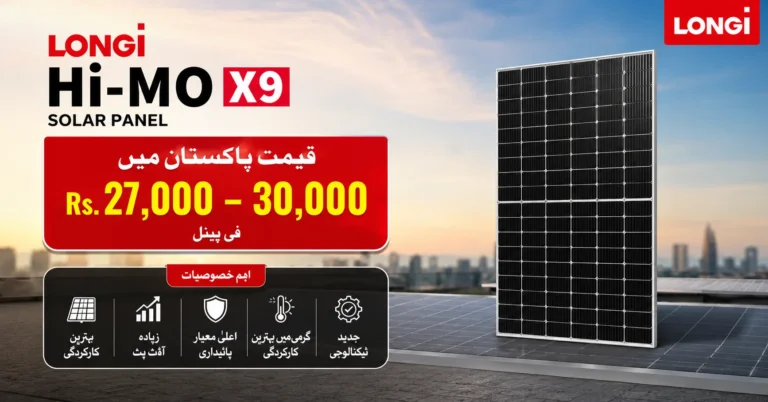
Why does Longi show up in basically every single quote? Because it’s the most installed brand here, full stop. They hold some world record for cell efficiency and yet somehow didn’t price it like they’re selling gold bars.
The current lineup is the Hi-MO 6 series. Here’s what matters:
- Monocrystalline PERC cells, the decent kind
- Runs 380 watts up to 600 watts depending on the model
- Efficiency is 21 to 23 percent, which is legitimately good
- Temperature coefficient: -0.29% per degree
- 12-year product warranty, 25-year performance guarantee
- Costs somewhere around PKR 14,000 to 18,000 per panel (this fluctuates)
That -0.29% coefficient is actually the best you’ll find in this price range. I’m not exaggerating. On a rooftop in Multan that hits 65 degrees, a Longi panel just… keeps working better than cheaper alternatives would. It’s physics, not marketing.
They also make bifacial versions now, which means the back side generates power too from reflected light. Depending on your roof, that’s an extra 5 to 15 percent, which is pretty wild.
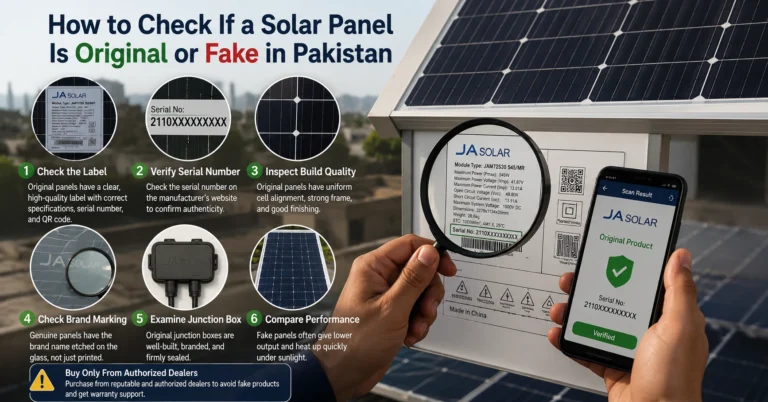
The catch with Longi: dealers. Some dealers are authorized. Some aren’t. Some guy will sell you a panel that came through god knows which channel and when it fails in year four, congratulations, no warranty. This happened to people. Always verify the distributor is actually authorized before handing over money.
JA Solar Strong Performance, Competitive Pricing
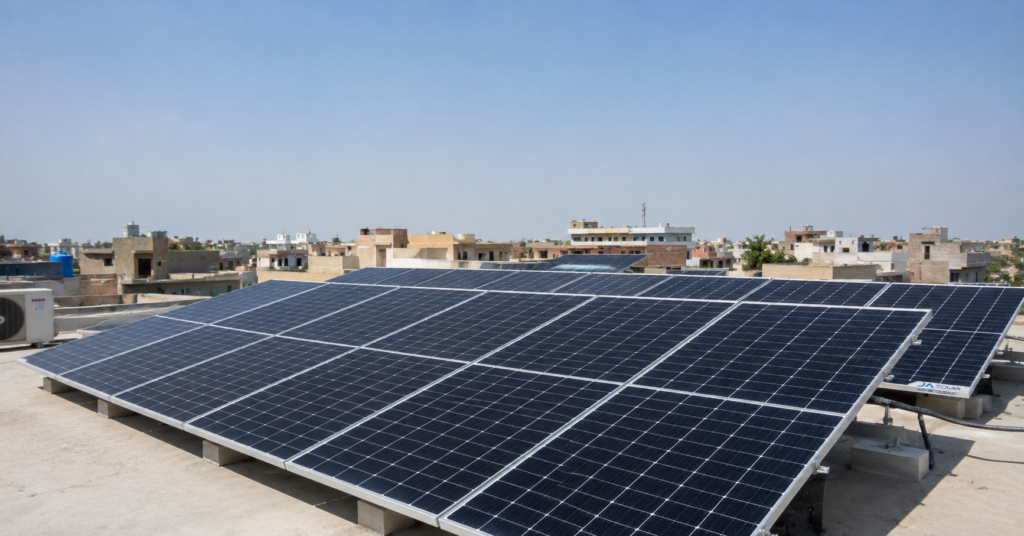
JA Solar is huge globally but doesn’t have quite the market dominance here that Longi does. They’ve positioned themselves as the cheaper alternative and honestly, they’ve pulled it off. The specs are close enough to Longi that most regular buyers won’t notice the difference until June hits.
Their main panel is the DeepBlue 3.0 Pro:
- Monocrystalline PERC
- 390 to 580 watts
- Efficiency 20.5 to 22.4 percent
- Temperature coefficient: -0.35% per degree
- 12-year product, 25-year performance warranty
- Runs PKR 12,500 to 16,500 per panel
That -0.35% is the sticking point. It’s worse than Longi’s -0.29%. Not by a huge amount, but on a panel that’s going to sit in Pakistani heat for 25 years? It compounds.
BUT. The price difference is real. On a 10kW system you could save 30 or 40 thousand rupees or more depending on your installer. For a lot of people, that difference between buying now or in 2027 is huge.
The DeepBlue stuff does have better low-light performance because of the anti-reflective coating, which helps during those dusty Punjab mornings when the sun’s not even fully clear yet. That’s useful.
So it’s basically: want to save money, and your summers aren’t absolutely nuclear? JA Solar makes sense. Want maximum output? Pay the extra.t compared to Longi panels of the same wattage rating.
Canadian Solar Reliability First
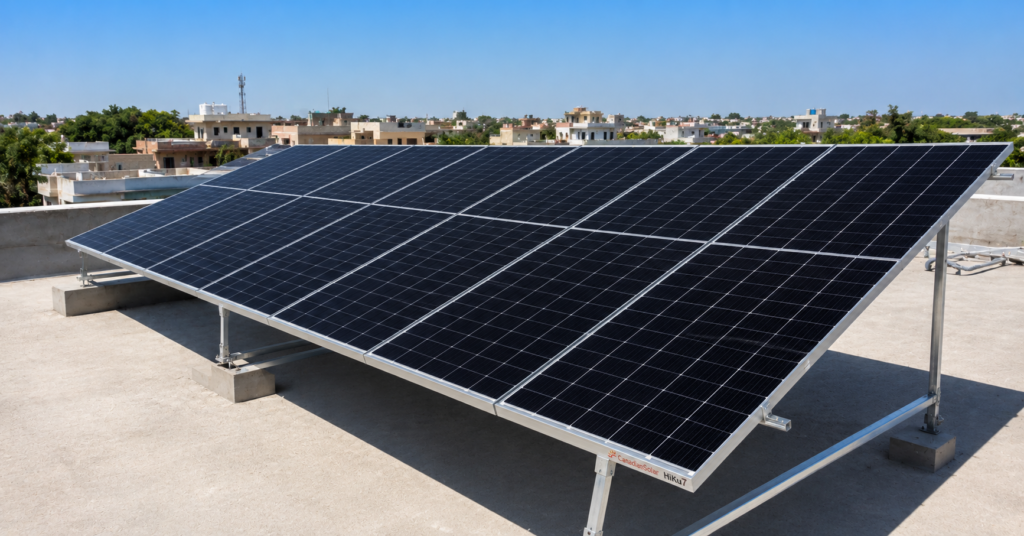
This company’s been around the longest, and they’ve built themselves a reputation by just… not screwing up. They’re boring in the way that’s actually good for a 25-year purchase.
Their HiKu7 series:
- Monocrystalline PERC
- 400 to 665 watts
- Efficiency 20.6 to 22.8 percent
- Temperature coefficient: -0.34% per degree
- 12-year product, 25-year performance
- Costs PKR 13,000 to 17,000 per panel
They use bigger cells (182mm instead of the standard size) which means fewer panels for the same output. Fewer panels is actually helpful if your roof is cramped, which it is if you’re in an old Lahore neighborhood or a dense Karachi block. Fewer mounting points, less wiring, simpler install.
Canadian Solar also has pretty solid after-sales support compared to others. Actual distributors in Islamabad, Faisalabad, Sialkot, Quetta. That matters more than you’d think when something needs fixing in year three.
Problem: some dealers quote Canadian Solar at nearly Longi prices. The specs don’t back that up. Just because one shop is charging Longi money doesn’t mean it’s worth it, so definitely get multiple quotes.
Quick Comparison
| Longi | JA Solar | Canadian | |
|---|---|---|---|
| Efficiency | 21-23% | 20.5-22.4% | 20.6-22.8% |
| Temp coefficient | -0.29% per °C | -0.35% per °C | -0.34% per °C |
| Wattage | 380-600W | 390-580W | 400-665W |
| Product warranty | 12 yrs | 12 yrs | 12 yrs |
| Performance warranty | 25 yrs | 25 yrs | 25 yrs |
| Typical price | PKR 14k-18k | PKR 12.5k-16.5k | PKR 13k-17k |
| Best for | Hot climates | Budget first | Tight roofs |
| Dealer network | Very strong | Strong | Moderate |
Which One Should You Probably Get?
Longi if you’re in Sindh, southern Punjab, or Balochistan and your summers are honestly scorching. The temperature coefficient pays for the extra cost over the panel’s lifetime. Simple as that. If money’s not the constraint, Longi is the clear pick.
JA Solar if budget matters and your area isn’t in the absolute furnace zone. It’s still a legit tier-1 brand. For a smaller residential system, the performance hit from that worse temperature coefficient might not matter enough to justify spending more.
Canadian Solar if your rooftop is basically a postage stamp or if you’ve noticed the Canadian dealer in your city is stronger than the others. The bigger wattage helps when space sucks. And good local support means something when you actually need a technician.
Stuff to Actually Check
Don’t just let the dealer hand you whatever they want. Actually do this:
- Is the distributor authorized? Each brand publishes a list. Ask for proof. Grey market panels = no warranty that works.
- Read the datasheet yourself. The spec sheet has the real numbers. Don’t trust what someone verbally told you. Cross-check the model number on the actual manufacturer’s website.
- NEPRA net metering is a thing. If you’re registering for it, your installer needs to understand the requirements for your specific DISCO. This varies by region and a lot of installers don’t know it.
- Degradation guarantee. Standard is 80% output after 25 years. Some panels now promise 82 to 85%. That number is important, get it in writing.
- Look at the whole system, not just panels. A cheap panel with a weak inverter underperforms an expensive panel with a good inverter. Compare total system cost.
Where Pakistan’s Solar Market Actually Is in 2026
Net metering capacity crossed 3,000 MW in 2025. That’s mostly homes and small businesses, not mega solar farms. AEDB and NEPRA made registration way simpler than it used to be. And financing from Meezan, HBL, NBP? Way easier to access now.
Prices fell hard. In 2022 a 5kW complete system with decent panels and inverter was pushing PKR 900,000. Now you’re looking at PKR 550,000 to 650,000 for tier-1 equipment. Exchange rates help but also the market’s just gotten competitive.
Lead times used to be insane. 2022-2023 was a nightmare. Now it’s normal. Most cities have multiple authorized dealers with stock sitting around.
Questions People Actually Ask
Is Longi really the number one brand?
Yeah. Highest market share in Pakistan as of 2026. It’s the obvious reach, though that doesn’t mean it’s always the right choice for your specific situation.
What’s a 400W panel cost now?
Somewhere in the PKR 12,500 to 16,000 range depending on brand and dealer. Bifacial costs more. Everything moves with exchange rates so this shifts constantly.
Are Chinese panels actually reliable?
Longi, JA, and Canadian Solar aren’t like… random manufacturers. These are tier-1 companies that sell across Europe, North America, and Australia. “Chinese” doesn’t mean anything by itself. What matters is whether the specific model is tier-1 and whether you’re buying through an actual authorized channel.
Which brand handles summer heat best?
Longi. -0.29% coefficient beats the others. In Multan, Sukkur, Jacobabad, where rooftops hit extreme temperatures regularly, that difference actually shows up in your generation numbers.
Can you finance solar panels?
Multiple banks do it. Meezan has solar-specific financing. HBL’s green finance works. NBP has renewable energy loans. Some installers also do their own installment plans, but terms vary wildly, so compare.
The Final Thing
You want a panel that’s installed properly by someone who actually knows what they’re doing, and you want the warranty paperwork in your hands before anything goes on the roof.
The brand matters but not more than the install quality and where you source it from. Between the three, Longi’s the safest for Pakistani heat. JA Solar wins if budget’s tight. Canadian Solar makes sense for space-constrained roofs or if your city has better after-sales support for them.
Get a minimum of three quotes from actually authorized installers. Compare the full system cost. Don’t sign anything until you’ve seen the warranty in writing. That’s really it.