6kW Hybrid Solar Inverter Price in Pakistan (2026 Rates)
In Pakistan, a 6kW hybrid solar inverter can cost Rs. 140,000 to Rs. 260,000, depending on the brand, IP protection, lithium battery compatibility, etc. That’s the number most buyers look for, but it’s only half the decision. NEPRA’s revision of the net-metering rules, since February 2026, has changed the pace of how fast a 6kW hybrid system pays for itself. The type of inverter you buy is as important as the sticker price on it.
This guide explains the LSI keywords buyers really need to understand (MPPT, IP rating, dual AC output, BMS compatibility) and breaks down real 2026 prices by brand. It also walks through how the new net billing regime affects your return on investment.
What Is a 6kW Hybrid Solar Inverter?
A hybrid inverter is the one device that determines, at any given second, whether your home should be powered by solar panels, battery storage, or WAPDA grid power. The 6kW hybrid solar inverter is designed for a typical mid-size Pakistani household, which generally includes 2 split ACs, a fridge, lights, fans, and a washing machine, and is positioned between the smaller 4kW/5kW units and the bigger 8kW to 10kW units, which are used for larger houses or small commercial setups.
A hybrid unit has a BMS (Battery Management System) port for lithium batteries, 2 MPPT charge controllers (most models), and automatic switching that keeps essential appliances running during load shedding, unlike a basic on-grid inverter.
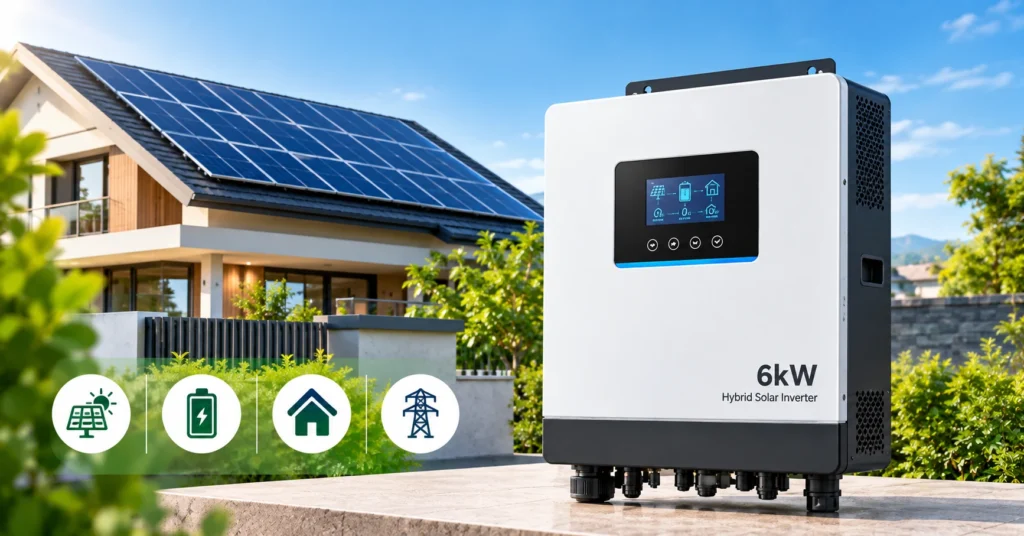
6kW Hybrid Solar Inverter Price in Pakistan, 2026 Brand Comparison
Here is the current market snapshot. Prices are approximate and can shift with dollar-rupee parity, so always confirm with an authorized dealer before ordering.
| Brand & Model | Approx. Price (PKR) | Notable Feature |
|---|---|---|
| Inverex Nitrox 6kW | 197,000 to 210,000 | IP65 weatherproof, 5-year local warranty, touch-screen display |
| Solis 6kW Hybrid | ~245,000 | Strong thermal management, dual MPPT |
| Knox Krypton 6kW (PV7500W) | 218,000 to 235,000 | IP54, battery-free operation mode |
| Growatt 6kW (on-grid reference) | 171,000 to 178,000 | Efficient string technology, grid-sync focus |
| Budget imported units (e.g., Itel-class) | ~125,000 | Best for indoor, climate-controlled spaces only |
| MaxPower Voltas 6K-H4 | ~260,000 | IP66, 10ms transfer time, dual MPPT |
Wholesale market range for 6kW hybrid units: Rs. 140,000 to Rs. 260,000, with most reliable, IP65-rated residential units clustering around Rs. 197,000 to Rs. 235,000.
The spread exists because “6kW hybrid inverter” is not one standardized product; it’s a capacity label. Two units, both marketed as 6kW, can differ by Rs. 100,000 or more because of:
- IP rating (IP54 vs IP65 vs IP66, how well it survives outdoor heat, dust, and monsoon humidity)
- MPPT tracker count: dual MPPT tracks two panel strings independently for better yield on partially shaded roofs
- Transfer time: how fast the inverter switches from grid to battery power during an outage (10 ms units protect sensitive electronics better than slower ones)
- Battery chemistry support: lithium-compatible BMS ports cost more to engineer than lead-acid-only units
- Warranty depth and local after-sales backing: a 5-year warranty with a local service network is worth more than a cheaper unit with no local support
Key Features to Check Before You Buy (LSI Keywords Explained)
These are the terms you’ll see on every spec sheet; understanding them prevents overpaying or underbuying.
- Dual AC Output: splits your home’s load into “Heavy” and “Smart” circuits. During an outage, the inverter automatically cuts power to heavy appliances (like ACs) to preserve battery life for fans, lights, and routers.
- Lithium Battery Compatibility (BMS port): lets the inverter communicate directly with a lithium battery’s management system for safer charging and longer battery life versus lead-acid setups.
- MPPT (Maximum Power Point Tracking): the technology that extracts the most usable power from your solar panels under varying sunlight conditions.
- IP Rating (Ingress Protection): IP65 or higher is strongly recommended for rooftop-mounted units exposed to Pakistan’s summer heat and monsoon rain.
- Transfer Time: the gap between grid failure and battery takeover; shorter is better for homes running computers or medical equipment.
- Three-Phase vs Single-Phase: Most 6 kW residential units are single-phase; three-phase versions (used at higher capacities) suit commercial loads with heavier, more balanced power draw.

How Many Solar Panels Does a 6kW Inverter Need?
A 6kW hybrid inverter typically pairs with 12 to 16 solar panels (at 450W to 550W per panel), producing roughly 7.5kW to 8kW of DC panel capacity. Inverters are usually oversized on the panel side by about 20-30% to compensate for cloudy days and panel degradation over time. Add a lithium battery bank of 5kWh to 10kWh for a household that wants 4-6 hours of backup during load-shedding without running the AC.
10kW Hybrid Solar Inverter Price in Pakistan (2026) →NEPRA’s 2026 Net Billing Shift: Why It Changes Your ROI Math
This is the part most price guides skip, and it directly affects how fast your 6kW hybrid inverter pays for itself.
On February 9, 2026, NEPRA notified the Prosumer Regulations 2026 through SRO 251(I)/2026, replacing the decade-old net metering framework (ARE&NM Regulations 2015) that had governed rooftop solar in Pakistan. Under the old system, every unit of solar electricity exported to the grid was compensated at the same rate charged for grid electricity, a direct one-to-one offset.
Under the new net billing system, that changes substantially. DISCOs now purchase surplus electricity from prosumers at the national average energy purchase price while continuing to sell electricity back to consumers at the standard applicable tariff, ending the one-to-one offset model. Consumers now buy grid electricity at prevailing tariffs of roughly Rs. 37 to 55 per unit while selling surplus solar back at only around Rs. 10 to 11 per unit. The contract term for new connections has also been shortened, from seven years down to five.
There’s an important exception worth knowing if you’re mid-application: NEPRA has allowed all net metering applications submitted up to February 8, 2026, to be processed under the older, more generous seven-year rules, protecting more than 5,000 pending applicants.
What this means for your 6kW hybrid inverter purchase: because exported solar power is now worth far less than it used to be, the financial logic of a hybrid system has shifted toward maximizing self-consumption rather than exporting surplus for credit. This is exactly why hybrid inverters with strong battery integration, dual MPPT, high-capacity BMS support, and dual AC output are becoming more valuable than simple on-grid units in 2026. A hybrid inverter lets you store your daytime solar generation in a battery and use it at night, instead of selling it to the grid at the new, lower net billing rate.
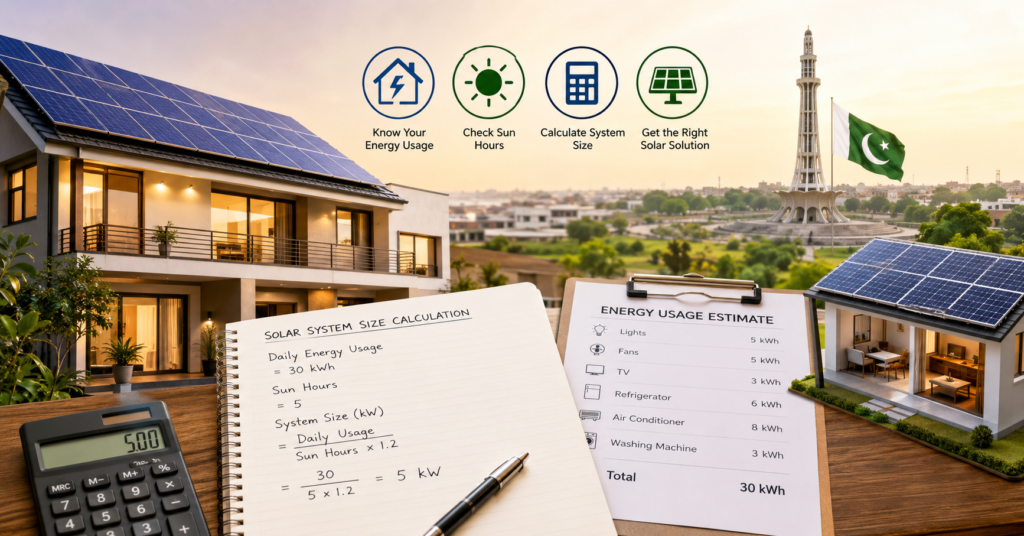
Hybrid vs On-Grid: Which Makes More Sense Now?
| Factor | Hybrid Inverter | On-Grid Inverter |
|---|---|---|
| Works during load-shedding | Yes, with a battery. | No |
| Battery storage | Supported (lithium/lead-acid) | Not supported |
| Best under new net billing rules | Better; stores excess power instead of selling cheap | Less advantageous, surplus sold at low buyback rate |
| Upfront cost | Higher (battery adds cost) | Lower |
| Ideal for | Homes needing backup and bill reduction | Homes with stable grid and pure bill-offset goal |
Where to Buy and What to Verify
Before ordering a 6kW hybrid solar inverter in Pakistan:
- Buy from an authorized dealer, not a grey-market reseller; this protects your warranty claim.
- Confirm the IP rating in writing; many listings say “weatherproof” without stating the actual IP number.
- Ask about local service centers, not just the manufacturer’s overseas support line.
- Check net billing eligibility timing with your DISCO before finalizing system size, since sanctioned load caps now apply under the new Prosumer Regulations.
- Match battery size to your actual backup needs; oversized batteries add cost without proportional benefit for most homes.
For official, up-to-date regulatory details, refer to NEPRA’s official notifications and the Alternative Energy Development Board (AEDB) for solar policy guidance.
FAQ Section
1. What is the average 6kW hybrid solar inverter price in Pakistan in 2026?
Most reliable, IP65-rated 6kW hybrid inverters cost between Rs. 197,000 and Rs. 260,000. Budget imported units start around Rs. 125,000 to 140,000 but usually lack outdoor weatherproofing and local warranty support.
2. Which is the best 6kW hybrid inverter brand in Pakistan?
Inverex, Solis, and MaxPower are the most recommended brands for 2026, based on warranty length, local service network, and IP65/IP66 protection ratings. Knox and Growatt are strong budget-to-mid-range alternatives.
3. How many batteries does a 6kW hybrid inverter need?
Most homes pair a 6 kW hybrid inverter with 5 kWh to 10 kWh of lithium battery storage, giving roughly 4-6 hours of essential backup (fans, lights, fridge, router) during an outage.
4. Does net metering still work with a 6kW hybrid inverter after the 2026 NEPRA changes?
Yes, but the compensation structure has changed. New connections fall under net billing, where surplus exported power is bought at the national average energy purchase price (around Rs. 10 to 11/unit) instead of the old one-to-one offset rate. Applications submitted before February 8, 2026, are still processed under the older, more generous rules.
5. Is a 6 kW inverter enough for a house with 2 ACs?
Yes, a 6kW hybrid inverter can typically run 2 split ACs (1.5-ton each) along with a fridge, lights, and fans, especially when paired with adequately sized panels and a lithium battery bank.
6. What’s the difference between IP54 and IP65 rated inverters?
IP65 offers better protection against dust and water jets, making it more suitable for outdoor rooftop installation in Pakistan’s summer heat and monsoon rain. IP54 units are better suited to sheltered or indoor mounting.
7. Can I install a 6kW hybrid inverter without net metering?
Yes. A hybrid inverter works independently of net metering; it can run entirely on self-consumption (solar + battery + grid backup) without ever exporting power, which is often the more cost-effective setup under the new net billing rates.

2 Comments