
When we compare solar panels, we often see two different warranty periods: a product warranty and a performance warranty. They may both last for decades, but they protect against different risks.
Understanding the difference between a solar panel product warranty vs performance warranty is essential before purchasing a solar system. A panel might have a 25-year performance warranty but a much shorter product warranty. These numbers should never be treated as interchangeable.
The product warranty generally concerns defects in the panel itself, while the performance warranty concerns how much electrical output the panel is expected to retain over time under the manufacturer’s specified conditions.
For homeowners in Pakistan, understanding both warranties can help us compare solar panel brands, evaluate long-term value, and avoid misunderstandings when making a warranty claim.
Product Warranty
A solar panel product warranty, sometimes called a materials or workmanship warranty, protects against certain defects in the physical panel and its manufacturing.
Depending on the manufacturer and model, this warranty may cover problems involving:
- Manufacturing defects
- Materials
- Workmanship
- Frame
- Junction box
- Certain electrical components
- Delamination
- Certain physical defects
- Manufacturing-related failures
The exact coverage depends on the manufacturer’s written warranty terms.
A product warranty does not simply mean that the panel will produce its original rated power for the entire warranty period.
That is where the performance warranty becomes important.
Performance Warranty
A solar panel performance warranty guarantees that the panel’s power output will remain above a specified level for a defined period, subject to the manufacturer’s warranty conditions.
Solar modules naturally experience some degradation over time. Their maximum power output gradually declines as they age.
For example, a manufacturer might specify that a module will retain at least a certain percentage of its original rated power after a specified number of years.
The exact degradation rate differs by panel technology and manufacturer.
A performance warranty therefore answers a different question:
How much power should this solar panel still be capable of producing after years of operation?
Comparison Table
The simplest way to understand the difference is:
| Warranty | Main Purpose | Typical Concern |
|---|---|---|
| Product warranty | Protects the panel against specified defects | "Is the panel itself defective?" |
| Performance warranty | Covers specified minimum power retention | "Has the panel’s output fallen below the warranted level?" |
These warranties can overlap in time, but they do not cover the same thing.
A panel could continue producing electricity while developing a physical defect covered by the product warranty.
Likewise, a panel could have no obvious physical defect but produce less power than the level guaranteed under its performance warranty.
Warranty Illustration
Suppose we purchase a solar panel rated at:
550W
The manufacturer provides separate warranties.
Imagine, for illustration, that the warranty terms specify:
- Product warranty: 15 years
- Performance warranty: 30 years
- Guaranteed power retention: a specified percentage after the warranty period
The important point is that the 15-year product warranty and 30-year performance warranty are different commitments.
The product warranty concerns defects covered by the manufacturer’s terms.
The performance warranty concerns the panel’s ability to retain a specified electrical output.
We should always use the actual warranty document for the specific panel model rather than assuming that all manufacturers use the same terms.
Panel Degradation
Solar panels operate outdoors for years under:
- Sunlight
- Heat
- Cold
- Humidity
- Rain
- Dust
- Wind
- Thermal cycling
- UV exposure
These conditions can gradually affect the materials and electrical characteristics of a module.
As the panel ages, its maximum power output can decline.
This process is known as solar panel degradation.
The rate is not necessarily constant for every product or every year. Modern modules may use different degradation models, and manufacturers may specify different first-year and subsequent annual degradation rates.
Degradation Rates
Many modern solar panel warranties distinguish between the initial degradation during the first year and the subsequent annual degradation rate.
For example, a hypothetical warranty might specify:
- First-year degradation: 1%
- Subsequent annual degradation: 0.4%
The exact numbers vary by manufacturer and product.
Using those figures only as an example, a 550W panel would not necessarily remain exactly 550W after many years. Its warranted minimum output would gradually decline according to the manufacturer’s warranty formula.
This is why we should examine the actual performance warranty rather than focusing only on a headline such as "30-year warranty."
Calculation Example
Suppose a hypothetical 550W panel has a warranty guaranteeing:
- 99% of initial output after year one
- 0.4% maximum degradation per year thereafter
The calculation would be based on the manufacturer’s defined warranty methodology.
The important concept is that the guaranteed output is usually expressed as a percentage of the panel’s original rated power.
For a 550W module:
Original rated power = 550W

If guaranteed retention = 90%

550W × 0.90 = 495W
This does not mean the panel will necessarily produce exactly 495W in normal operation after that period.
It means the manufacturer’s specified minimum warranted power level may be around that amount under the applicable warranty conditions.
Actual energy production depends on sunlight, temperature, shading, orientation, inverter operation, soiling, and other factors.
Production Guarantee
One of the most important distinctions is that a product warranty does not guarantee a specific amount of electricity generated by the panel every day, month, or year.
Solar production changes with:
- Sunlight intensity
- Weather
- Temperature
- Shading
- Dust
- Panel orientation
- Panel tilt
- Inverter efficiency
- System losses
A panel’s rated wattage is measured under standardized test conditions.
It should not be interpreted as the amount of electricity the panel will continuously produce in real-world conditions.
Coverage Details
The exact coverage varies by manufacturer, but a product warranty can address specified defects in:
Solar Cells
If a manufacturing defect causes the cells to fail in a way covered by the warranty, the manufacturer may provide a remedy according to the warranty terms.
Glass
Some warranty documents cover defects in materials or workmanship associated with the module’s glass.
However, accidental physical damage is generally treated differently from a manufacturing defect.
Frame
Manufacturing defects affecting the module frame may be covered under applicable warranty conditions.
Junction Box
The junction box and associated manufacturing defects may be covered depending on the product warranty.
Connectors
Certain connector-related manufacturing defects may be covered, subject to the manufacturer’s requirements.
Encapsulation and Lamination
Some warranties address manufacturing defects involving the materials that protect the solar cells.
However, coverage depends on the exact warranty document.
Warranty Exclusions
A product warranty does not generally mean that every type of damage is covered.
Potential exclusions can include:
- Improper installation
- Incorrect system design
- Unauthorized modification
- Physical impact
- Natural disasters where excluded
- Improper storage
- Incorrect transportation
- Chemical exposure
- Corrosive environments beyond specified conditions
- Unauthorized repairs
- Failure to follow installation instructions
- Damage caused by external electrical equipment
The actual exclusions vary by manufacturer.
We should therefore read the warranty document before assuming that a particular failure will be covered.
Performance Coverage
A performance warranty typically establishes a minimum power output that the manufacturer guarantees over time.
For example, a manufacturer might specify that the module will maintain at least a certain percentage of its initial rated power after a specified period.
The warranty may define:
- Initial guaranteed output
- First-year degradation
- Annual degradation
- Final-year guaranteed output
- Measurement methodology
- Testing conditions
- Claim requirements
The exact warranty formula matters more than simply comparing the number of years.
Warranty Duration
We should not judge a solar panel by warranty length alone.
Consider two hypothetical panels:
Panel A
- 25-year performance warranty
- Lower warranted degradation
Panel B
- 30-year performance warranty
- Higher degradation rate
Panel B has a longer headline warranty, but Panel A could potentially have a stronger guaranteed output at a particular point in time.
The right comparison is:
Warranty length + degradation rate + final guaranteed output + product warranty + claim terms
rather than warranty length alone.
Importance Factors
Both matter because they protect against different risks.
The product warranty is particularly important for defects and failures in the module itself.
The performance warranty is important for long-term power retention.
When comparing panels, we should review both.
A strong panel warranty package may include:
- A substantial product warranty
- A long performance warranty
- Low warranted degradation
- Clearly documented claim procedures
- Strong manufacturer support
Evaluation Metrics
When evaluating two solar panel models, use a comparison table like this:
| Warranty Factor | Panel A | Panel B |
|---|---|---|
| Product warranty | ||
| Performance warranty | ||
| First-year degradation | ||
| Annual degradation | ||
| Guaranteed final output | ||
| Warranty provider | ||
| Claim process | ||
| Replacement policy | ||
| Labor coverage | ||
| Shipping coverage | ||
| Transferability |
This gives us a much more accurate comparison than looking at a single warranty number.
Labor Costs
This is an important question that is often overlooked.
Suppose a panel fails after several years.
The manufacturer may agree to replace the defective module under its warranty.
But who pays for:
- Removing the failed panel?
- Transporting the replacement?
- Installing the replacement?
- Inspecting the system?
- Reconnecting the module?
The answer depends on the manufacturer’s warranty terms and the installer’s agreement.
A product warranty does not automatically mean that all future labor costs are covered.
We should specifically ask about labor and removal/reinstallation coverage before purchasing.
Claim Process
There can be several parties involved:
Homeowner → Installer → Distributor → Manufacturer
The exact process varies.
Some manufacturers require the homeowner or installer to contact the manufacturer directly.
Others may expect the authorized distributor or installer to handle the claim.
Before installation, we should know:
- Who receives the warranty claim?
- What documents are required?
- What proof of purchase is required?
- Are panel serial numbers required?
- Who performs testing?
- Who pays transportation?
- Who removes the defective panel?
- How is the replacement shipped?
- What happens if the exact model is discontinued?
Having these answers in writing can prevent problems later.
Discontinued Models
Solar manufacturers regularly update their product ranges.
A panel installed today may no longer be manufactured several years later.
The warranty document should explain how replacements are handled when the original model is unavailable.
A manufacturer may provide:
- The same model
- An equivalent model
- A newer model
- A replacement of comparable specifications
- Another remedy permitted under the warranty
The exact approach depends on the manufacturer’s terms.
Warranty Transfer
This depends on the manufacturer.
Some warranties are transferable under specific conditions, while others may have restrictions.
If we are buying a property that already has solar panels, we should request:
- Original purchase documentation
- Panel serial numbers
- Installation records
- Warranty documents
- Transfer documentation if applicable
We should not assume that a warranty automatically transfers to a new property owner.
Installation Impact
Yes.
Many manufacturers specify installation requirements that must be followed for warranty coverage to remain valid.
Potential requirements may include:
- Approved mounting methods
- Correct clamping zones
- Compatible connectors
- Proper electrical configuration
- Specified environmental conditions
- Correct handling
- Qualified installation
- Compliance with installation manuals
Incorrect installation can cause damage that may fall outside warranty coverage.
This is why choosing the cheapest installer is not necessarily the best approach.
Workmanship Warranty
There is another warranty that homeowners should understand: the installation workmanship warranty.
This is separate from the solar panel’s product warranty.
Product Warranty
Generally provided by the panel manufacturer and concerned with specified defects in the module.
Performance Warranty
Generally provided by the panel manufacturer and concerned with specified power retention.
Workmanship Warranty
Generally provided by the installer and concerned with installation-related work.
For example, if a mounting system was improperly installed and causes a problem with the roof, that may be an installer workmanship issue rather than a solar panel product warranty issue.
We should therefore request separate warranty details for the equipment and installation.
Climate Considerations
Solar panels installed in Pakistan can experience challenging outdoor conditions, including high temperatures, dust, humidity, monsoon rainfall, and in some regions, significant temperature changes.
These conditions make proper installation and maintenance particularly important.
Heat
High module temperatures can temporarily reduce electrical output.
This is different from long-term degradation.
Dust
Dust and soiling can reduce the sunlight reaching the cells.
Cleaning requirements depend on the location, rainfall, roof environment, and soiling levels.
Humidity
Moisture exposure can contribute to material degradation if a module or installation has a defect or is exposed beyond its specified environmental conditions.
Wind
The mounting structure and panel attachment system should be properly designed for local wind conditions.
Corrosive Environments
Properties near coastal or industrial environments may require additional consideration regarding corrosion and equipment specifications.
A strong warranty does not replace correct system design and installation.
Power Guarantees
No.
A long-term performance warranty usually guarantees a minimum specified output, not the original rated power for the entire warranty period.
For example, a hypothetical panel rated at 550W may have a long-term warranty guaranteeing a lower percentage of its original power after several decades.
That is normal.
The warranty is designed to establish a minimum performance threshold rather than promise zero degradation.
Degradation Trends
These concepts are related but not identical.
Degradation is the decline in a panel’s electrical output over time.
Performance warranty defines the manufacturer’s guaranteed minimum power retention under its stated terms.
A manufacturer may model expected degradation more favorably than the minimum level guaranteed under the warranty.
Therefore:
Expected performance ≠ guaranteed minimum performance
When comparing panels, it is useful to review both the manufacturer’s expected degradation information and the legally applicable warranty terms.
Document Analysis
Before buying a panel, we should locate these sections in the warranty document:
1. Warranty Period
Find the exact duration of the product and performance warranties.
2. Covered Products
Confirm the warranty applies to the exact model being purchased.
3. Guaranteed Power
Identify the initial guaranteed output and final guaranteed output.
4. Degradation Formula
Look for first-year and subsequent annual degradation provisions.
5. Exclusions
Read the situations where coverage does not apply.
6. Claim Procedure
Check where and how a claim must be submitted.
7. Remedy
Determine whether the manufacturer will repair, replace, refund, or provide another remedy.
8. Labor
Check whether removal and reinstallation costs are included.
9. Shipping
Determine who pays transportation costs.
10. Transferability
Check whether the warranty can be transferred.
11. Governing Terms
Review the applicable legal jurisdiction and dispute process.
Buying Checklist
Use this checklist when comparing solar panels:
- ☐ Exact panel manufacturer identified
- ☐ Exact model number identified
- ☐ Product warranty period confirmed
- ☐ Performance warranty period confirmed
- ☐ First-year degradation confirmed
- ☐ Annual degradation confirmed
- ☐ Final guaranteed power confirmed
- ☐ Warranty document obtained
- ☐ Warranty exclusions reviewed
- ☐ Installation requirements reviewed
- ☐ Labor coverage checked
- ☐ Shipping coverage checked
- ☐ Replacement policy checked
- ☐ Warranty claim procedure understood
- ☐ Transferability checked
- ☐ Serial-number requirements understood
- ☐ Installer workmanship warranty confirmed
- ☐ Manufacturer or distributor support confirmed
Installer Questions
Before signing the solar installation quotation, ask:
- What is the exact solar panel model?
- How long is its product warranty?
- How long is its performance warranty?
- What is the first-year degradation rate?
- What is the annual degradation rate afterward?
- What percentage of original power is guaranteed at the end of the performance warranty?
- Can we see the manufacturer’s warranty document?
- Who handles warranty claims in Pakistan?
- Is the manufacturer represented by an authorized distributor?
- Are labor and replacement costs covered?
- Who pays for removing a defective panel?
- Who pays for installing the replacement?
- What happens if the panel model is discontinued?
- Is the warranty transferable?
- What installation conditions must be followed to maintain coverage?
- What is the installer workmanship warranty?
- Will we receive the panel serial numbers and purchase documentation?
Side-by-Side Comparison
Suppose we are comparing two panels.
Panel A
- 15-year product warranty
- 25-year performance warranty
- Higher guaranteed final output
Panel B
- 12-year product warranty
- 30-year performance warranty
- Lower guaranteed final output
Panel B should not automatically win because its performance warranty lasts five years longer.
We should compare the complete warranty structure.
A better decision may depend on:
- Product warranty strength
- Performance degradation
- Final guaranteed output
- Panel technology
- Efficiency
- Temperature coefficient
- Manufacturer reputation
- Warranty claim process
- Local availability
- Price
- Installation requirements
Warranty is one part of the overall panel specification.
Quality Assessment
Not necessarily.
A longer warranty is valuable, but it should be evaluated alongside the actual technical specifications and manufacturer’s ability to support warranty claims.
We should also compare:
- Module efficiency
- Temperature coefficient
- Power density
- Mechanical load rating
- Degradation characteristics
- Cell technology
- Manufacturer support
- Product availability
- Installer compatibility
A panel with an attractive warranty but poor suitability for the specific installation may not be the best choice.
Investment Value
Solar panels are purchased for long-term energy production.
If a panel has lower degradation, it may retain more of its original power over time. This can contribute to greater long-term energy production.
For example, consider two hypothetical 550W panels:
Panel A: lower degradation
Panel B: higher degradation
Even if both produce similar energy during their first year, their cumulative lifetime production can differ.
This is why warranty degradation figures are worth examining when evaluating long-term solar investments.
Comparison Formula
For a basic comparison, we can estimate warranted power retention as:
Warranted Power = Original Rated Power × Guaranteed Retention Percentage
For example:
550W × 92% = 506W
This is only a simplified illustration. Actual warranty calculations should follow the manufacturer’s exact formula and definitions.
Final Summary
| Question | Product Warranty | Performance Warranty |
|---|---|---|
| Protects against manufacturing defects? | Yes, subject to terms | Not primarily |
| Covers power degradation? | Not primarily | Yes, subject to terms |
| Concerns physical defects? | Yes | Not primarily |
| Specifies minimum output? | Usually no | Yes |
| Long-term coverage? | Depends on manufacturer | Often longer |
| Covers accidental damage? | Usually excluded | No |
| Covers poor installation? | Usually excluded | Usually excluded |
| Requires warranty claim? | Yes, if a covered issue occurs | Yes, if output falls below guaranteed level |
| Should we compare it when buying panels? | Yes | Yes |
Common FAQs
What is the difference between product warranty and performance warranty on solar panels? The product warranty generally covers specified defects in the panel’s materials and workmanship. The performance warranty specifies the minimum electrical output the panel is guaranteed to retain over a defined period.
Is a 25-year solar panel warranty a product warranty or performance warranty? It could refer to either, so we should not assume. The quotation should clearly identify the product warranty period and performance warranty period separately.
Is a 30-year performance warranty better than a 25-year warranty? Not necessarily. We should compare the degradation rate and final guaranteed power as well as the warranty duration.
What is solar panel degradation? Solar panel degradation is the gradual reduction in a module’s electrical output as it ages. The manufacturer may specify a maximum degradation rate in the performance warranty.
Do solar panels produce their rated wattage for 25 years? No. The rated wattage represents the module’s nominal output under standardized test conditions. Performance normally changes with environmental conditions and gradually declines over time.
Does the product warranty cover broken solar panels? It depends on why the panel is broken and the specific warranty exclusions. Manufacturing defects may be covered, while accidental impact or improper installation may not be.
Does a solar panel warranty cover installation labor? Not automatically. Labor coverage depends on the manufacturer’s warranty and installer agreement. We should confirm removal and reinstallation costs separately.
Can solar panel warranties be transferred? Some warranties can be transferred under specified conditions, while others have restrictions. We should check the warranty document for the exact rules.
What should Pakistani homeowners check before buying solar panels? We should verify the exact model, product warranty, performance warranty, degradation rate, final guaranteed output, warranty exclusions, claim procedure, local support, installer workmanship warranty, and complete purchase documentation.
Closing Thoughts
Understanding solar panel product warranty vs performance warranty helps us make a much more informed purchasing decision.
The product warranty and performance warranty are not two names for the same protection. The product warranty generally addresses defects in the module itself, while the performance warranty addresses the panel’s ability to retain a specified level of electrical output over time.
When comparing solar panels in Pakistan, we should look beyond statements such as "25-year warranty" or "30-year warranty." The important details are the exact product warranty period, performance warranty period, degradation rate, final guaranteed output, exclusions, claim procedure, labor coverage, and manufacturer’s support arrangements.
The strongest comparison is therefore not:
"Which panel has the longest warranty?"
It is:
"Which panel provides the best combination of product protection, low warranted degradation, long-term power retention, technical specifications, and practical warranty support for our installation?"
By obtaining the actual warranty document and checking these details before installation, we can avoid confusing a long warranty headline with meaningful long-term protection.
Related solar guides and reference documents
Continue with our solar inverter buying guide, solar system sizing guide, safe panel cleaning guide and battery backup calculation guide.
Reference: JinkoSolar warranty documents. Use the exact model and regional documents for your equipment. Grid-connected designs must meet the current requirements of the relevant electricity distribution company.
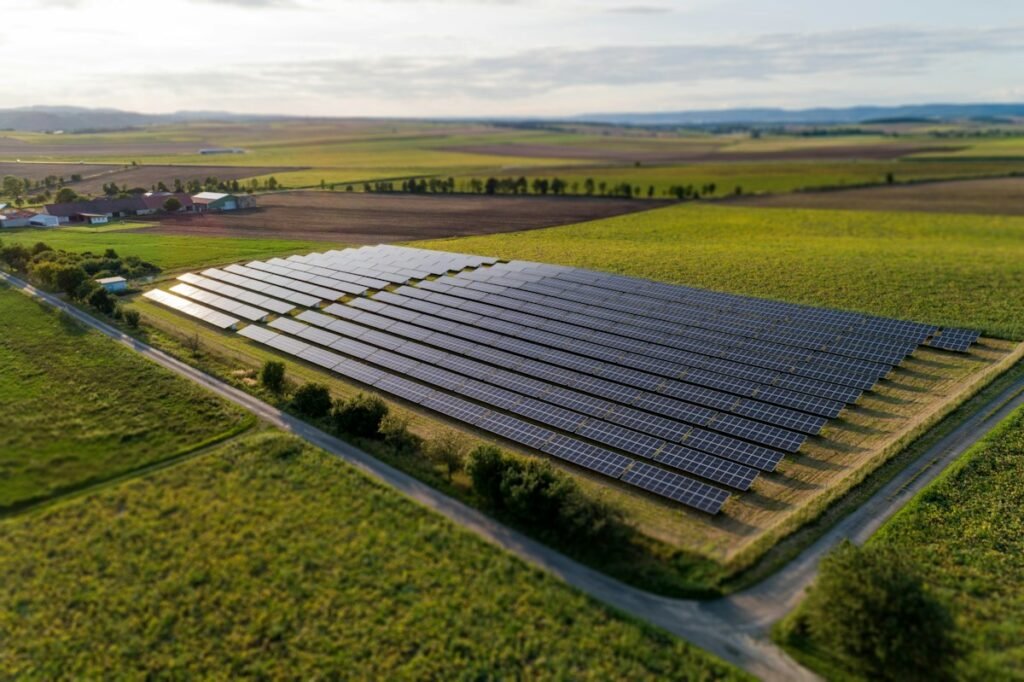
Featured stock photo: Raphael Cruz / Unsplash. The image is illustrative and does not identify a Pakistani installation or a recommended equipment model.