Safety and schedule: This checklist is an example routine, not a universal service interval. Follow the equipment manuals and site conditions. Homeowners should observe safely; tightening connections, opening equipment, testing earthing and working on wiring belong to qualified technicians. Use the manufacturer shutdown procedure; daylight can leave PV circuits energized.
A solar system can provide reliable electricity for many years, but installing solar panels is only the beginning. Regular maintenance helps keep the system efficient, safe, and capable of producing as much electricity as possible.
For homeowners in Pakistan, solar maintenance is particularly important because systems are exposed to dust, heat, humidity, monsoon rain, bird droppings, pollution, and seasonal weather changes. These conditions can gradually reduce solar panel performance or cause problems with electrical components.
The good news is that most residential solar systems do not require complicated maintenance. A simple inspection schedule can help identify problems before they become expensive repairs.
This solar system maintenance checklist for homes in Pakistan explains what homeowners should check monthly, quarterly, and annually, including solar panels, inverters, batteries, wiring, mounting structures, protection equipment, and monitoring systems.
Why Solar System Maintenance Matters
Solar panels have no moving parts, so they generally require less maintenance than conventional power-generation equipment. However, the complete solar installation contains several components that need periodic inspection.
A properly maintained system can help:
- Maintain better solar energy production
- Identify panel problems early
- Reduce unexpected repair costs
- Protect the inverter and electrical equipment
- Improve battery performance
- Reduce electrical safety risks
- Extend the useful life of the system
- Detect loose connections and damaged cables
- Keep monitoring equipment working correctly
Even a small issue can become more serious if it remains unnoticed for several months.
For example, a damaged DC cable may initially cause a small production loss. If the problem is ignored, it can potentially damage other equipment or create a safety hazard.
Solar System Maintenance Checklist at a Glance
Homeowners can use the following checklist as a simple maintenance schedule.
| Component | Recommended Check | Frequency |
|---|---|---|
| Solar panels | Dust, dirt, bird droppings and physical damage | Monthly |
| Panel cleaning | Clean surface when required | When needed; inspect monthly |
| Inverter | Error codes, temperature and ventilation | Monthly |
| Solar monitoring | Production and system alerts | Weekly/Monthly |
| DC cables | Visible damage or loose connections | Quarterly |
| AC wiring | Visible damage and connections | Quarterly |
| Mounting structure | Rust, looseness and corrosion | Quarterly |
| Earthing | Inspection and testing | Annually |
| Surge protection | Check protection devices | Annually/after major events |
| Battery | Terminals, temperature and condition | Monthly |
| Battery water level | For applicable lead-acid batteries | As recommended by manufacturer |
| Electrical connections | Professional inspection | Annually |
| Energy production | Compare expected vs actual output | Monthly |
| Professional inspection | Complete system inspection | Annually |
The exact schedule can vary depending on the equipment, environment, battery type, installation quality, and manufacturer’s instructions.
1. Dust Check
Dust is one of the most common causes of reduced solar panel performance in Pakistan.
Dry weather can deposit dust and sand on the panel surface. Urban pollution, agricultural dust, construction activity, and nearby roads can make the problem worse.
A layer of dirt blocks part of the sunlight reaching the solar cells.
What to check
Look for:
- Dust buildup
- Bird droppings
- Mud
- Leaves
- Tree sap
- Water stains
- Construction debris
- Other material covering the panel
If you can visibly see significant dirt covering the panels, cleaning may be necessary.
2. Proper Cleaning
Solar panels do not necessarily need to be cleaned every week. The appropriate frequency depends on the location and amount of dust.
Homes in particularly dusty areas may require more frequent cleaning than homes in cleaner residential areas.
Basic solar panel cleaning checklist
Before cleaning:
- Check the manufacturer’s cleaning instructions.
- Avoid cleaning during extremely hot conditions.
- Use clean water where possible.
- Use a soft sponge or appropriate soft brush.
- Avoid abrasive materials.
- Do not use harsh chemicals unless approved by the manufacturer.
- Avoid putting unnecessary pressure on the panels.
Cleaning is usually best done when the panels are cooler, such as early morning or later in the afternoon.
Important safety point
Do not climb onto a roof simply to clean solar panels if safe access is not available.
A professional should handle roof work where there is a fall risk.
3. Damage Inspection
During a visual inspection, check whether any panel has:
- Cracked glass
- Broken frames
- Visible chips
- Discoloration
- Delamination
- Burn marks
- Damaged junction boxes
- Loose connectors
Even if the system continues producing electricity, visible panel damage should not be ignored.
A cracked panel can allow moisture to reach areas that should remain protected.
If you notice significant physical damage, contact a qualified solar technician rather than attempting to repair the panel yourself.
4. Shading Issues
Solar panels need unobstructed access to sunlight.
Trees may grow after installation, nearby construction may change the surroundings, or new structures may create shadows that did not exist when the system was installed.
Check for:
- Growing trees
- New buildings
- Water tanks
- Satellite dishes
- Poles
- New rooftop structures
- Seasonal shading
A shadow affecting part of a solar array can reduce energy production.
If your electricity generation appears lower than expected, shading should be one of the things you investigate.
5. Mounting Structure
Solar panels depend on a strong mounting structure to remain secure.
Pakistan experiences strong sunlight, wind, rain, and seasonal weather changes, so mounting hardware should be inspected periodically.
Look for:
- Loose bolts
- Rust
- Corrosion
- Bent metal
- Damaged brackets
- Movement in the structure
- Water accumulation around mounting points
- Damage caused by strong winds
Do not tighten or modify rooftop mounting hardware yourself if you are not familiar with the structure.
A professional can inspect the system and safely make necessary adjustments.
6. Inverter Monitoring
The inverter is one of the most important components of a solar system.
It converts the DC electricity produced by solar panels into AC electricity that household appliances can use.
A problem with the inverter can affect the entire system.
Check the inverter for:
- Error messages
- Warning lights
- Unusual sounds
- Excessive heat
- Unexpected shutdowns
- Poor ventilation
- Fault codes
- Communication problems
Many modern inverters display system information on a screen or mobile application.
Record recurring error codes rather than simply resetting the inverter repeatedly.
7. Inverter Ventilation
Solar inverters generate heat during operation.
The inverter should have adequate airflow according to the manufacturer’s installation requirements.
Avoid placing objects around ventilation openings.
Do not cover the inverter with cloth, cardboard, plastic, or other materials.
Check that:
- Air vents are not blocked
- Dust is not heavily accumulated around the unit
- The inverter is not exposed to unnecessary water
- The surrounding area remains reasonably cool and ventilated
High temperatures can affect inverter performance and component life.
8. Energy Production
One of the easiest maintenance tasks is monitoring your system’s electricity production.
You do not need to inspect the rooftop every day.
Instead, check your inverter display or monitoring application.
Track:
- Daily generation
- Monthly generation
- Inverter status
- System alerts
- Battery charging
- Battery discharge
- Grid import
- Grid export where applicable
A sudden drop in production can indicate a problem.
For example, if your system normally generates a certain amount under similar weather conditions but suddenly produces substantially less, investigate the reason.
Weather should always be considered before assuming there is an equipment fault.
9. Weather Comparison
Solar generation naturally changes throughout the year.
Production can decrease because of:
- Cloudy weather
- Rain
- Fog
- Dust
- Winter sunlight conditions
- Temporary shading
Therefore, do not assume every reduction in generation indicates a fault.
Instead, compare production with:
- Previous days
- Previous weeks
- Similar weather conditions
- Seasonal performance
The goal is to identify unusual changes rather than normal seasonal variation.
10. DC Cables
DC cables connect the solar panels to the inverter.
These cables are important for both system performance and electrical safety.
During a professional inspection, check for:
- Cracked insulation
- Exposed wires
- Burn marks
- Loose connectors
- Damaged cable clips
- Cable rubbing against metal
- Poor cable routing
- Signs of overheating
- Animal or rodent damage
Never touch exposed or damaged solar DC wiring yourself.
Solar panels can generate electricity whenever sufficient sunlight is available, even if the home’s electricity supply is switched off.
11. AC Wiring
The AC side connects the inverter to the home’s electrical system.
A professional should periodically inspect:
- AC cables
- Distribution board connections
- Breakers
- Isolators
- Terminals
- Signs of overheating
- Loose connections
- Burn marks
If you smell burning plastic, notice unusual heat, hear buzzing, or see discoloration around an electrical connection, switch off the system according to the manufacturer’s safety procedure and contact a qualified electrician or solar technician.
12. Grounding System
Proper earthing is an important part of solar system safety.
A solar installation should have appropriate grounding/earthing arrangements based on the equipment and applicable electrical requirements.
A professional inspection should verify:
- Earthing connections
- Grounding conductors
- Connection points
- Corrosion
- Physical damage
- Continuity and resistance where applicable
Do not assume the earthing system is working correctly simply because the solar system is producing electricity.
Generation and electrical safety are separate issues.
13. Surge Protection
Solar systems can be exposed to electrical surges caused by grid events and nearby lightning activity.
Surge protection devices can help protect electrical equipment from transient voltage events.
During maintenance, a qualified technician should check the condition and indicators of installed surge protection devices.
This is particularly important after:
- Major electrical events
- Severe storms
- Lightning activity
- Equipment failures
- Significant grid disturbances
14. Battery Maintenance
Battery maintenance depends heavily on the battery technology installed.
Common residential battery technologies include:
- Lithium-ion batteries
- Lithium iron phosphate (LiFePO4)
- Lead-acid batteries
- Tubular batteries
Different battery types have different maintenance requirements.
For lithium batteries
Check:
- Battery temperature
- Error messages
- State of charge
- Communication with inverter
- Physical damage
- Ventilation
- Battery management system alerts
Do not open or modify a lithium battery yourself.
For lead-acid batteries
Depending on the battery design, maintenance may include:
- Checking terminals
- Checking electrolyte levels where applicable
- Cleaning corrosion
- Inspecting cables
- Checking charging behavior
- Checking battery temperature
Always follow the battery manufacturer’s maintenance instructions.
15. Terminal Inspection
Loose or corroded battery connections can create performance and safety problems.
During an appropriate inspection, check for:
- Corrosion
- Loose terminals
- Damaged cables
- Heat marks
- Swelling
- Leakage
- Unusual odors
If a battery is swollen, leaking, overheating, or producing an unusual smell, stop using it and contact a qualified professional.
16. Backup Performance
For hybrid or backup solar systems, occasionally verify whether the battery is behaving as expected.
Monitor:
- Battery charging time
- Battery discharge time
- Backup duration
- State-of-charge readings
- Sudden battery shutdowns
- Battery-related warnings
If backup duration becomes noticeably shorter without a corresponding increase in household consumption, the battery or charging system may require inspection.
17. Consumption Tracking
Solar system maintenance is not only about the equipment.
Your household electricity usage can change over time.
For example, adding:
- Air conditioners
- Water pumps
- Electric heaters
- Refrigerators
- Washing machines
- Electric cooking appliances
- Additional computers
can increase electricity consumption.
A system that previously covered most household demand may appear to be underperforming simply because the home’s electricity usage has increased.
Compare both solar generation and household consumption before diagnosing a system problem.
18. Roof Waterproofing
Solar mounting systems are often attached to rooftops.
After installation, inspect areas around mounting points for signs of:
- Water leakage
- Cracks
- Damaged sealant
- Standing water
- Loose waterproofing
- Moisture penetration
This is particularly important after the monsoon season.
Do not make random holes or apply unsuitable sealants to the roof. Repairs should be performed using appropriate materials and methods.
19. Animal Prevention
Birds may build nests beneath solar panels, while rodents can sometimes damage electrical cables.
Look for:
- Bird nests
- Droppings
- Feathers
- Rodent activity
- Damaged cable insulation
- Debris beneath panels
Where necessary, a professional can install suitable bird-control or cable-protection measures without damaging the solar system.
20. Monsoon Check
Pakistan’s monsoon season can bring heavy rain, wind, humidity, and storms.
After severe weather, inspect the system for:
- Loose panels
- Damaged mounting structures
- Water leakage
- Cable damage
- Inverter alerts
- Battery problems
- New corrosion
- Debris
- Changes in energy production
A professional inspection may be appropriate after unusually severe weather.
21. Dust Storms
Dust storms can deposit significant amounts of dust on solar panels.
After a major dust event:
- Visually inspect the panels.
- Check system production.
- Clean the panels if necessary.
- Inspect exposed equipment for debris.
- Check for any inverter warnings.
Do not assume rainfall will completely clean heavily soiled panels.
22. Record Keeping
Maintaining a simple record can make troubleshooting much easier.
Record:
- Installation date
- Panel model
- Inverter model
- Battery model
- System capacity
- Installation company
- Warranty details
- Cleaning dates
- Maintenance visits
- Error codes
- Repairs
- Major component replacements
- Monthly energy production
A maintenance record is especially useful when making a warranty claim or changing service providers.
Monthly Solar System Maintenance Checklist
Homeowners can use this quick monthly checklist:
Solar Panels
- ☐ Check visible dust and dirt
- ☐ Look for bird droppings
- ☐ Check for visible physical damage
- ☐ Look for new shading
Inverter
- ☐ Check operating status
- ☐ Check error messages
- ☐ Check ventilation
- ☐ Review production data
Battery
- ☐ Check battery status
- ☐ Check for warnings
- ☐ Check temperature information
- ☐ Review backup performance
Electrical System
- ☐ Look for visible damage
- ☐ Check for unusual smells
- ☐ Look for overheating signs
Quarterly Solar Maintenance Checklist
Every three months, consider a more detailed inspection.
- ☐ Inspect panel condition
- ☐ Inspect mounting structure
- ☐ Check for rust and corrosion
- ☐ Check cable routing
- ☐ Inspect visible connectors
- ☐ Check inverter ventilation
- ☐ Review energy production trends
- ☐ Inspect roof around mounting points
- ☐ Check for bird nests or animal activity
- ☐ Review battery performance
Electrical work should be performed by qualified professionals.
Annual Solar System Maintenance Checklist
At least once a year, arrange a professional inspection where appropriate.
The annual inspection can include:
- Solar panel inspection
- Inverter inspection
- Battery inspection
- DC wiring inspection
- AC wiring inspection
- Earthing inspection
- Surge protection inspection
- Mounting structure inspection
- Electrical connection inspection
- System performance review
- Safety inspection
- Warranty review
An annual professional inspection is particularly valuable for larger residential systems and systems with battery storage.
When Should You Call a Solar Technician?
Not every issue should be handled by the homeowner.
Contact a qualified solar professional if you notice:
- Repeated inverter errors
- Sudden unexplained production drops
- Burning smells
- Exposed electrical wires
- Damaged connectors
- Cracked panels
- Loose panels
- Battery swelling
- Battery leakage
- Overheating
- Frequent system shutdowns
- Electrical shocks
- Water entering electrical equipment
- Serious mounting structure damage
Never attempt to repair live electrical equipment without the required training and equipment.
Common Solar Maintenance Mistakes in Pakistan
Cleaning Panels With Abrasive Materials
Hard brushes or abrasive materials can damage the panel surface.
Use appropriate cleaning equipment recommended by the manufacturer.
Ignoring Inverter Warnings
An inverter warning should not automatically be dismissed.
Record the error and investigate it according to the manufacturer’s instructions.
Washing Hot Panels With Cold Water
Large temperature differences can potentially stress materials. Cleaning should preferably be done when panels are cooler.
Walking on Solar Panels
Never walk directly on solar panels.
Pressure can damage the glass, cells, or internal connections.
Ignoring Battery Problems
Battery swelling, leakage, overheating, or unusual smells should be treated as serious warning signs.
Using Unqualified Electricians
Solar systems contain DC and AC electrical equipment. Electrical maintenance should be handled by appropriately qualified professionals.
Never Checking Production
A system can develop a problem while the homeowner remains unaware.
Regular monitoring helps identify unusual performance changes earlier.
How Often Should Solar Panels Be Cleaned in Pakistan?
There is no single cleaning schedule that works for every Pakistani home.
A reasonable starting point is to inspect panels monthly and clean them when significant dirt has accumulated.
Homes in dusty environments may need cleaning more frequently, while homes that receive regular rain and have low dust exposure may require less frequent cleaning.
The correct approach is condition-based cleaning rather than blindly following a fixed schedule.
Does Rain Clean Solar Panels?
Rain can remove some dust and loose particles, but it does not always remove:
- Bird droppings
- Oily deposits
- Mud
- Sticky dirt
- Heavy dust buildup
After rain, inspect the panels rather than assuming they are completely clean.
How Much Does Solar System Maintenance Cost in Pakistan?
Solar maintenance costs vary depending on:
- System size
- Location
- Number of panels
- Battery type
- Inverter type
- Required cleaning
- Electrical repairs
- Inspection requirements
- Roof accessibility
- Service provider
Routine visual monitoring may cost nothing for the homeowner, while professional inspection, cleaning, electrical testing, or repairs may involve service charges.
Instead of focusing only on the cheapest maintenance service, homeowners should consider technician qualifications, safety practices, warranty implications, and the quality of the work.
Solar Maintenance Checklist for Different System Types
On-Grid Solar System
Focus on:
- Panels
- Inverter
- DC wiring
- AC connections
- Earthing
- Surge protection
- Energy production
- Grid connection equipment
Hybrid Solar System
In addition to the above, monitor:
- Battery
- Charging behavior
- Backup performance
- Battery state of charge
- Battery temperature
- Backup load
Off-Grid Solar System
Maintenance is particularly important because the system may depend entirely on solar generation and battery storage.
Pay close attention to:
- Battery health
- Solar production
- Charging
- Energy consumption
- Backup capacity
- Inverter operation
Simple Solar Maintenance Schedule for Pakistani Homes
A practical routine can look like this:
Every Week
- Check the monitoring app if available.
- Look for major production abnormalities.
- Check for inverter alerts.
Every Month
- Inspect panels visually.
- Check for dust and bird droppings.
- Review energy production.
- Check inverter status.
- Check battery status if installed.
Every 1–3 Months
- Clean panels when required.
- Inspect the mounting structure.
- Check for new shading.
- Look for animal or bird activity.
Every 6 Months
- Review system performance.
- Inspect visible cables and equipment.
- Check roof condition around mounting areas.
Every Year
- Arrange professional electrical and system inspection.
- Check earthing.
- Check protection devices.
- Inspect connections.
- Review warranties.
- Review long-term energy production.
After Severe Weather
- Inspect the system.
- Check for physical damage.
- Check inverter warnings.
- Review energy production.
- Arrange professional inspection if anything appears abnormal.
Printable Solar System Maintenance Checklist
Use this simplified checklist to keep your solar system maintenance organized:
| Task | Monthly | Quarterly | Annually |
|---|---|---|---|
| Check panel cleanliness | ✓ | ✓ | ✓ |
| Inspect panel condition | ✓ | ✓ | ✓ |
| Check energy production | ✓ | ✓ | ✓ |
| Check inverter alerts | ✓ | ✓ | ✓ |
| Check battery status | ✓ | ✓ | ✓ |
| Inspect mounting structure | ✓ | ✓ | |
| Check visible wiring | ✓ | ✓ | |
| Check roof mounting areas | ✓ | ✓ | |
| Inspect earthing | ✓ | ||
| Inspect surge protection | ✓ | ||
| Professional electrical inspection | ✓ | ||
| Review warranty documentation | ✓ |
Frequently Asked Questions
How often should I clean solar panels in Pakistan?
Inspect your panels monthly and clean them whenever significant dust, bird droppings, mud, or other dirt accumulates. Dusty locations may require more frequent cleaning.
Do solar panels require regular maintenance?
Yes. Solar panels require relatively little maintenance, but the complete system should still be monitored and periodically inspected. Inverters, batteries, wiring, mounting structures, and protection equipment also need attention.
Can I clean solar panels myself?
If the panels are safely accessible from the ground or a secure location, basic cleaning may be possible. However, do not climb onto an unsafe roof or work around electrical equipment without proper training.
How do I know if my solar system needs maintenance?
Common warning signs include a sudden drop in electricity production, repeated inverter errors, damaged cables, unusual sounds, overheating, battery problems, or visible physical damage.
Does dust reduce solar panel efficiency?
Yes. Dust and other deposits can reduce the amount of sunlight reaching the solar cells and may reduce energy production.
How often should a solar inverter be serviced?
The inverter should be monitored regularly and professionally inspected according to the manufacturer’s recommendations and the system’s operating environment.
How often should solar batteries be checked?
Battery condition should be monitored regularly. The exact maintenance requirements depend on whether the battery is lithium-based, lead-acid, or another technology.
Should solar panels be cleaned after rain?
Not necessarily. Rain may remove loose dust, but it does not always remove bird droppings, mud, or stubborn deposits. Inspect the panels and clean them when needed.
What should I do if my inverter shows an error?
Record the error code and check the manufacturer’s documentation. If the warning persists or involves an electrical fault, contact a qualified solar technician.
Is annual solar maintenance necessary?
An annual professional inspection is a sensible practice for many residential systems because it allows electrical connections, earthing, protection equipment, mounting structures, and other components to be checked.
Final Solar System Maintenance Checklist
A solar system can operate for many years with relatively little maintenance, but low maintenance does not mean no maintenance.
For Pakistani homeowners, the most important habits are simple:
- Inspect panels regularly.
- Clean panels when they become significantly dirty.
- Monitor solar production.
- Check inverter warnings.
- Keep inverter ventilation clear.
- Inspect batteries according to their technology.
- Watch for damaged cables and connectors.
- Check mounting structures for corrosion or looseness.
- Inspect roof areas around mounting points.
- Maintain proper earthing and electrical protection.
- Arrange professional inspections periodically.
- Keep records of maintenance and repairs.
- Pay attention to changes in system performance.
The goal is not to constantly work on the solar system. The goal is to identify small problems before they become expensive or dangerous problems.
A consistent maintenance routine helps ensure your solar investment remains safe, reliable, and productive for many years.
Related solar guides and reference documents
Continue with our solar inverter buying guide, solar system sizing guide, safe panel cleaning guide and battery backup calculation guide.
Reference: Canadian Solar installation and maintenance documents. Use the exact model and regional documents for your equipment. Grid-connected designs must meet the current requirements of the relevant electricity distribution company.
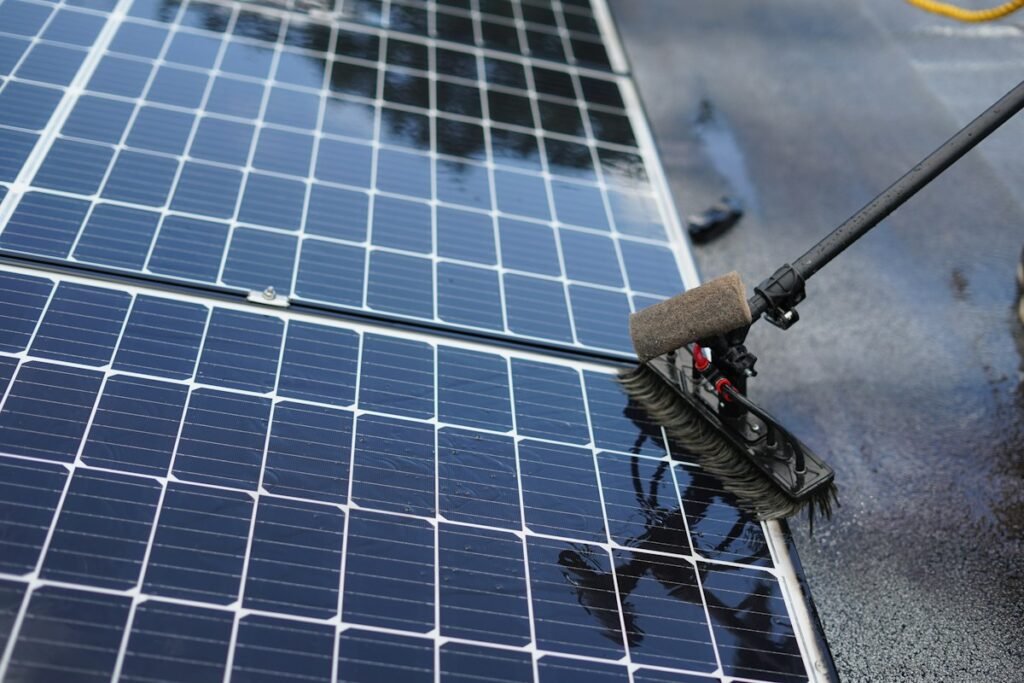
Featured stock photo: Florida Solar Fix / Unsplash. The image is illustrative and does not identify a Pakistani installation or a recommended equipment model.