
What Really Happens to Solar Panels in a Pakistani Winter
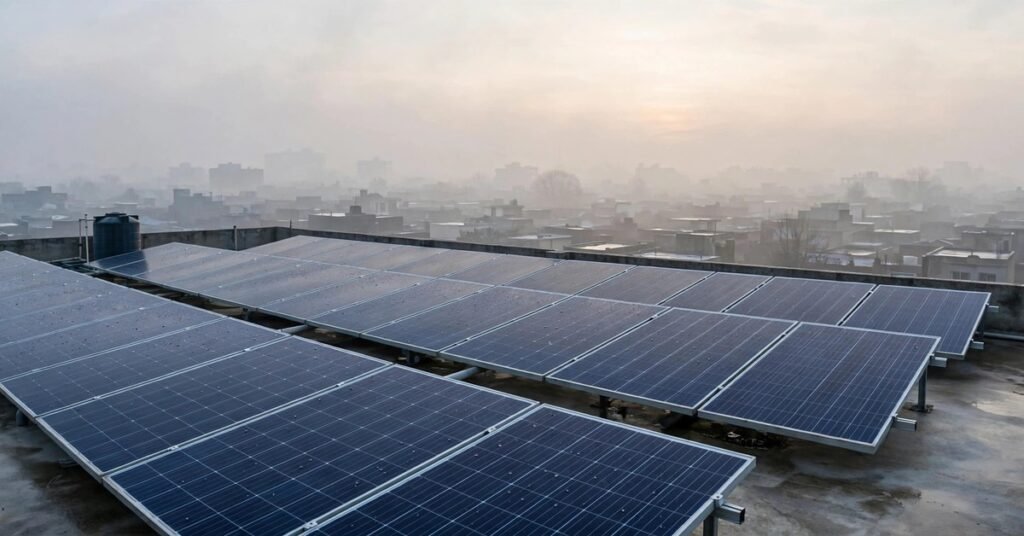
Every December, solar system owners across Punjab and upper Sindh notice the same thing: their daily units drop sharply, and many assume something has broken. In most cases, nothing is wrong. Winter simply hits solar generation on three fronts at once — shorter days, a lower sun, and the dense fog-and-smog blanket that settles over cities like Lahore, Multan, Faisalabad and Peshawar. Monitoring data from installers in Pakistan shows that home systems typically generate roughly 40–60% less energy in December and January than in July and August. Over the full year, about 65% of a system’s annual output falls in the March-to-September half, with only about 35% coming in the other six months.
The dip is steepest in the big cities of the plains. A 5 kW system that comfortably delivers 20–24 units a day in June may produce only 8–12 units on a foggy December day. That is normal — but understanding exactly why it happens helps you separate a healthy winter system from one that genuinely needs attention.
Why Winter Output Drops: The Three Causes
1. Shorter days and a lower sun
In late December, Lahore gets barely 10 hours of daylight, and the sun’s peak is much lower in the sky than in summer. Lower sun angle means sunlight strikes the panels obliquely rather than head-on, so the same panel catches noticeably less energy per hour even on a clear winter day. There is a silver lining: cool weather genuinely helps panels. Cell efficiency improves as temperature falls — the same temperature effect explained in our guide to STC vs NMOT panel ratings — so on a bright, cold, clear day a panel can briefly perform better per ray of sun than it does in May’s heat. The problem is that winter gives you far fewer of those rays.
2. Fog and smog cut the light itself
This is the factor most buyers underestimate. Dense winter smog over the plains physically blocks sunlight before it ever reaches your roof. Research studies cited by Lahore-based solar firms put the irradiance loss in heavily polluted air at up to 30% — meaning the sky itself delivers a third less energy to your panels, before any dust or equipment losses are counted. Unlike the brief clouds of summer, winter smog can persist for days or weeks, and unlike rain, fog deposits almost nothing to wash panels with. It only takes light away.
3. Soot and dust settle on the glass
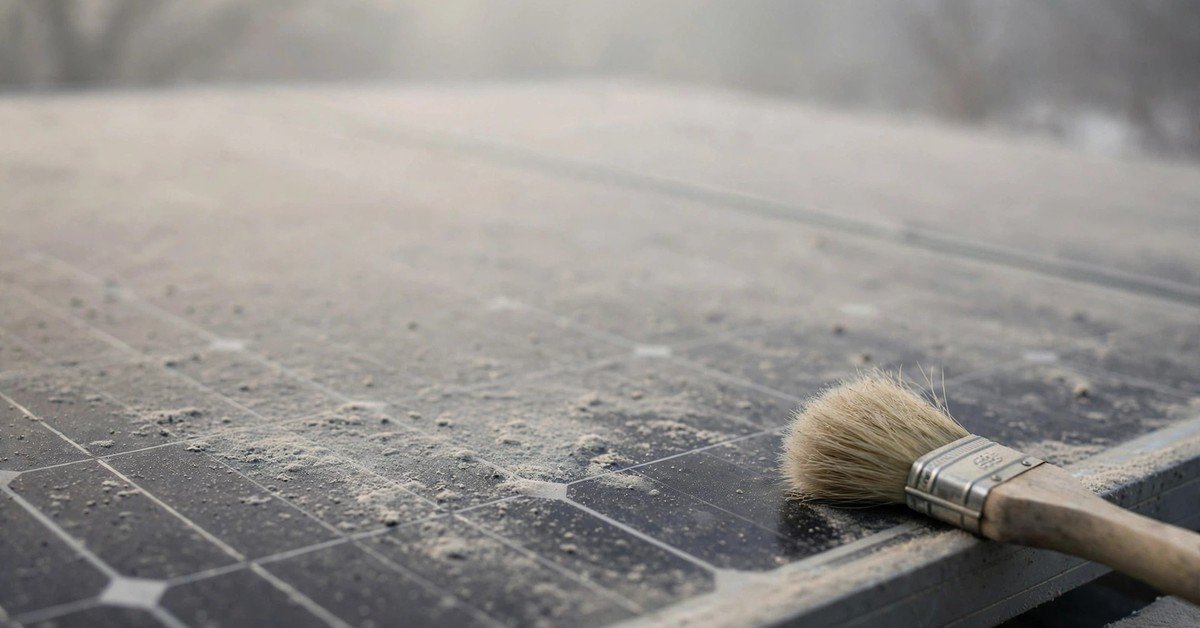
Winter air in Pakistan’s cities is loaded with soot, construction dust and agricultural smoke. It settles on panel glass as a greasy film that ordinary wind will not move. Studies of dust deposition in dusty, polluted cities show soiling losses of up to around 20% when panels are left dirty — and smog-season soot is stickier than summer dust. A panel that looks merely “dull” can already be underperforming by a tenth or more.
Realistic Winter Generation Figures for Pakistan
The figures below are indicative ranges based on installer monitoring data and published seasonal output studies — not guarantees, since roof angle, shading and local pollution vary:
- A clear, cold winter day: roughly 60–70% of a summer day’s yield. If your system averages 20 units in June, expect 12–14 units on a bright December day.
- A hazy but sunny winter day: roughly 40–55% of a summer day’s yield — 8–11 units for the same system.
- Dense fog or smog, sun invisible: roughly 15–30% of a summer day’s yield — 3–6 units. Output never drops to absolute zero in daylight, but it can feel close to it.
Watch your inverter or monitoring app over a week, not a single day. One foggy day is weather; a week of low output with clear skies is a sign of dirty panels or a real fault.
Sizing your system for winter matters
If you depend on solar all year round, size for the winter minimum — not the summer peak. See how to calculate the right system size for your load.
How to Protect Your Yield Through Winter
Clean more often than in summer
During the smog season, cleaning once a month — and twice a month in badly affected areas like Lahore and Peshawar — is a sensible rule. Local service firms recommend a 4–6 week cleaning cycle for Lahore’s smog, and more often if your roof sits near a road or construction site. Clean early in the morning or late evening when the panels are cool, use plain water and a soft brush or mop, and never abrasive pads or high-pressure jets. Our full solar panel cleaning guide for Pakistan covers safe technique in detail. Fog and smog also leave a film of grime on the glass, so follow a practical maintenance and cleaning routine that protects your panels and your investment through the winter months.
Check the tilt and orientation
Panels installed at the common near-flat angle used on Pakistani roofs suffer twice in winter: they catch the low sun poorly and they collect more soot. If your structure allows it, a slightly steeper tilt (closer to your city’s latitude, roughly 25–35°) helps winter capture and lets soot wash off more easily. If you are still planning the installation, read our guide to panel orientation for Pakistani roofs before the structure is welded.
Trim winter shadows
The low winter sun throws longer shadows. Water tanks, parapet walls and neighbouring buildings that never shadowed panels in July can shade them for hours in December. Walk your roof in late December and look for new shadow lines — moving a structure is cheaper than losing a winter’s worth of generation.
Use net metering credits wisely
If your system is net-metered, winter is when your accumulated export credits pay for themselves: the surplus units you exported in summer offset the extra grid power you draw in December and January. If you have not yet applied, our net metering application guide walks through the process step by step.
Dirty panels after a smog week?
A proper winter clean can recover 10–20% of lost output. See the safe cleaning method, water tips and what to avoid.
When Low Output Actually Means a Problem
Winter low generation is normal, but do not use it as an excuse to ignore real faults. Investigate if: one string of panels produces near zero while others work (possible diode or wiring fault), the inverter shows an error code, output stays low on a genuinely clear day after cleaning, or a single panel looks discoloured or hot. A quick monthly glance at your generation graph through the season — comparing with our monsoon output guide for the other difficult season — makes abnormal drops easy to spot.
The Bottom Line
Expect winter generation to fall to roughly a third to a half of summer output in Pakistan’s fog and smog belt, driven by shorter days, blocked sunlight and soiled glass. None of that is a fault — it is physics and pollution. What separates well-run systems from disappointing ones is the response: clean the panels on a smog-season schedule, check for new winter shadows, and if you are buying, size the system for December rather than June. Do that, and winter stays a predictable slow season instead of an unpleasant surprise.