
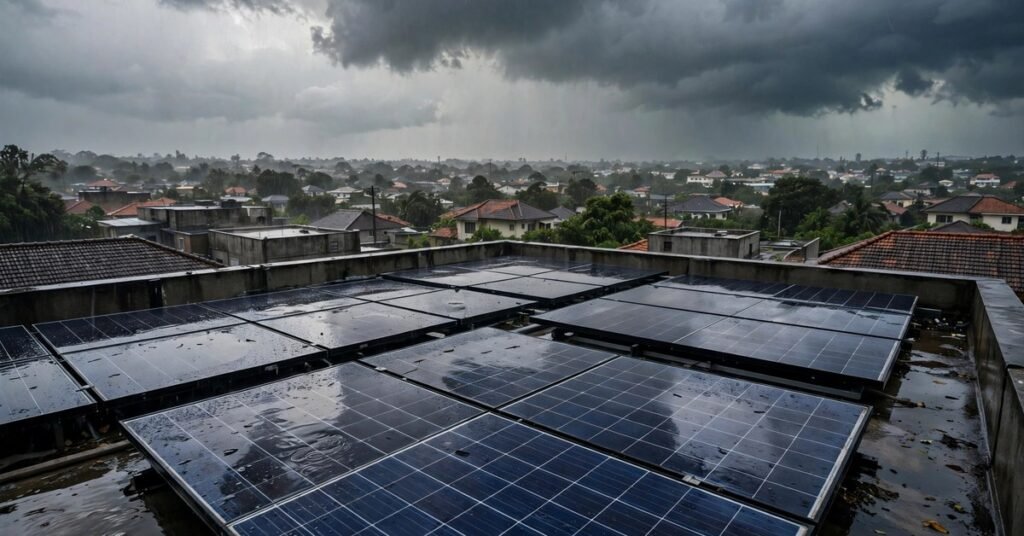
Every year, as the monsoon clouds gather over Lahore, Karachi and Islamabad, solar owners ask the same question: will my panels still work when it rains? The short answer is yes — panels do not switch off in the rain — but the season does change how much they produce, and it brings a handful of risks that a little preparation handles easily. Here is what to realistically expect from your system during Pakistan’s rainy months.
Do solar panels work when it rains?
Yes. Solar panels generate electricity from light, not heat, so they keep producing on rainy and overcast days — just less of it. Rain itself does not damage a properly installed panel; panels are built to withstand rain, hail and wind within their rated limits. What reduces output is the cloud cover between the sun and your roof, not the water falling on the glass.
This is the same physics behind how heat affects solar panel output: panels actually run slightly more efficiently in cooler rainy weather — there is simply less light reaching them. A cool, bright, partly cloudy day can produce surprisingly well; a dark, stormy day will not.
How much does output actually drop?
There is no single number because cloud cover varies by the hour, but as a rough rule of thumb reported by installers in Pakistan:
- Light cloud / hazy sun: output dips modestly, often 10–30% below a clear day.
- Heavy overcast: output can fall to a small fraction of clear-day generation for those hours.
- Full monsoon downpour: expect minimal generation while the heaviest rain passes, recovering quickly as clouds thin.
What matters is the monthly total, not any single gloomy afternoon. Monsoon months still contain plenty of bright intervals, and a well-sized system rides through them. If you want to see exactly how your system behaves, monitoring your generation and consumption through the season is the best way to learn your own roof’s pattern.
The upside: rain washes your panels
Here is the part most owners miss: dust is a bigger enemy of generation in Pakistan than rain. A layer of dust can quietly shave a noticeable percentage off output for weeks. Monsoon rain does the cleaning for you — regular showers keep panels largely dust-free through the season, which is one reason many owners see their per-sunshine-hour efficiency actually improve in these months.
That said, rain does not remove everything. Bird droppings, sticky pollution film near busy roads and residue at panel edges can survive light rain. Give the array a visual check after the season’s first heavy storms, and read our solar panel cleaning guide for Pakistan before you climb up with a bucket — there is a right way and a wrong way to wash panels.
Washed your panels the right way?
Wrong cleaning methods scratch glass and void warranties. See the safe method, timing and tools.
Read the cleaning guide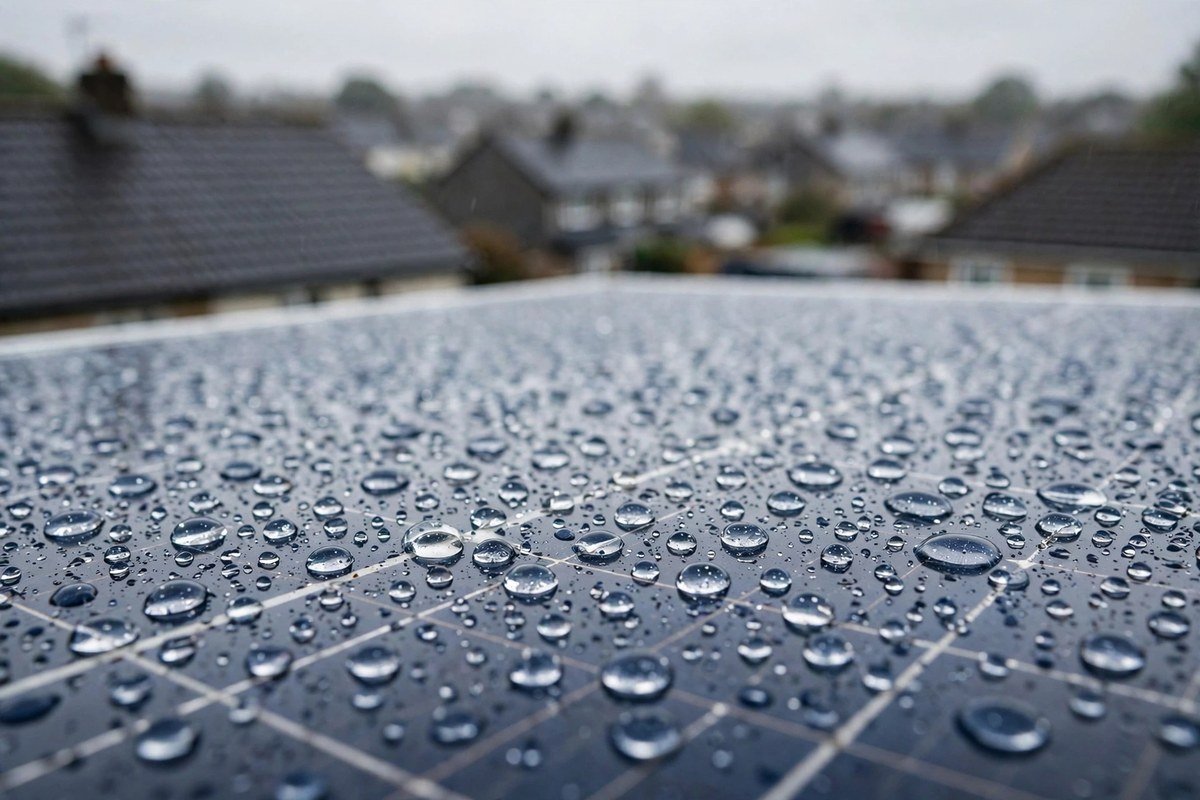
The real monsoon risks (and how to prevent them)
Rain on the glass is harmless. The genuine risks are structural and electrical — and all of them trace back to installation quality:
1. Water ingress at roof penetrations
Every bolt and bracket that passes through your roof is a potential leak path. Quality installations seal these properly; cheap ones rely on hope. If you notice damp patches on the ceiling below the array after heavy rain, call your installer back — this is a workmanship issue, not a panel issue.
2. Loose mounting in windstorms
Monsoon gusts test every clamp and rail. Mounting structures should be designed for local wind loads with proper ballast or anchoring. After the season’s first big storm, do a ground-level visual check: nothing should have shifted, and there should be no new rattling sounds on windy days.
3. Lightning and surges
Pakistan’s monsoon brings intense electrical storms. A proper earthing system and surge protection devices (SPDs) on both the DC and AC sides are what stand between a nearby strike and a fried inverter. If your installation skipped these to cut costs, get them retrofitted before the season peaks.
4. Inverter and battery placement
Inverters and batteries must live where rainwater cannot reach them — under a proper shelter, never in a spot that waterlogs. Check that cable conduits drain away from equipment rather than into it.
Monsoon maintenance checklist
Run through this once before the season and once mid-season, alongside your normal solar system maintenance checklist:
- Visually inspect mounting rails, clamps and bolts for looseness or rust.
- Check roof penetration seals and look for damp spots on ceilings below.
- Confirm the inverter and battery area stays dry even in driving rain.
- Clear roof drainage so water does not pool around the mounting structure.
- Trim overhanging branches — storms bring them down, and shade hurts output year-round (see our guide to rooftop shading).
- Verify surge protection and earthing are in place and intact.
- Watch your monitoring app for sudden generation drops that do not match the weather — that signals a fault, not a cloud.
Planning your system for cloudy months
If you are buying a system ahead of the monsoon, three design choices soften the cloudy-season dip:
- Slight oversizing: a system sized with a small margin above your exact need still covers your load on mediocre days.
- Net metering credits: surplus units banked during the long sunny months offset the leaner monsoon weeks on your bill.
- Battery backup: storms cause grid outages too — the right solar battery setup keeps essentials running when both the sun and the grid disappear.
Monsoon is not the enemy of solar in Pakistan — poor installation is. A well-installed system shrugs off the rain, enjoys the free cleaning, and keeps your bills down all year.
Sizing a system for year-round output?
Use the solar calculator to estimate the right system size for your home’s load and roof.
Open the solar calculatorMonsoon storms are not the only weather threat to plan for — hailstones can crack panel glass in minutes, which is why we also recommend reading up on how to protect solar panels from hail.
One Response