
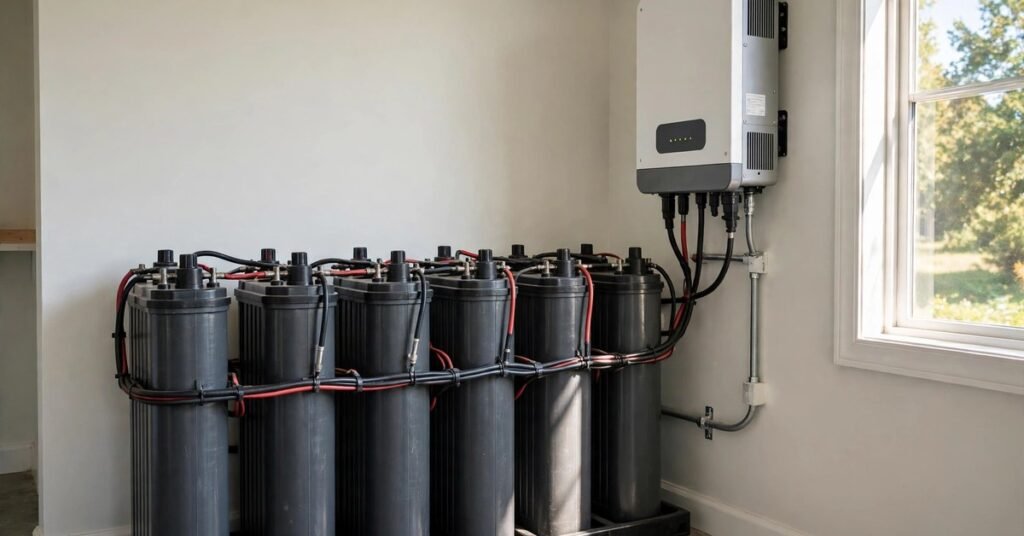
Walk into most Pakistani homes with a solar system and you will find a row of tall tubular batteries sitting in a corner — the hardest-working and most neglected part of the whole setup. They are the reason your fans keep spinning during load shedding, but they are also the one component that asks for regular attention. Skip it, and a battery that should last five to seven years can die in two. Maintain it, and it will pay you back with longer backup and fewer replacements.
This guide explains exactly how to maintain tubular batteries for solar in Pakistan — what to check, how often, and the small mistakes that quietly destroy them.
Why Tubular Batteries Need Maintenance
Unlike sealed lithium batteries, tubular batteries are flooded lead-acid batteries: their positive plates sit inside tubes of active material, surrounded by a liquid electrolyte of sulphuric acid and water. Every time the battery charges, some of that water evaporates or breaks down into gases. If the level drops too low, the plates are exposed to air, sulphation sets in, and capacity falls permanently. You cannot recharge your way out of that damage — it is prevented, not fixed.
Heat makes everything worse. In Lahore, Multan or Karachi summers, where battery rooms can push past 40°C, water loss accelerates and plate corrosion speeds up. That is why a battery that gives five years in a cool, ventilated room may give only three in a hot, stuffy corner. If you want the full picture of how usage and climate eat into battery life, see our guide to solar battery cycle life vs calendar life.
The Tubular Battery Maintenance Routine
1. Check and top up distilled water
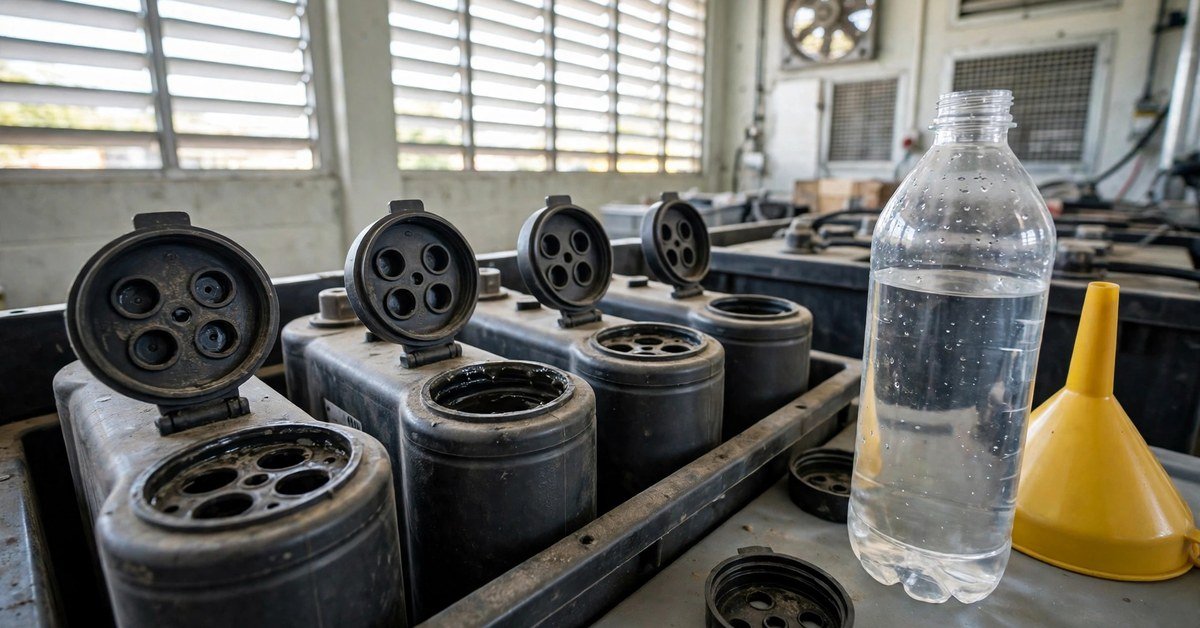
This is the single most important job. Check the electrolyte level once a month in normal weather, and every two to three weeks during peak summer. Top up with distilled or de-ionised water only — never tap water, whose minerals settle on the plates and shorten the battery’s life.
Fill to just above the plates, between the minimum and maximum markers. Do not overfill: top up when the battery is partially discharged, because the electrolyte expands during charging and a “full” battery can overflow. Let it charge afterwards so the new water mixes with the acid.
2. Keep terminals clean and tight
White or blue-green crust on the terminals is corrosion, and it adds resistance that cuts charging efficiency and backup time. Every couple of months, disconnect the terminals, scrub them with a baking soda and water mixture, rinse, dry, and reconnect tightly. A thin coat of petroleum jelly on the clean terminals slows corrosion from returning. Check that every bolt is snug — loose connections overheat.
3. Give the battery air
Charging releases small amounts of hydrogen gas, so the battery room must be ventilated — a window, a vent, or at least a door that is not sealed shut. Keep batteries out of direct sunlight and away from heat sources, ideally on a stand off the floor so air circulates. Heat above 40°C can cut life dramatically, so a cool, ventilated spot is worth more than any branded charger.
4. Charge fully, but never drain to zero
Tubular batteries are deep-cycle, but experts still recommend limiting routine discharge to around 50% depth of discharge — at that level a good tubular battery delivers roughly 1,200 to 1,500 cycles, versus under 700 if drained to zero repeatedly. Use an inverter or charge controller with correct lead-acid settings: overcharging boils off water, while chronic undercharging causes sulphation. An occasional equalisation charge balances the cells — ask your installer before doing this yourself.
5. Watch for warning signs
Shorter backup, unusually long charging, white deposits on plates, or a rotten-egg smell usually mean low electrolyte, sulphation, or a failing cell. Check water levels first; if backup does not recover, have a technician test each cell before buying a replacement. Often only one cell is weak, and early detection can save the bank.
If those checks do not restore your backup, our guide to replacing a solar battery bank explains how to diagnose the bank before you buy a replacement.
To read those warning signs correctly, compare solar battery SOC vs voltage for lithium and lead-acid systems.
Is Your Backup Short, or Is the Battery Fine?
Work out how many hours your battery bank should actually deliver before blaming the battery.
Summer in Pakistan: Extra Precautions
May to August is the danger season. Water evaporates faster, inverter rooms trap heat, and batteries cycle harder through long outages. During these months, check water every two to three weeks, run a small exhaust fan in the battery room if you can, keep batteries out from under metal roofs that radiate heat, and make sure the bank gets a full recharge the day after a long outage — leaving it partially charged for days accelerates sulphation.
Tubular vs Lithium: The Maintenance Trade-Off
A tubular battery costs far less upfront than a lithium one, is available in every Pakistani market, and tolerates our rough grid conditions. The price is maintenance: water checks, terminal cleaning, and careful charging. Lithium is essentially maintenance-free and safely discharges to 80–90%, but costs much more and needs an inverter that specifically supports it. If you are weighing the switch, read our lithium battery and inverter compatibility guide first.
Common Mistakes That Kill Tubular Batteries
- Topping up with tap or mineral water — the fastest way to ruin the electrolyte.
- Leaving the battery discharged for days — sulphation begins within days, not months.
- Overloading — a single 200Ah battery cannot run a 1.5-ton AC all night without draining below safe limits. Size your bank to your loads; our solar batteries in Pakistan guide covers typical setups.
- Ignoring one weak cell — it drags the whole bank down and overworks the others.
- No ventilation — heat and hydrogen build-up in closed store rooms are silent killers.
Cut Your Backup Before You Replace the Battery
Most batteries die from oversized loads, not bad luck — trim your night-time load and your bank lasts years longer.
FAQs
How often should I add distilled water to my tubular battery?
Once a month in normal weather, and every two to three weeks during Pakistan’s hot summers or heavy load-shedding periods.
Can I use boiled or filtered water instead of distilled water?
No. Boiling kills germs but does not remove minerals. Only distilled or de-ionised water is safe for topping up.
How long should a tubular battery last in Pakistan?
With good maintenance, four to seven years is realistic. Neglected batteries in hot rooms often fail in two to three.
A tubular battery is not a fit-and-forget device, but it does not demand much either. Keep the water up, the terminals clean, the room cool, and the discharge shallow, and it will quietly do its job for years. Add battery checks to your solar system maintenance checklist and you will catch small problems long before they become expensive replacements.
One Response