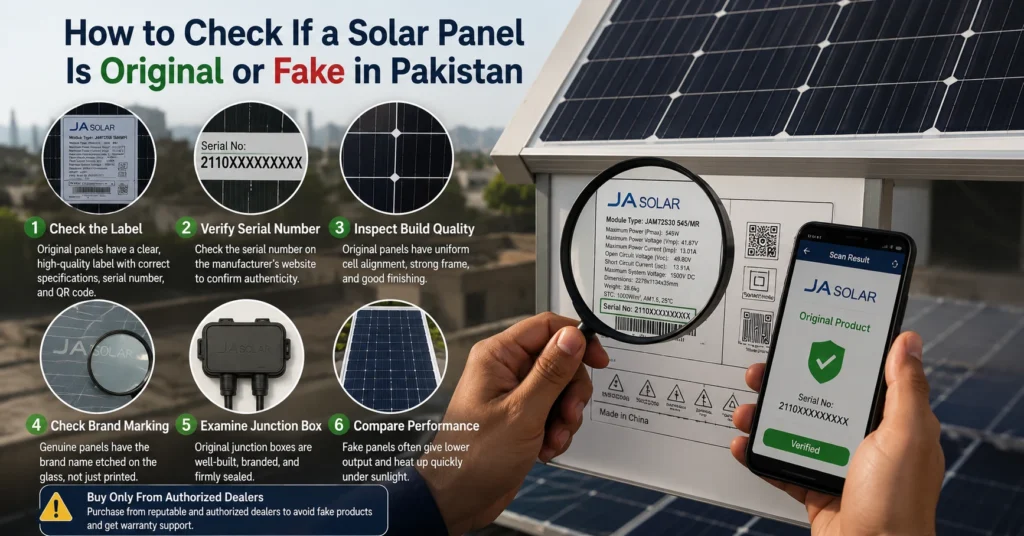
Solar panel authenticity should be checked through the manufacturer’s documented process, a traceable supplier and matching product records. Appearance, a printed QR code or a seller’s use of the term A-grade is not sufficient proof by itself.
Keep a Traceable Purchase Record
Request the exact model, serial numbers, matching official datasheet, invoice and written warranty terms. Verify product information through the manufacturer’s own website or support channel. Check packaging and the physical condition without opening electrical equipment, and resolve conflicting serial or model information before paying.
So here’s what actually tells a real panel apart from a fake, and how to check it before the installer’s truck is already parked outside.
How Many Solar Panels Do I Need in Pakistan? (2026 Calculator)
Why This Keeps Happening
Panels are built to run for 25 years, give or take. That’s kind of the entire pitch behind solar, pay once, get decades out of it. And that’s exactly what makes getting scammed on the hardware itself sting so much. You’re not out a few thousand rupees on a blender that breaks in a year. You’re potentially stuck with a mediocre system for the next quarter century.
Names like Longi, Jinko, Canadian Solar, JA Solar, Trina, these get asked for constantly around here. Which, unfortunately, is exactly why they’re the ones getting copied. A convincing sticker with the right logo costs the counterfeiter almost nothing to print. What’s actually difficult to fake is everything underneath the sticker: cell quality, internal wiring, the manufacturing steps that decide whether a panel holds close to its rated output for twenty years or starts dropping off after eighteen months.
Talk to enough installers and the same story comes up more than once. System goes up, numbers come back lower than what was promised, and somewhere down the line it turns out the panels weren’t quite what they were sold as.
Real Panel, Fake Panel, What’s Actually Different
Serial numbers are the easiest tell. A genuine panel has one that’s unique to it, nothing else. A fake either skips this or, worse, reuses the same number across a batch. QR codes work the same way, scan a real one and it actually pulls manufacturer data; scan a fake one and you either get nothing or a page that has nothing to do with solar panels.
Warranty is another giveaway, but a subtle one. A real warranty comes from the manufacturer itself, on paper, with terms you can point to later. A fake warranty is usually just a dealer saying “don’t worry, we’ve got you,” which sounds reassuring right up until something actually breaks.
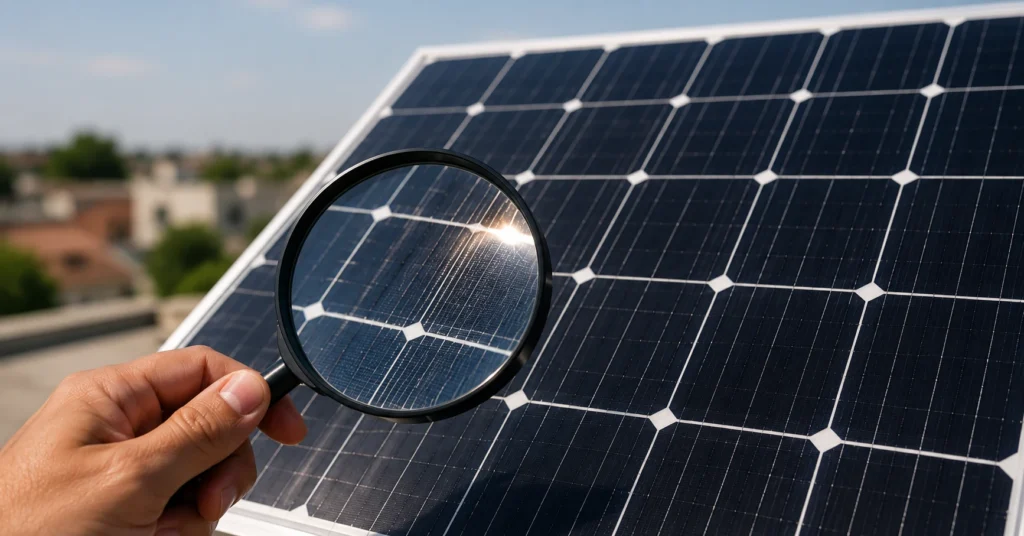
Then there’s the panel itself. Pick it up. A genuine one has a frame that doesn’t flex, glass that sits properly, cells lined up in neat, even rows. A fake tends to feel a little off: the frame gives slightly under pressure, cell spacing isn’t quite right, and edges aren’t finished properly. And output tells the real story eventually; genuine panels hit close to their rated wattage, fakes fall short, sometimes by a noticeable margin. fake panel may look similar but usually lacks proper quality control and reliable after-sales support.
20kW Solar System Price in Pakistan 2026: Commercial & Large Home Guide
10 Ways to Verify an Original Solar Panel
Start with the serial number. It should be unique, full stop. If you’re buying several panels and two of them share a number, that’s not a typo, that’s a fake. Most major manufacturers run an online lookup tool now, so find the number, go to the official site, type it in. If nothing comes back, or the record doesn’t match what the seller told you, walk away from that particular panel.
Scan the QR code, if there’s one. It should bring up the model, manufacturing date, factory, and warranty terms. Dead link or an unrelated page means something’s wrong.
Read the label properly, not just glance at it. Brand, model, rated wattage, voltage, current, country of manufacture, serial number again. Fakes usually slip somewhere small, a misspelled word, printing that’s slightly blurry, a sticker that’s crooked, or numbers that don’t line up with what was said out loud during the sale.
Actually look at how it’s built. A sticker is cheap to fake. A frame, glass, cell alignment, junction box, these are much harder to fake convincingly. Solid, tight construction usually means a real panel. Loose fittings and uneven cells usually don’t.
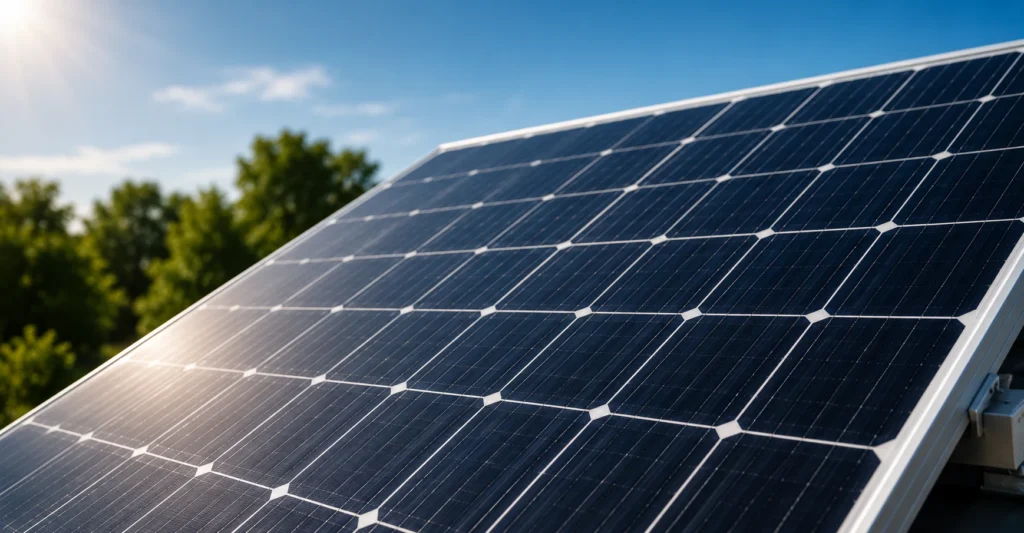
Compare the electrical specs against the manufacturer’s own website. Max power, voltage, current, efficiency, dimensions. Even a small gap between what’s printed and what’s published is worth asking about before paying.
Ask for paperwork, and don’t accept a verbal promise instead. Invoice, warranty card, importer details, clear terms. A manufacturer honors documentation. They don’t honor a conversation that happened in a shop two years ago.
Buy from someone actually authorized to sell the brand. This step alone removes most of the risk. Authorized dealers get real stock from the manufacturer or an approved distributor, meaning real warranties and real support if something breaks down the line.
1kW Solar System Price in Pakistan 2026: Is It Worth It for Apartments?
If the price seems too low, ask why before you get excited. The exact same branded panel priced way under everyone else usually means refurbished stock, a downgraded B-grade unit, or a straight-up fake wearing a name it hasn’t earned.
Double-check the certifications. IEC, TÜV, CE, these aren’t decoration, they represent testing the panel went through. Compare the label against what’s published officially. Fake certification stickers show up more often than people assume.
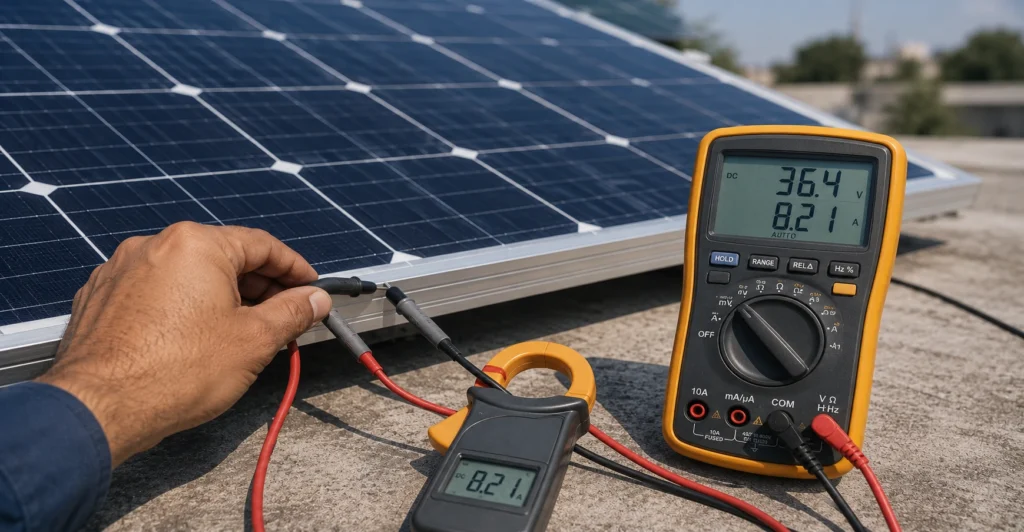
Get the output tested once it’s up. A professional can measure real voltage, current, and power under decent sun. If it consistently underperforms its rated capacity, either it’s damaged or it was never what it was sold as.
3kW Solar System Price in Pakistan 2026: Complete Cost Guide
Scams That Come Up Again and Again
A-grade stickers on B-grade panels. The same serial number stamped across a whole batch. Refurbished units passed off as new. Warranty cards that look official but aren’t backed by anyone real. One QR code reused across several different panels. Electrical specs printed wrong, sometimes by mistake, sometimes not.
Buyer forums and solar groups across the country bring up the same handful of complaints over and over, duplicated labels especially, and paperwork that falls apart the second you actually look closely at it. Pakistani solar users frequently mention duplicated labels, incorrect unit markings, and fake documentation as common warning signs.
10KW Solar Panel Price in Pakistan 2026: City-Wise Complete Guide
Quick Checklist Before You Pay
Look up the serial number online. Scan the QR code and see if it actually goes somewhere real. Compare printed specs against the official listing. Check the frame, glass, and cell alignment with your own hands. Ask for the invoice and warranty card, skip anything verbal. Buy authorized where you can. Keep every document somewhere safe. Confirm the certification labels hold up. Question anything priced oddly low. Test the real output once it’s installed.
Fifteen minutes, maybe less. That’s really all it takes, and it’s a small price against years of poor output or a warranty claim that goes nowhere. These simple steps dramatically reduce the chances of purchasing counterfeit products.
Bottom Line
A solar system is a long-term thing, and the panel is the part doing actual work every single day for as long as it’s up there. A few extra minutes checking a serial number, or asking for real paperwork instead of a handshake, is a small ask against what you get back: a system that actually performs the way it was sold to you.
Genuine panels earn their cost back through reliable output and real support standing behind them. Fake ones almost always end up costing more, eventually, than whatever felt like savings at the time.
Frequently Asked Questions
How do I know if my solar panel is genuine in Pakistan?
Check the serial number against manufacturer records, scan the QR code if there’s one, compare the printed specs to the official listing, and make sure the warranty is real paperwork rather than something the dealer said out loud.
Does a low price automatically mean it’s fake?
Not always. Sometimes it’s just older or honestly discounted B-grade stock. But a well-known brand priced way under the market average is worth a closer look before you buy.
Can a fake panel damage my inverter?
It can. Unstable output puts extra strain on the inverter over time, which can wear it down faster than it should.
Is buying solar panels online actually safe?
It can be, as long as the seller is reputable and authorized, and you’re still checking authenticity yourself rather than trusting the listing blindly.
Which single check matters most?
Verifying the serial number through the manufacturer’s official portal, especially paired with a physical inspection and real paperwork.
One Response