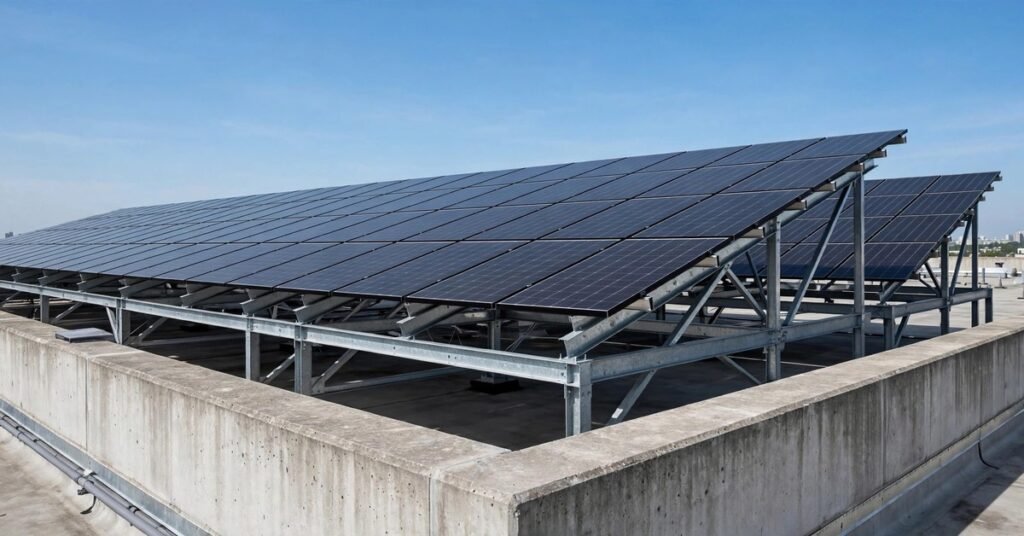
Ask a solar buyer in Pakistan what they negotiated hardest on, and the answer is almost always the panel brand or the inverter. Almost nobody negotiates the mounting structure — the steel frame that holds those panels twenty feet in the air through monsoon winds, hailstorms and dust storms. Yet the structure is what decides whether your system survives the next decade intact or becomes an expensive pile of cracked glass.
Structures make up roughly 10–15% of a typical installed system’s cost — more than the cabling and protection combined — so getting this part wrong hurts twice: you pay for it in the quote, and you pay again if it fails. This guide explains the structure types common in Pakistan, what they should cost in 2026 as indicative estimates, and the checks that separate a solid installation from a future headache. If you are comparing full quotes, read it alongside our solar installation quotation checklist so nothing on the hardware list escapes scrutiny.
Why the structure matters more than you think
A solar panel is a large, flat sail. A typical 585-watt panel covers more than two and a half square metres, and an array of sixteen of them catches an enormous amount of wind. During a monsoon storm the frame has to resist uplift forces trying to peel the panels off the roof — while carrying the panels’ own weight day in and day out. A frame that is too light, poorly anchored or made of the wrong material can shift, bend or collapse, and cracked panels from a structure failure are not covered by any panel warranty.
Material choice matters for longevity too. Pakistan’s climate is brutal on bare steel: humid summers, monsoon rain and coastal salt air in cities like Karachi chew through untreated mild steel in just a few years. The right structure should outlast your panels’ 25-year performance warranty — the wrong one may not survive five.
Common solar structure types in Pakistan
L2 and L3 low-profile frames
The workhorse of Pakistani rooftops. L2 frames typically hold two panels side by side and L3 frames hold three, sitting low and close to the roof. Because they sit low, wind cannot get underneath them easily, which makes them inherently safer in storms. They use the least steel of any design, so they are also the cheapest option — usually supplied as ready-made kits by installers. For a standard flat RCC roof with no obstructions, L2/L3 is the sensible default.
Elevated (high-rise) structures
These raise the panels six to ten feet off the roof on thick steel poles with heavy concrete bases. They are popular in Pakistan because the shaded space underneath stays usable — for storage, a washing line, or a family seating area. But height comes at a price: tall frames need much heavier steel sections, diagonal bracing and substantial concrete footings, which roughly doubles or triples the per-kW cost compared to a low-profile frame. They also catch more wind, so the engineering (and the anchor bolts) matters more.
Ground-mount structures
For farms, tube wells and open plots, panels go on ground-mounted frames with concrete foundations. These offer the easiest cleaning and maintenance access and the best airflow for cooling — which helps output on hot days, since heat trims panel efficiency as explained in our guide on how heat affects solar panel output. The downside is the cost of foundations, fencing and security.
Tin-shed and carport structures
Factories and warehouses often mount panels flush on corrugated tin sheds using aluminium rails and clamps — cheap, but the shed’s purlins must be checked for the extra weight and uplift. Carport canopies double as shaded parking and look impressive, but they are the priciest residential-adjacent option because the frame has to be both structural and presentable.
Material: GI, MS or aluminium?
You will hear three materials quoted in the market, and the difference between them is really a difference in rust:
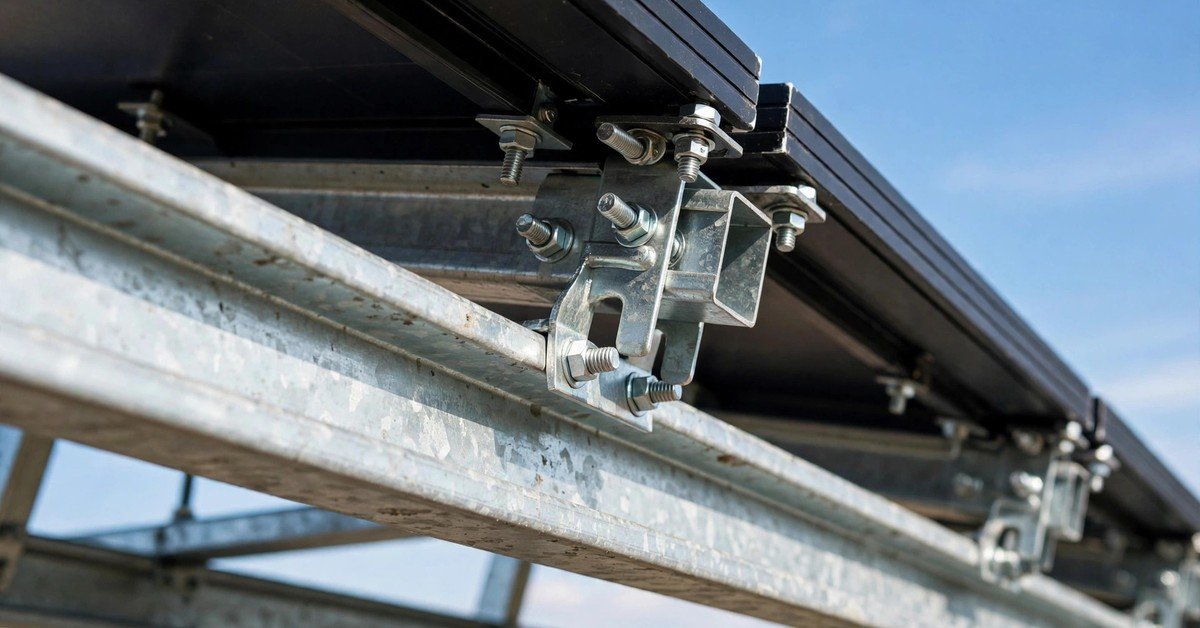
- Hot-dip galvanised (HDG) steel: the gold standard. The steel is dipped in molten zinc after fabrication, coating every cut edge and weld. Expect 20-plus years of rust-free service. It costs more, and it is worth it.
- Pre-galvanised steel: coated with zinc at the factory before cutting and drilling. Cheaper, but every cut edge and drilled hole exposes bare steel that rusts first. Fine on a tight budget, but do not expect a 25-year life.
- Plain mild steel (MS), painted: the cheapest — and the riskiest. Paint looks fine on day one and fails within a couple of monsoon seasons in humid areas. Never accept this for a rooftop array.
- Aluminium: naturally rust-proof and light, commonly used for tin-shed rails and in coastal areas. Costs more than steel and is not usually needed for a standard RCC rooftop.
Comparing installer quotes?
Use our quotation checklist to compare structure specs, cable sizes and protection devices line by line before you pay.
Indicative structure costs in Pakistan (2026)
Structure pricing is usually quoted per kilowatt of installed panel capacity or per watt. Treat the ranges below as indicative market estimates for 2026, not fixed rates — they move with steel prices and vary between cities:
- L2/L3 low-profile frame (galvanised): roughly Rs 5,000–10,000 per kW — the cheapest option for a standard flat roof.
- Standard elevated structure (6–8 ft): roughly Rs 15,000–28,000 per kW, depending on height, steel gauge and concrete work.
- High-rise/heavy-duty elevated frame: roughly Rs 28,000–50,000 per kW for obstacle clearance or tall installations.
- Ground-mount: roughly Rs 10,000–45,000 per kW, driven by foundation and site work.
- Tin-shed flush mount: roughly Rs 5,000–13,000 per kW — cheapest, but get the roof’s strength checked first.
To put that in perspective: on a typical 10 kW home system the structure alone runs roughly Rs 80,000–180,000. That is a real share of the total, so a quote that looks suspiciously cheap overall has often been cheapened right here — with thinner steel or painted MS instead of galvanised.
What to check in your quotation
Ask your installer to put these five items in writing on the quotation:
- Steel type and gauge: hot-dip galvanised is the ask; 14 gauge is the common residential standard. “Galvanised” alone is not enough — ask whether it is hot-dip or pre-galvanised.
- Fasteners: stainless steel or hot-dip galvanised nuts, bolts and rawl bolts. Cheap local screws loosen in wind and rust within a year.
- Fixing method: how the frame is anchored to your roof — chemical anchor/rawal bolts into the slab, or concrete dead-weight blocks. Drilling through waterproofing without proper sealing is a leak waiting to happen.
- Wind gaps and tilt: in windy areas (Karachi, coastal belt, open plains) there should be small gaps between panel rows so wind can pass through rather than lifting the array. Tilt around 15–30 degrees suits most of Pakistan.
- Earthing connection: the frame must be bonded to the system’s earthing — an unearthed frame is a lightning and fault hazard.
Red flags: the scams to avoid
Two tricks are common in the local market. The first is the paint trap: plain mild steel sprayed silver to look like galvanised iron. It looks identical on installation day and rusts through after the first rainy season. Ask for a mill/galvanising certificate or at least a written material warranty from the fabricator.
The second is the vanishing concrete: quotes that promise concrete block footings but deliver the frame bolted to thin pads or nothing at all on an elevated structure. On installation day, check that the footings actually exist before the crew leaves. And just as with fake or mislabelled panels, the cheapest quote is usually the one cutting these invisible corners.
The bottom line
Do not treat the mounting structure as filler in your solar quotation. For a standard home, a low-profile galvanised L2/L3 frame is the safe, economical choice; go elevated only if you genuinely need the roof space, and then pay for real steel, real bolts and real concrete. Spend an extra hour checking the structure specs now, and you buy yourself 25 years of not thinking about them again. Once the frame decision is settled, the next decision that shapes your returns is the panel itself — our guide to the best solar panel brands in Pakistan for 2026 compares what is actually worth your money.
Planning a 5 kW system?
See the full installed cost breakdown — structure, inverter, panels and wiring — for Pakistan’s most popular home size.
Once the structure is chosen and fixed, the job moves to the panels themselves, so it is worth reading a step-by-step walkthrough of how to install solar panels on a roof.