
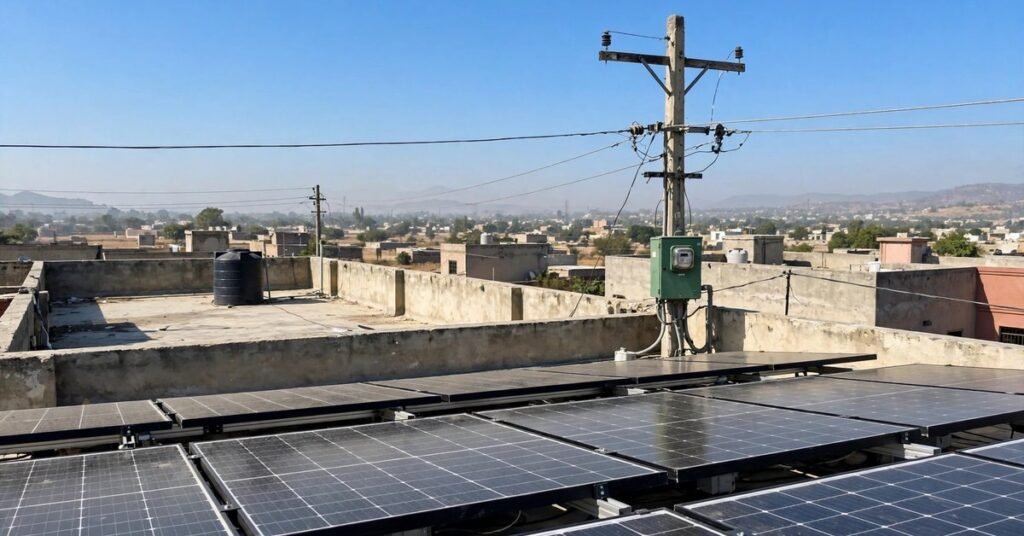
Net metering is what turns a rooftop solar system from a daytime-only setup into a genuine bill-killer: your surplus units flow back to the grid and get credited against what you import at night. Most buyers budget carefully for panels, the inverter and batteries — then discover the connection itself costs money too. The green meter, DISCO fees, inspection and wiring upgrades are rarely included in the system quotation, and they can add a meaningful chunk to your total spend.
This guide breaks down every cost head involved in getting net metering in Pakistan in 2026, with indicative ranges so you can budget honestly. If you want the process itself first, read our step-by-step guide to applying for solar net metering alongside this one.
What “net metering cost” actually includes
Net metering is not a single payment. It is a chain of small costs, each paid to a different party:
- The bi-directional (green) meter — replaces your existing meter and records both import and export.
- DISCO application and processing fees — paid to your distribution company (LESCO, IESCO, K-Electric, etc.).
- Inspection charges — the DISCO inspects your installation before approving the connection.
- Wiring and earthing upgrades — bringing your side of the wiring up to the DISCO’s standard.
- Installer service charges — many installers charge separately for handling the paperwork and follow-ups.
Miss any one of these from your budget and the “cheap” system quote starts looking less cheap. Use our solar installation quotation checklist to make sure every head is itemised before you sign.
Green meter price in Pakistan (2026)
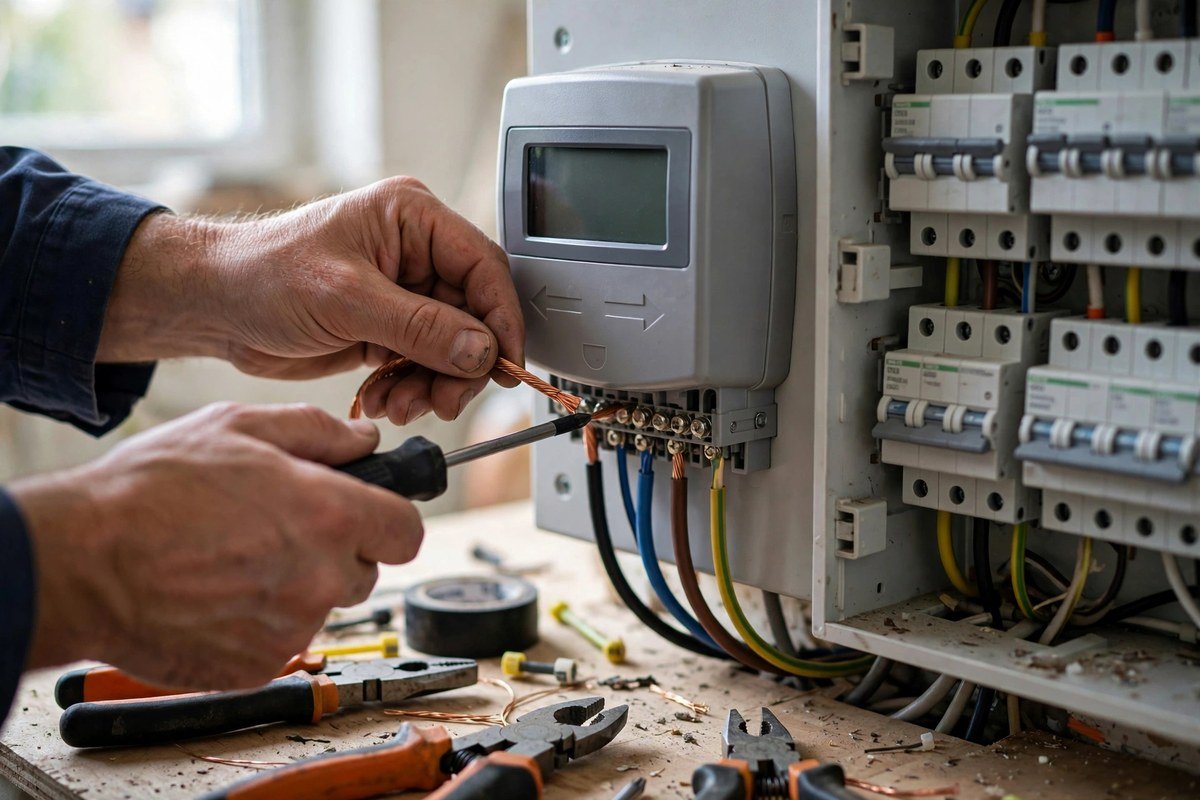
The bi-directional meter is the single biggest net-metering expense. Prices move with the dollar and with DISCO procurement, so treat these as indicative market estimates for 2026, not fixed rates — confirm the current figure with your DISCO or installer before budgeting:
- Single-phase bi-directional meter: roughly Rs 35,000–60,000
- Three-phase bi-directional meter: roughly Rs 60,000–110,000
Three-phase meters cost more because the hardware is more complex, and most systems above 5 kW run on three-phase anyway. In many DISCOs the meter is procured through the DISCO’s own channel or an approved vendor — you usually cannot just buy any meter off the shelf and expect it to be accepted. Ask your installer which meters your DISCO currently approves; buying the wrong one is an expensive mistake.
DISCO application and processing fees
Every DISCO publishes its own fee schedule, and it changes from time to time. Expect an application/processing fee in the low tens of thousands of rupees for a typical residential system, plus possible charges if your sanctioned load needs to be enhanced to match the solar capacity. The honest advice here is simple: ask your DISCO’s net metering desk (or your installer’s liaison) for the current written schedule and keep a copy. Verbal quotes for government fees have a habit of changing at the counter. If you are served by LESCO or IESCO, also read the step-by-step process for applying for a green meter with LESCO and IESCO so you know exactly which documents, counters and timelines your application will pass through.
Inspection, wiring and earthing upgrades
The DISCO inspection checks that your installation is safe and standards-compliant — proper earthing, correct cable sizing, a proper changeover/isolation arrangement, and safe meter-box wiring. Older homes often fail the first inspection because of undersized wiring or missing earthing, and each re-inspection can mean another fee plus weeks of delay.
The fix is to get the electrical side right before the inspector arrives. Depending on the distance between your inverter and the meter and the condition of your existing wiring, budget roughly Rs 15,000–50,000 for this electrical work on a typical home. A good installer will flag this during the site survey rather than surprising you later.
Applying for net metering?
See the documents, DISCO steps and timelines involved, from application to meter installation.
Total net metering cost by system size
Putting the heads together, here are indicative all-in ranges for 2026 (meter + DISCO fees + inspection + minor electrical work, excluding the solar system itself). Your city, DISCO and existing wiring decide where you land in the range:
- 3–5 kW system: roughly Rs 80,000–150,000
- 6–10 kW system: roughly Rs 100,000–180,000
- 11–20 kW system: roughly Rs 130,000–230,000
For context, a 10 kW solar system in Pakistan typically costs well over a million rupees installed, so net metering adds roughly 8–15% on top. That percentage is worth every rupee, as the next section shows.
How net metering changes your payback period
Without net metering, every surplus unit your panels produce at midday is simply wasted (unless you have batteries big enough to store it, which most homes do not). With net metering, those units are credited against your night-time imports — which is exactly when most households consume the most.
In practice, net metering can shorten the payback period of your solar investment by a year or more on a typical residential system, because you are monetising generation that would otherwise be thrown away. The connection cost therefore pays for itself: it is not an optional luxury, it is part of what makes the economics work. Skipping net metering to “save” Rs 100,000+ usually costs far more in lost credits over the system’s life. One caveat before you lock in your payback maths: check the proposed buyback changes and what they could mean for your savings, because a lower export rate would stretch the payback period beyond the figures above.
Costs and delays people forget
- Re-inspection fees if your installation fails the first check.
- Meter replacement if the installed meter develops a fault — clarify whose responsibility this is before installation.
- Months of waiting — DISCO processing can take weeks to months. Every month of delay is a month of export credits you never earn, so apply early, ideally while the system is being installed rather than after.
- Follow-up visits — files do not move themselves. Whoever handles your case (you or the installer) needs to follow up persistently.
5 ways to keep net metering costs down
- Apply early — start the paperwork alongside installation, not after it.
- Pick an installer who handles liaison — their fee is usually cheaper than your own wasted months.
- Fix wiring and earthing before inspection — one failed inspection costs more than doing it right once.
- Right-size the system — check our solar system size guide so you are not paying three-phase meter prices for capacity you do not need.
- Get every fee in writing — from the DISCO schedule and from your installer, before work starts.
Net metering is the step that converts a good solar installation into a great investment. Budget for it properly, apply early, and the green meter starts earning its keep from the first sunny day.
Work out your real payback
See how net metering credits shorten the time your system takes to pay for itself.
For the rules, timelines and billing maths behind these charges, see the complete net metering guide for Pakistan.
That investment case gets stronger every year: Pakistan’s power-sector circular debt has now climbed to Rs 1,675 billion, and a large share of it lands on consumer electricity bills — see what the circular debt surge means for your electricity bill and solar.