Why Earthing Matters for a Rooftop Solar System
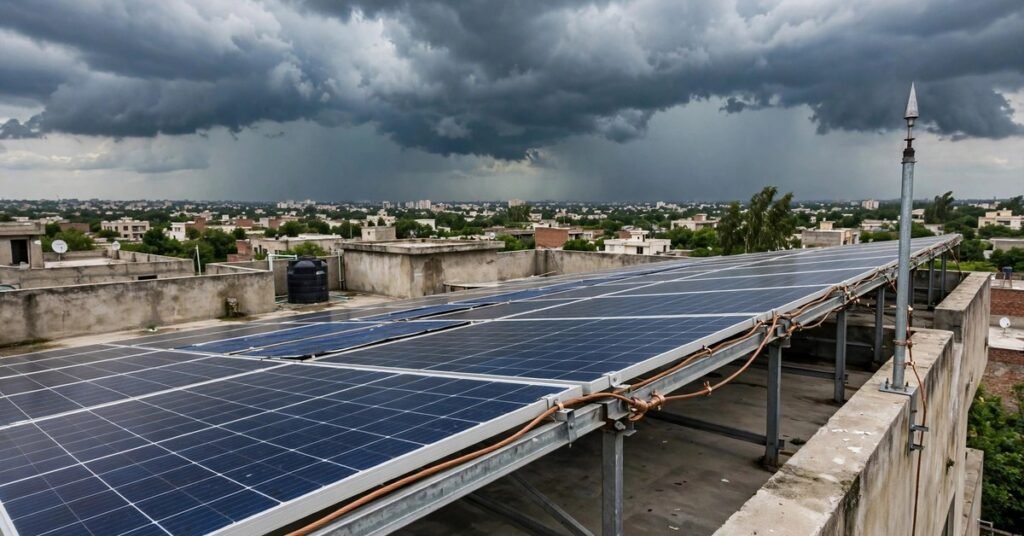
A solar system is a large metal structure sitting on the highest point of your house, wired into your home’s electricity and exposed to the sky all year. Most buyers in Pakistan focus on panel wattage and inverter size, yet many installers treat earthing and lightning protection as an optional extra. Industry engineers note that poor earthing is among the most common causes of equipment damage and fire in Pakistani solar installations, especially during the monsoon when lightning activity peaks.
Proper earthing does three jobs: it gives fault currents and surge energy a safe path into the ground, it keeps every metal part of the system at the same electrical potential, and it allows protective devices such as surge protectors and breakers to work as designed. Without a good earth, those devices simply cannot do their job.
Even a small system needs this protection, so check the 1kW solar system price in Pakistan before you buy.
What a Complete Solar Earthing System Includes
1. Equipment earthing (frame bonding)
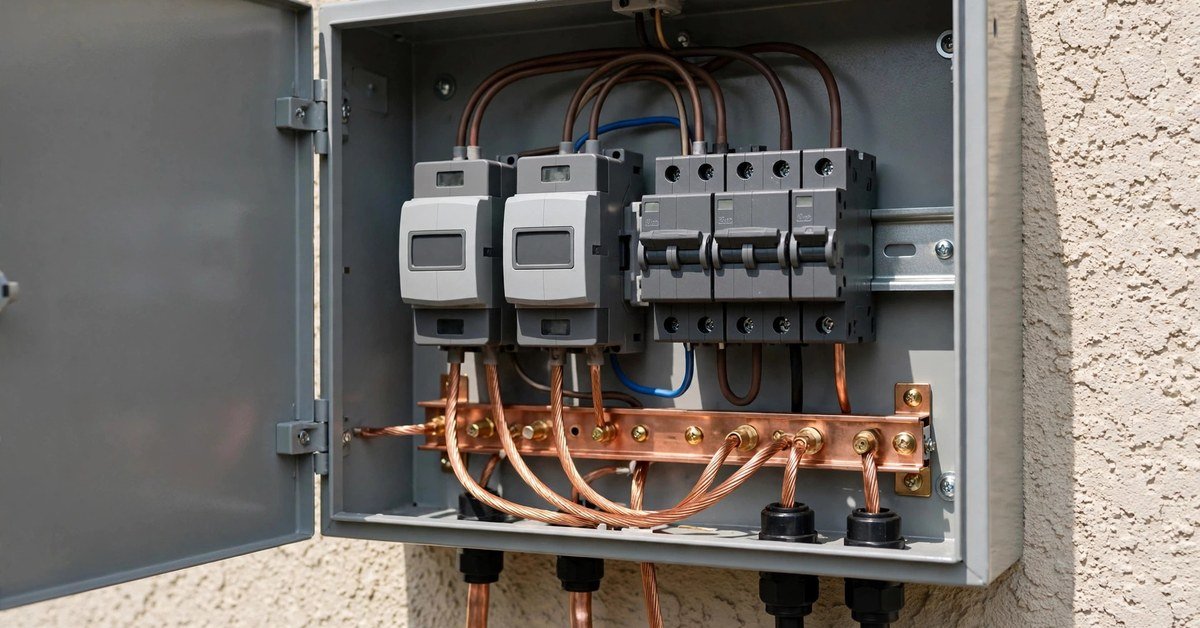
Every metal part — panel frames, mounting rails, the inverter chassis, DC and AC distribution boxes — should be bonded together with a continuous copper earth conductor and connected to the earth pit. Many installers skip this on the panels to save a few hours of labour, which leaves long runs of metal frame floating and ready to carry a surge straight into the system.
2. A proper earth pit with low resistance
The earth conductor terminates in an earth pit (or several pits) with a copper plate or rod surrounded by charcoal and salt, or with a maintenance-free chemical earth electrode. The goal is low earth resistance — a common benchmark for such installations is below 10 ohms, and lower is better. Dry Pakistani soil, especially in the northern plains in summer, has high resistivity, so a single shallow rod rarely achieves this; two pits connected together are a reasonable minimum for a home system.
3. Lightning protection (external LPS)
A lightning air terminal (rod) mounted above the highest point of the array, connected through dedicated down conductors to its own earth, intercepts direct strikes before they hit the panels. The down conductor must be kept a safe distance from the DC cabling to avoid dangerous sparking between conductors.
4. Surge protection devices (SPDs)
SPDs clamp fast transient overvoltages from indirect lightning strikes, grid switching and utility disturbances. A well-designed home system carries SPDs on both sides:
- DC side: Type 2 DC SPDs at the inverter’s MPPT inputs protect against induced lightning and switching surges; Type 1+2 devices suit areas with high direct-strike risk.
- AC side: AC SPDs at the inverter output and at the distribution board entry guard the inverter and home loads against grid-borne surges.
SPDs have a status window — green means healthy, red means the cartridge has sacrificed itself and needs replacing. Ask your installer to point them out before he leaves. Breakers are not a substitute: an MCB or isolator protects against overcurrent, while an SPD handles fast transient overvoltage — two different devices for two different faults.
Common Mistakes Installers Make in Pakistan
These are worth checking on your own roof:
- No earth pit at all — the earth wire is wrapped around a water pipe or left coiled near the inverter. This is the most common shortcut and effectively means there is no earthing.
- Panels bonded, but nothing else — or the reverse. Every metal part must be on the same bonded network.
- SPD installed without a good earth — an SPD cannot divert surge energy through a poor earth path. Sellers in the Pakistani market openly note this: fitting an SPD while ignoring the grounding system is a mistake.
- Rusted or loose connections — down conductors and earth terminals corrode in monsoon humidity; resistance rises silently year after year.
- Long, coiled SPD leads — surge devices work best with short, straight connections to the earth bar; loops and long leads reduce their effectiveness.
What Earthing and Lightning Protection Cost (Indicative)
Prices below are rough indicative ranges for Pakistan, not quotations — actual costs vary by city, copper prices and soil conditions:
- Earth pit with copper plate/rod, charcoal and salt: roughly Rs 8,000–20,000 each, depending on depth and materials.
- Type 2 AC SPDs for a single-phase board: roughly Rs 2,500–8,000 per unit in local markets.
- DC SPDs for the inverter side: roughly Rs 5,000–15,000 depending on type and rating.
- Lightning rod with down conductor and dedicated earth: roughly Rs 15,000–40,000 for a residential installation.
For a typical 5–10 kW home system, full earthing and surge protection adds a small single-digit percentage to the total project cost — cheap insurance next to an inverter that can cost several hundred thousand rupees to replace after a strike. When you are collecting quotations, use a proper installation quotation checklist so these items appear as line items rather than disappearing into a lump sum.
Before You Pay an Installer
Make sure earthing, SPDs and lightning protection appear as separate line items in your quote — not hidden in a lump sum.
How to Verify the Earthing on Your System
You do not need to be an electrician to do a basic check:
- Ask the installer for the measured earth resistance value, in ohms, and when it was measured. A claim of “proper earthing” without a number is worth very little.
- Visually trace the earth conductor: panel frames → rails → inverter body → distribution boxes → earth pit. Breaks, cut wires and rusted clamps are common.
- Look at the SPDs: confirm both AC and DC devices are present, and that their status windows show green.
- Confirm the lightning rod stands above the array and its down conductor runs separately from the DC cables.
- Re-check once a year — add earthing to your solar maintenance checklist alongside cleaning and inspection. Corrosion is gradual, and a system that tested fine in year one can drift badly by year three.
Earthing work also ties into correct cable sizing and routing — see our guide on cable voltage drop for why conductor size and run length matter on the DC side.
The Bottom Line
Earthing and lightning protection will not make your panels produce a single extra watt — which is exactly why installers quietly leave them out. They are insurance: invisible on a sunny day, decisive during a storm. If your quotation has no earth pits, no SPDs and no lightning rod, you have not been offered a cheaper system; you have been offered an incomplete one. Get them specified, get them measured, and check them every year.
Strong Structures, Safe Systems
Earthing bonds to your mounting structure — check what makes a mounting structure strong before it gets earthed.