
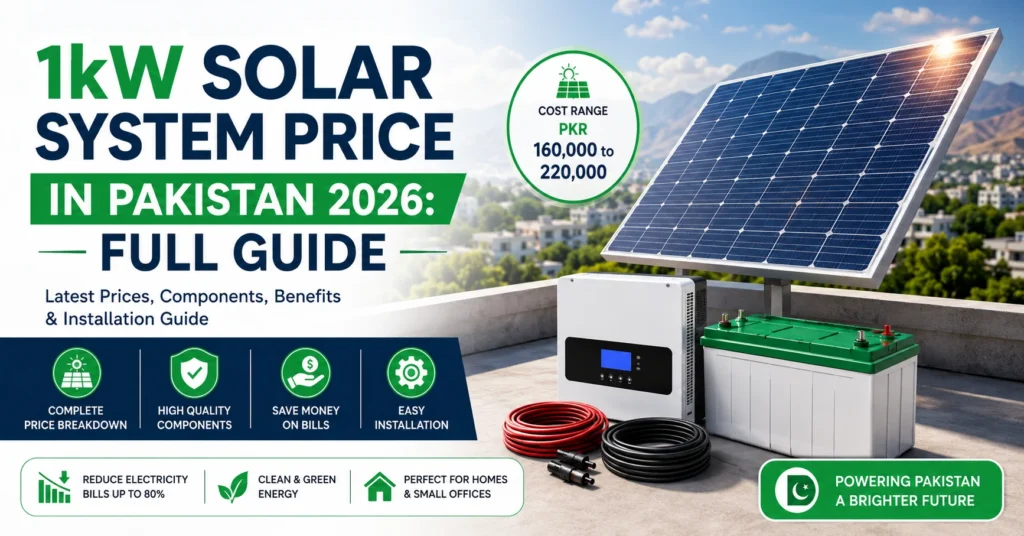
A 1kW solar setup can serve a limited energy requirement, but it does not establish which appliances can run together. The inverter, battery and actual demand determine whether the system suits a small home, apartment or workspace.
Check Space, Permission and Essential Loads
Confirm permission to use the roof and a safe route for cables. Record the wattage and operating hours of essential appliances. Small systems still need correct protection and installation; whether they support backup or grid export depends on the chosen design and applicable approvals.
Price context: Numerical prices elsewhere in this article are previously published indicative estimates. They have not been independently reverified as live supplier quotations during this content review. Confirm a dated quote for the exact model, quantity, tax, delivery and warranty before buying. Solar Price Pak publishes information and does not sell or install equipment.
This guide breaks down current 1kW solar system prices in Pakistan, what’s included in the system, how many panels you need, how much electricity it produces, and whether it’s the right size for your home.
1kW Solar System Price in Pakistan
Here’s a general breakdown of what a 1kW solar system costs in Pakistan in the examples below, based on system type:
| 1kW Solar System | Price (PKR) |
|---|---|
| Basic/On-grid | 90,000 – 130,000 |
| Hybrid (battery-ready, no battery installed) | 140,000 – 180,000 |
| With battery | 180,000 – 240,000 |
| Installation (if quoted separately) | 15,000 – 35,000 |
These figures are approximate and change frequently based on the dollar rate, import duties, and panel availability, so always confirm current rates with a local supplier before buying.
Why does the price vary so much for the same 1kW label? A few reasons:
- Panel type — locally assembled panels cost less than imported Tier-1 panels from brands like Jinko or Longi.
- Inverter brand — a basic on-grid inverter is far cheaper than a smart hybrid inverter with app monitoring.
- Battery inclusion — lithium batteries add significantly more cost than lead-acid or AGM batteries, but last longer and charge faster.
- City and transport — installation costs in Karachi, Lahore, and Islamabad differ slightly due to freight and labor rates.
- Installation quality — proper mounting structure, cabling, and protection devices (breakers, surge protectors) affect the final quote.
A supplier quoting an unusually low price for a “complete” 1kW system is often leaving out installation, structure, or protection components — so always ask for a full itemized quote.Current quote rather than relying on one more than a couple of months old.
What Is Included in a 1kW Solar System?
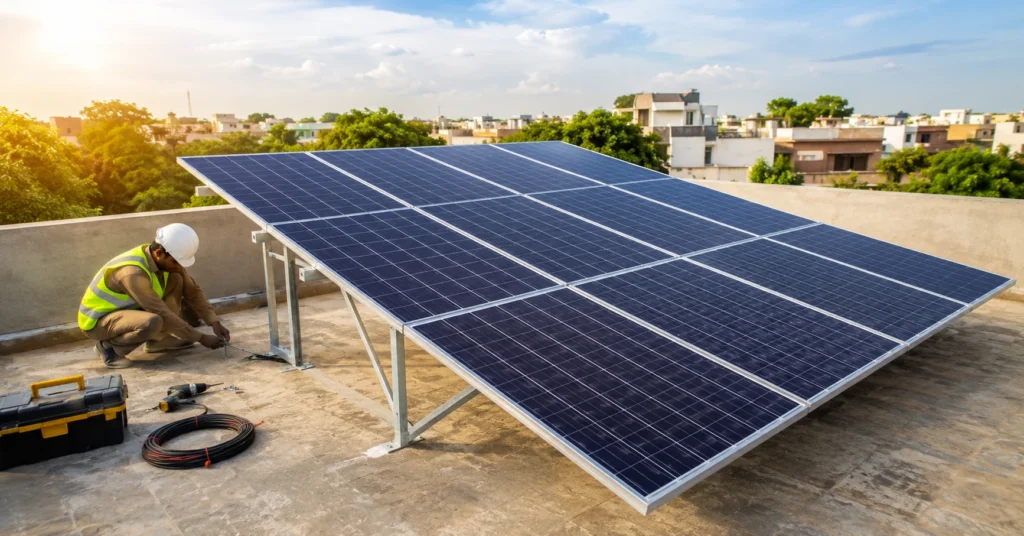
A complete 1kW solar system isn’t just panels. Here’s what typically makes up the package:
Solar Panels
A 1kW system needs enough panels to add up to roughly 1,000 watts of capacity. Most installers slightly oversize the panel array (by 10–20%) to account for real-world losses from heat, dust, and cloud cover.
1kW Solar Inverter
The inverter converts DC power from the panels into usable AC power for your home. For a 1kW system, a small on-grid or hybrid inverter (roughly 1–1.2kW rated) is sufficient. Hybrid inverters cost more but allow battery connection later.
Mounting Structure
Panels need a stable frame, usually made of galvanized iron (GI) or aluminum, angled to catch maximum sunlight. Structure cost depends on roof type and height.
Wiring and Protection
This includes DC/AC cables, circuit breakers, surge protection devices, and earthing — all essential for safety and system longevity. Skipping these to cut costs is a common shortcut that shortens system life.
Battery, If Required
If you need backup during load-shedding or at night, a battery is added. Battery type — lead-acid, AGM/gel, or lithium — has the biggest impact on both price and backup duration for a 1kW system. Much protective equipment is included all move the number quite a bit at this small a scale.
How Many Solar Panels Are Needed for a 1kW System?
The panel count depends on the wattage of the panels you choose. The basic calculation is:
1,000W ÷ panel wattage = approximate number of panels
For example:
- Using 250W panels → around 4 panels
- Using 330W panels → around 3 panels
- Using 450W panels → 2–3 panels (often rounded up to keep the array balanced)
Most installers today lean toward fewer, higher-wattage panels since they take up less roof space and mean fewer mounting points and connections. For a small residential rooftop, this usually works out to just 2–4 panels for a 1kW system.
How Many Units Does a 1kW Solar System Produce?
A 1kW system doesn’t produce a fixed number of units every day — output depends on several factors:
- Sunlight hours — more direct sun in summer means higher output than in winter.
- Shading — trees, walls, or nearby buildings can reduce generation significantly.
- Panel orientation and tilt — panels facing south at the right angle perform best in Pakistan.
- System losses — inverter efficiency, wiring losses, and dust on panels all reduce actual output slightly below the theoretical maximum.
- Seasonal differences — generation is noticeably higher from March to October than in the shorter, cloudier winter days.
1kW Solar System Daily Production
On a clear day with good sun exposure, a 1kW system typically produces somewhere in the range of 3.5 to 5 units (kWh) per day. Cloudy or winter days will produce less.
1kW Solar System Monthly Production
Averaged across a month, this usually works out to roughly 100–150 units, though this varies by city, season, and installation quality. Don’t expect a single fixed number to hold true year-round — treat any quoted figure as an estimate, not a guarantee.
What Can a 1kW Solar System Run?
A 1kW system is best suited for light, essential household loads rather than heavy appliances.
| Appliance | Suitable for 1kW? |
|---|---|
| LED lights | Yes |
| Fans | Yes |
| TV | Yes |
| Refrigerator | Depends on load |
| Water pump | Depends on capacity |
| Washing machine | Depends on usage |
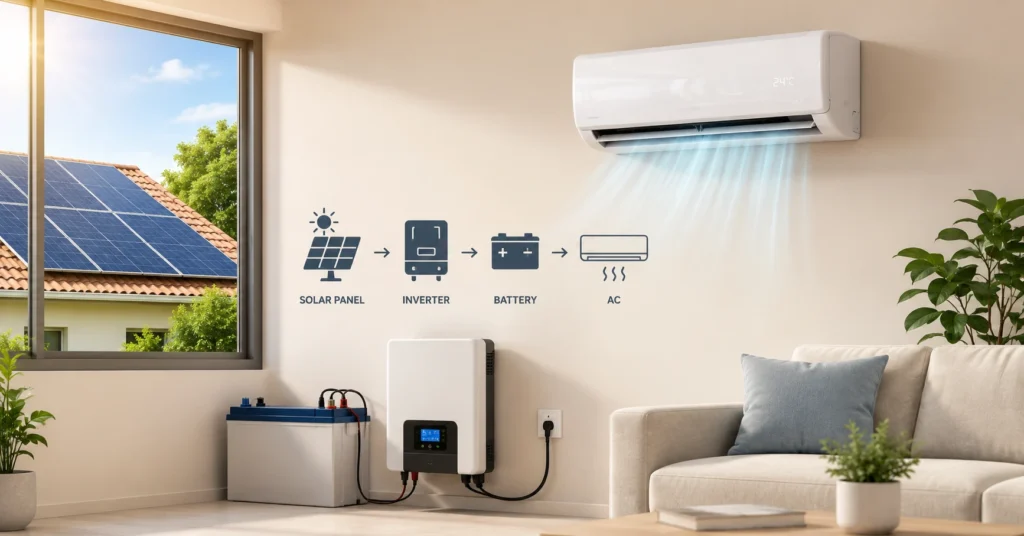
| AC | Generally not ideal |
If you’re planning to run a refrigerator or water pump alongside lights and fans, it’s worth having an installer calculate your actual load before committing to a 1kW system; you may find a slightly larger system serves you better. ceiling is why the appliance list above tops out where it does: 6 LED bulbs (roughly 60–70W total), 2–3 fans (roughly 150–225W), a TV (60–100W), and a router/charging load (under 50W) together sit comfortably under 500W, leaving headroom within the inverter’s rated capacity but adding even one window AC (typically 1,200W+ running, with a much higher starting surge) would exceed it immediately.
Is a 1kW Solar System Enough for a Home?
It depends on your household’s actual consumption pattern, not just its size. A few things to consider:
- Total household load — how many appliances run at once, and for how long.
- Daytime consumption — a 1kW system is most efficient for homes that use electricity mainly during the day.
- Appliance usage — running heavy appliances like an AC or iron regularly will outgrow a 1kW system quickly.
- Backup requirements — if you need several hours of backup at night, battery capacity needs to match your load, not just your panel size.
A 1kW system tends to suit small households — a single room, a small apartment, or a home mainly using lights, fans, a TV, and a mobile charging setup. Larger families with multiple rooms and heavier appliance use typically need a bigger system, but that’s a separate calculation from what this guide covers.
1kW Solar System Installation Cost in Pakistan
Installation cost for a 1kW system is usually a smaller portion of the total price, but it directly affects how long the system lasts and how safely it operates. It typically covers:
- Labor — mounting the structure and wiring the system correctly.
- Mounting — fixing the frame securely to the roof, accounting for wind load.
- Wiring — running DC and AC cables from panels to inverter to the home’s electrical panel.
- Protection — breakers, surge protectors, and proper earthing.
- Transportation — delivering panels, inverter, and structure to the site.
- Installation — final assembly, testing, and commissioning.
For a 1kW system, installation charges generally fall in the PKR 15,000–35,000 range, though some suppliers bundle this into the total system price rather than listing it separately. Always ask whether installation is included before comparing quotes across vendors.
What Affects the Price of a 1kW Solar System?
Several factors combine to determine the final price you’re quoted:
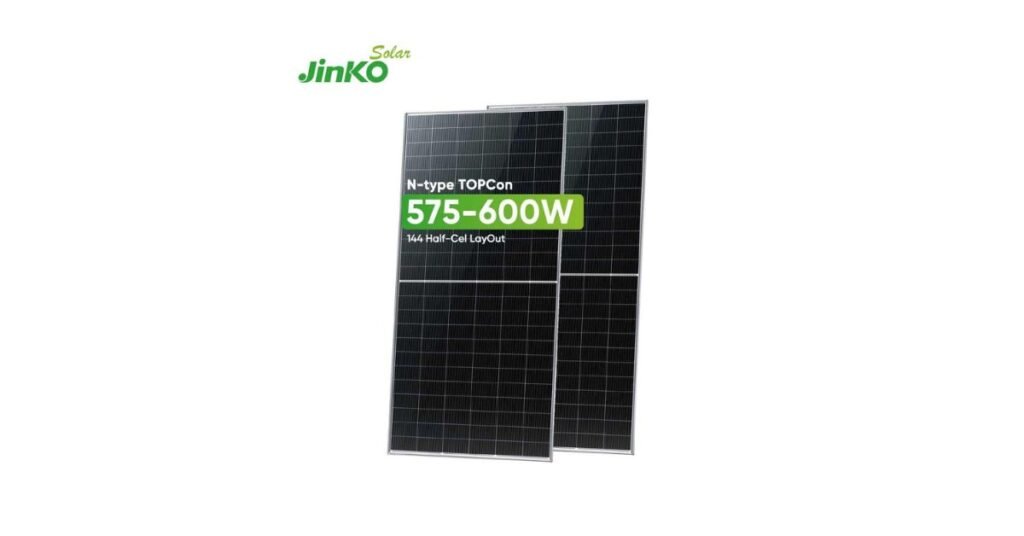
- Solar panel specifications — brand, wattage, and panel technology (P-Type vs N-Type).
- Inverter type — basic on-grid vs smart hybrid with monitoring features.
- Battery — whether one is included, and what chemistry (lead-acid, AGM, or lithium).
- Mounting structure — material and design suited to your roof type.
- Protection equipment — breakers, surge protection, and earthing quality.
- Installation — labor complexity, roof height, and site accessibility.
- Warranty — longer panel and inverter warranties usually mean a higher price but better long-term value.
- Supplier — established installers with after-sales support often charge more than smaller vendors.
- Market conditions — currency fluctuation and import costs affect panel and inverter pricing throughout the year.
How to Choose a 1kW Solar System in Pakistan
Before finalizing a purchase, run through this checklist:
- Check the total system capacity matches what’s advertised — verify actual panel wattage, not just the labeled “system size.”
- Compare panel specifications across suppliers, including brand and technology type.
- Check inverter specifications, especially whether it’s hybrid-ready if you plan to add a battery later.
- Decide whether you need a battery now or can add one later.
- Ask whether installation is included in the quoted price or billed separately.
- Check warranty terms for both panels and inverter.
- Compare the complete system price, not just the panel price per watt.
- Ask about after-sales support and response time for repairs.
Choosing the best 1kW solar system in Pakistan comes down to matching the system to your actual household load, not just picking the cheapest quote on offer — a slightly higher upfront cost with proper protection equipment and a reliable installer usually pays off over the system’s lifetime.le 1kW systems.
Frequently Asked Questions About 1kW Solar Systems
What is the price of a 1kW solar system in Pakistan?
Prices generally range from about PKR 90,000 for a basic on-grid setup to PKR 240,000 for a system with battery backup, depending on components and installation.
How many solar panels are needed for a 1kW system?
It depends on panel wattage. Dividing 1,000 W by the panel’s wattage gives the approximate count, usually 2–4 panels for common panel sizes available in Pakistan.
How many units does a 1kW solar system produce per day?
On a good sunny day, output is typically around 3.5–5 units, though this varies with season, shading, and panel orientation.
Can a 1kW solar system run a refrigerator?
It depends on the refrigerator’s power draw and what else is running at the same time. It’s best to have your total load calculated before relying on a 1kW system for a refrigerator.
Can a 1kW solar system run an AC?
Generally, a 1kW system isn’t sized for the power draw of an air conditioner, even a small one.
Does a 1kW solar system need a battery?
Only if you need power at night or during outages. If your usage is mainly during daylight hours, a battery isn’t necessary.
What is the installation cost of a 1kW solar system?
Installation typically adds PKR 15,000–35,000 on top of equipment costs, though some suppliers include it in their overall system price.
Is a 1kW solar system enough for a small home?
For a small household running lights, fans, a TV, and light electronics, a 1kW system is often sufficient. Homes with heavier appliance use should have their load assessed before choosing this size.