
How heat affects solar panel output in Pakistan is an important question for homeowners comparing summer production with the wattage printed on a module. Panels need sunlight, but higher cell temperatures generally reduce the power output of crystalline-silicon modules. A sunny day can therefore deliver less power than you expect from nameplate ratings.
The size of the reduction depends on the exact module, cell temperature, sunlight, ventilation and inverter operation. This guide explains the temperature coefficient, gives a clearly labelled calculation, and shows what to check before blaming heat for every production drop.
Cell temperature is different from air temperature
A panel’s power rating is measured under standard test conditions, including a cell temperature of 25°C, irradiance of 1,000 W/m² and a specified reference spectrum. The 25°C figure refers to the cells, not the outdoor weather forecast.
In strong sunshine, operating cells can be hotter than the surrounding air. Wind, roof layout, mounting and sunlight influence the difference. A forecast of 40°C does not by itself tell you the panel temperature, and a generic estimate should not be presented as a measurement from your roof.
Why voltage and power fall as panels get hotter
For crystalline-silicon modules, rising temperature typically reduces operating voltage more than it increases current. Since electrical power is voltage multiplied by current, this usually reduces maximum available power. It is more accurate to describe this as temperature-dependent semiconductor behaviour than simply claiming that heat creates internal resistance.
A production drop can also involve inverter thermal derating, a poorly designed string, shading or grid-related limits. A technician should check whether operating string voltage remains within the inverter’s MPPT range under the expected temperature conditions.
How to read the Pmax temperature coefficient
Look for the maximum-power temperature coefficient in the exact module datasheet. It is usually written as a negative percentage per degree Celsius. A value closer to zero represents a smaller temperature-related power reduction for the same rise in cell temperature.
Compare actual datasheets rather than assuming all monocrystalline, TOPCon, bifacial or thin-film products have the same coefficient. Modern modules differ, and a brand label or ‘Tier 1’ classification is not a substitute for model-specific specifications.
Worked example: temperature-related power reduction
Suppose a hypothetical 500 W module has a Pmax coefficient of −0.40%/°C and its cells operate at 65°C. The temperature rise above the 25°C reference is 40°C. The simplified temperature-only reduction is 40 × 0.40% = 16%, giving approximately 500 × 0.84 = 420 W.
For comparison, a hypothetical coefficient of −0.30%/°C gives a 12% reduction at the same temperature, or approximately 440 W. These are illustrative calculations at otherwise unchanged test-like conditions, not measured Pakistani rooftop results. They exclude changes in sunlight, wiring losses, dust, inverter efficiency and other effects.
A useful approximation is: power ≈ nameplate watts × [1 + coefficient × (cell temperature − 25)]. Enter −0.004 for −0.40%/°C. Use the formula within the relevant datasheet conditions, and do not interpret the result as an exact prediction of daily energy.
Mounting and airflow
Air can carry heat away from the rear of a module. Ask your installer whether the mounting arrangement provides the manufacturer’s required clearance and ventilation. Do not select a universal roof gap or promise a fixed percentage gain from raising every array.
Changes to a mounting structure must also account for roof condition, wind loads, waterproofing and safe maintenance access. A raised frame needs proper structural design; it is not just a cooling accessory. Keep permitted ventilation spaces free from obstructions without accessing live wiring.
Inverter thermal derating is a separate issue
An inverter may reduce output to protect itself when its operating temperature becomes too high. The threshold and behaviour depend on the specific model, load and installation conditions. There is no universal 45°C or 50°C derating point for every inverter.
Follow the inverter manual on shade, clearances, ventilation and installation location. Check monitoring logs for temperature warnings or faults. Do not cover the unit with an improvised enclosure, open its casing or add unapproved cooling equipment.
Dust, shading and clipping can look like heat losses
Dust blocks light; partial shading can change array performance; and inverter clipping can limit output when the array’s available power exceeds conversion capacity. These mechanisms need separate checks. A low midday reading is not enough to identify the cause.
Inspect visible soiling safely and follow our solar panel cleaning guide. Compare several days of generation together with weather and inverter warnings. If the decline is sudden or persistent, ask a qualified technician to investigate before modifying the equipment.
Should you add more panels to compensate for heat?
Array sizing should consider expected annual energy, daytime consumption, seasonal losses, roof space and inverter limits. A requirement for 5 kW of usable power does not automatically mean every household should install 6.5 kW of panels.
An installer should check maximum DC voltage, input current, MPPT limits, cold-weather string voltage and permitted array capacity. More panels without these checks can create an unsuitable design. Bifacial modules may gain energy from rear-side light under favourable conditions, but they are not a universal cure for heat.
Heat and long-term reliability
Temporary temperature-related output loss is different from permanent degradation. Materials experience thermal cycling over time, but reliability depends on product design, manufacturing quality, installation and operating conditions. Warranty length alone cannot predict real-world service life.
Keep model numbers, datasheets, invoices and warranty terms. Request an installation and maintenance plan appropriate for your location rather than relying on marketing labels such as ‘Grade A’ without supporting documentation.
Frequently asked questions
Do solar panels work in very hot weather? Yes, provided operating conditions remain within the manufacturer’s limits. Higher cell temperatures commonly reduce available power, but sunlight still drives generation.
Does a 16% heat loss mean 16% less electricity all year? No. A temperature-only calculation at one moment does not describe annual energy. Conditions change through the day and across seasons.
Should I spray water on hot panels? Do not improvise water cooling. Follow the module’s cleaning guidance and avoid sudden temperature changes.
Are cooler cities always better for solar? No. Annual yield also depends on sunlight, clouds, shading, orientation and system design. City rankings require comparable location-specific data.
Related guides and sources
Explore our N-type solar panel guide, solar system sizing guide and solar inverter buying guide.
For background, see the US Department of Energy explanation of photovoltaic performance. Use the temperature coefficient and operating limits from your own module and inverter datasheets for design decisions.
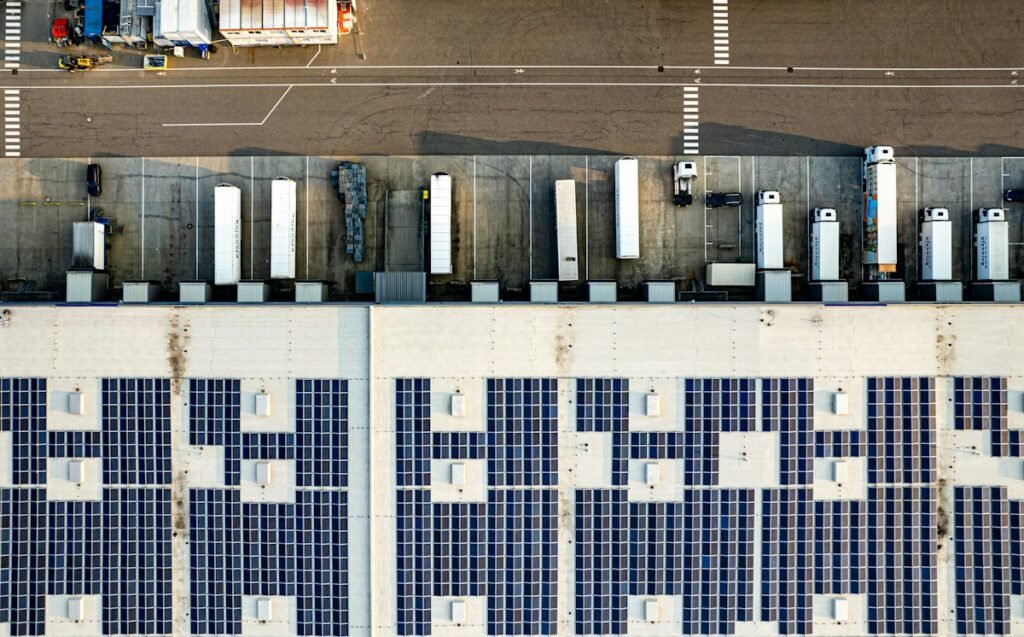
Featured stock photograph: Bernd Dittrich / Unsplash. This rooftop image is illustrative and is not presented as a Cholistan solar farm.