Solar power converts sunlight into electricity or useful heat. For a home in Pakistan, the practical question is how a photovoltaic system, inverter and any battery work together to meet the property’s actual electricity demand.
What to Understand Before Planning a System
Distinguish panel capacity in kW from energy generated in kWh. A panel’s nameplate rating describes a test condition, while daily output changes with sunlight, temperature and shading. A grid-connected system also needs suitable protection and approval; buying panels alone does not provide backup during an outage.
How Does Solar Power Work?
Solar power begins with solar radiation, the light and electromagnetic energy emitted by the Sun. The amount of sunlight available at a location varies with geography, time of day, season, weather, and atmospheric conditions.
For solar electricity, photovoltaic cells absorb sunlight and create electrical charges that move through the semiconductor, producing an electric current.
A basic rooftop solar system works through these stages:
- Solar panels capture sunlight.
- PV cells convert sunlight into DC electricity.
- An inverter converts DC electricity into AC electricity.
- The electricity powers appliances or other electrical loads.
- Excess electricity can be stored in batteries or handled according to the system’s grid connection.
The U.S. Department of Energy explains that individual PV cells are connected to create modules or panels, while multiple modules can be connected into larger solar arrays.
What Is Solar Photovoltaic (PV) Energy?
Solar photovoltaic energy converts sunlight directly into electricity. A PV cell contains semiconductor material that absorbs light and transfers its energy to electrons, allowing electrical current to flow.
Silicon is the most common semiconductor used in solar cells. Silicon-based PV technology remains widely used because its semiconductor properties allow sunlight to be converted into electrical energy.
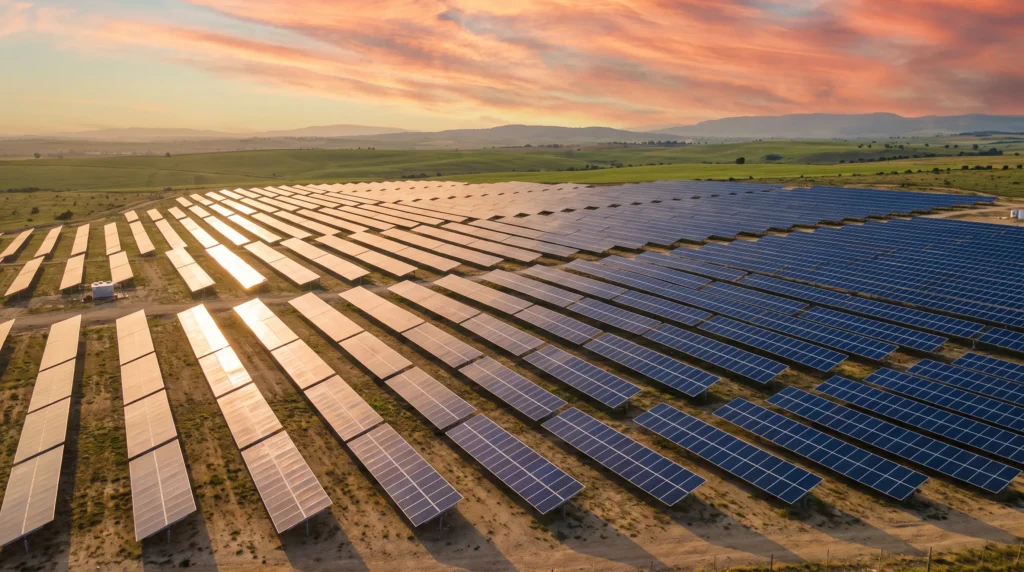
Individual cells produce relatively small amounts of power, so they are connected together to form modules. Modules can then be combined into arrays for residential, commercial, and utility-scale systems.
What Are the Main Types of Solar Power?
There are two major solar-energy technologies: photovoltaics (PV) and concentrating solar-thermal power (CSP), according to the U.S. Department of Energy.
Solar Photovoltaic Systems
PV systems use solar cells to convert sunlight directly into electricity.
They are commonly used for:
- Residential rooftop solar
- Commercial buildings
- Solar farms
- Remote electricity systems
- Battery-storage systems
Concentrating Solar-Thermal Power
Concentrating solar-thermal power uses mirrors to concentrate sunlight and generate heat. That heat can then be used to produce electricity or stored for later use. DOE notes that CSP is primarily used in large power plants rather than typical residential systems.
What Components Are in a Solar Power System?
A complete solar PV system contains more than just panels.
Solar Panels
Solar panels contain interconnected photovoltaic cells that generate DC electricity when exposed to sunlight.
Inverter
The inverter converts the panels’ direct-current (DC) electricity into alternating-current (AC) electricity suitable for typical household electrical loads.
Mounting Structure
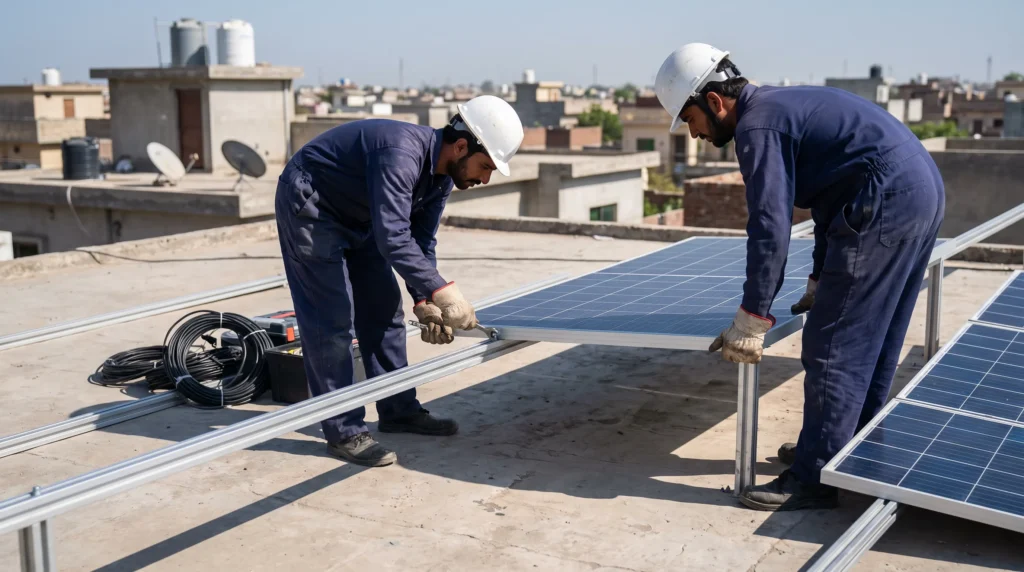
Mounting equipment holds the panels securely and positions them appropriately for solar exposure. DOE notes that PV mounting structures need to withstand outdoor conditions such as wind, rain, hail, and corrosion.
Battery Storage
A battery can store electricity for later use. Solar-plus-storage systems can therefore use stored energy when solar production is lower or when backup power is required.
Electrical Protection and Wiring
A working PV installation also requires electrical wiring and appropriate protection equipment to connect the solar array, inverter, battery (where applicable), and building electrical system.
What Affects Solar Power Production?
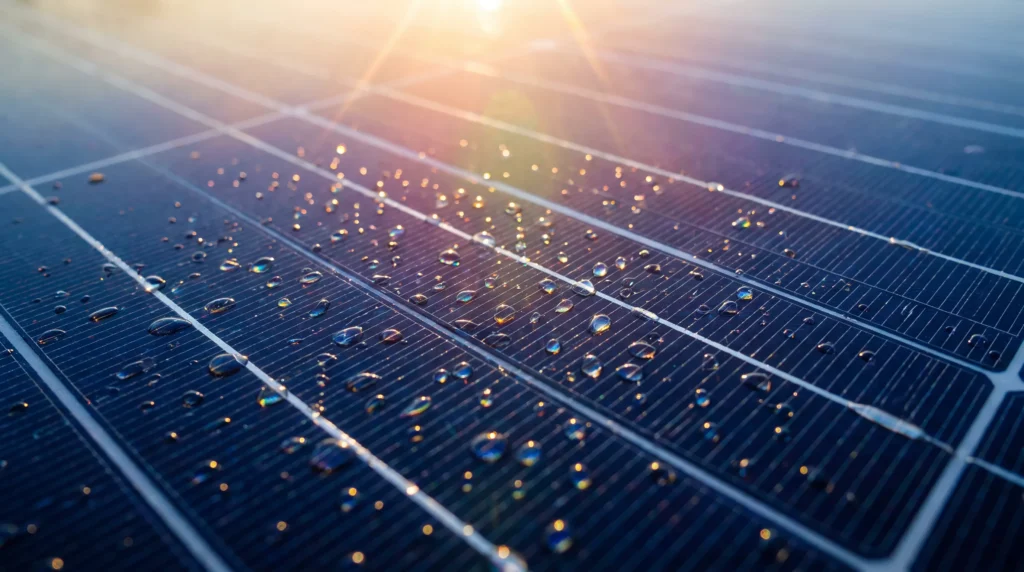
Solar panels do not produce the same amount of electricity at every moment. Solar radiation changes with several environmental and system factors.
Important factors include:
- Sunlight intensity
- Time of day
- Season
- Weather and cloud cover
- Panel orientation and positioning
- Shading
- Panel temperature
- Panel and system efficiency
DOE notes that higher temperatures generally reduce PV voltage and can lower overall cell performance.
What Does Solar Panel Efficiency Mean?
Solar-panel efficiency is the percentage of incoming solar energy that a PV device converts into usable electricity. It is one measure of how effectively a panel converts sunlight into electrical power.
Efficiency is not the only specification that matters. A solar system’s real-world output also depends on sunlight availability, temperature, shading, system design, and other operating conditions.
What Are the Benefits of Solar Power?
Renewable Energy Source
Solar energy comes from the Sun and can be continuously replenished naturally.
Lower Dependence on Conventional Electricity
A properly designed solar system can generate electricity on-site, potentially reducing the amount of electricity a household or business needs to obtain from the grid.
Energy Storage Options
Combining solar with batteries allows excess electricity to be stored and used later. DOE identifies solar-plus-storage systems as one way to improve resilience when grid service is disrupted.
Scalable System Design
PV systems can range from small residential installations to large utility-scale projects. Their modular design allows systems to be sized according to the electricity requirement and available installation space.
What Are the Limitations of Solar Power?
Solar power also has practical limitations.
Solar generation varies with sunlight, so electricity production is lower at night and can be reduced by clouds and other atmospheric conditions.
Solar systems also require suitable installation space and appropriate system design. Roof condition, shading, orientation, electrical requirements, and local regulations can all affect whether a particular installation is suitable. DOE’s homeowner guidance specifically recommends considering roof age and tree shading when evaluating a rooftop system.
Is Solar Power the Same as Solar Energy?
Not exactly.
Solar energy is the broader term for energy obtained from the Sun, while solar power commonly refers to using that energy to produce electricity. Solar technologies can also use sunlight to produce heat, as with concentrating solar-thermal systems.
Why Is Solar Power Important for Homes and Businesses?
Solar power allows electricity to be generated close to where it is consumed. A building can use a rooftop PV system to generate electricity during daylight hours, while batteries can provide an additional way to use stored solar energy later.
The actual financial and energy benefits depend on the system’s size, electricity consumption, local solar resource, equipment costs, electricity rates, and applicable grid rules.
Frequently Asked Questions
Is solar power renewable?
Yes. Solar power uses energy from sunlight, which is naturally replenished. Solar PV systems convert that sunlight into electricity without requiring fuel to generate electricity during operation.
How do solar panels generate electricity?
Solar panels contain photovoltaic cells made with semiconductor materials. When sunlight reaches the cells, its energy causes electrical charges to move, creating an electric current.
Can solar power work at night?
Solar panels do not generate electricity from sunlight at night. A solar system with battery storage can use electricity stored during earlier periods of solar generation, while grid-connected systems can use electricity from the grid when required.
Do solar panels work on cloudy days?
Yes, PV panels can still generate electricity when sunlight is available through clouds, but output can be lower than under stronger sunlight. Solar radiation reaching a location depends on weather and atmospheric conditions.
How long do solar panels last?
Solar panels are designed for long-term outdoor operation, but their output gradually changes over time. The exact expected service life and degradation rate depend on the panel technology and manufacturer’s specifications.