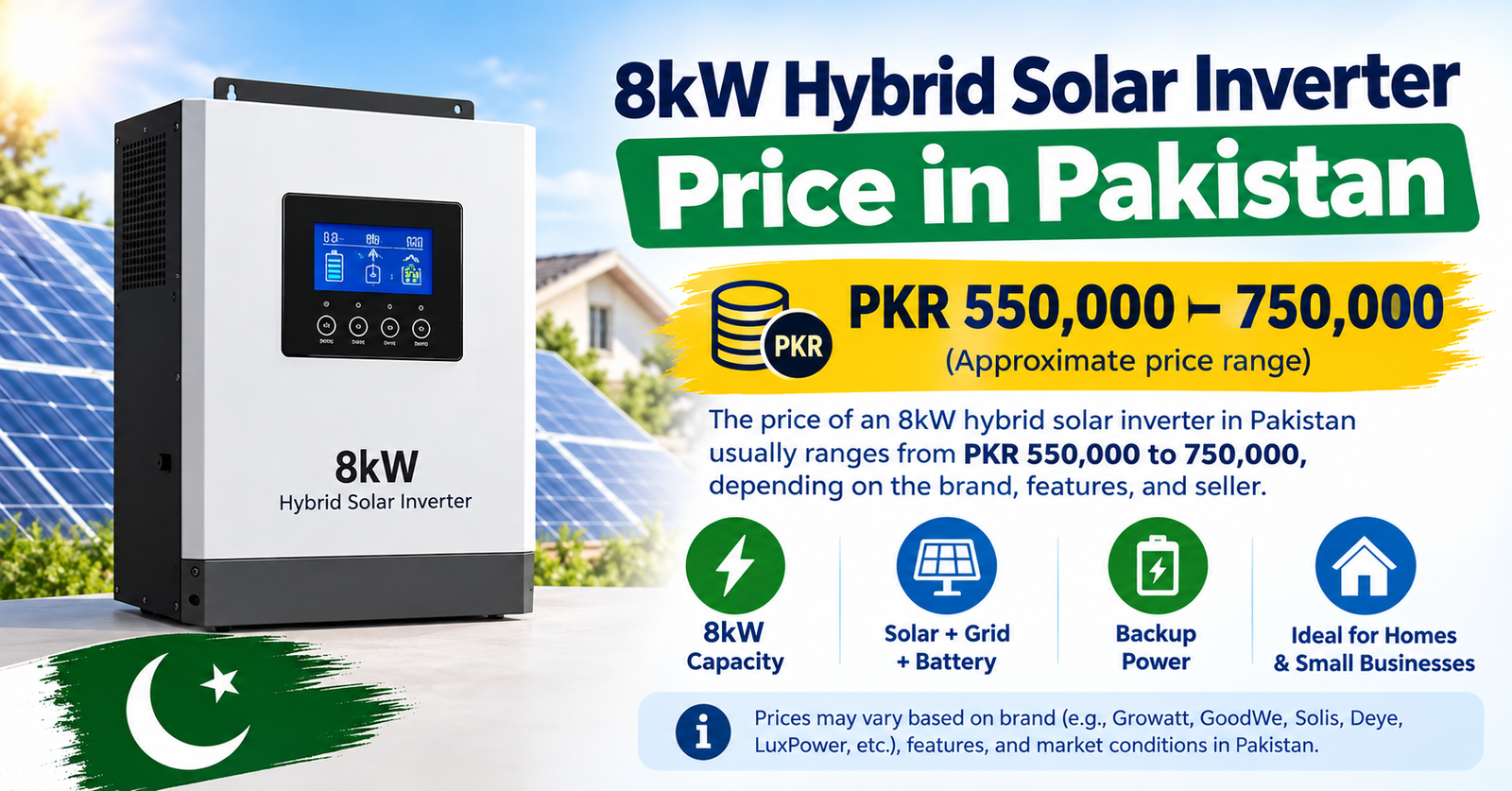
8kW Hybrid Solar Inverter Price in Pakistan (2026 Guide)
An 8kW hybrid solar inverter costs between Rs 195,000 and Rs 520,000 in Pakistan as of September 2026, depending on the brand, IP rating, and battery compatibility. Local and entry-level Chinese-assembled models like the Fronus PV9200 start near Rs 195,000; mid-range options from Knox, MaxPower/Voltas, and Ziewnic sit around Rs 280,000 to Rs 345,000, and internationally recognised names like Inverex Nitrox, Solis, and Solax typically land between Rs 400,000 and Rs 520,000.
That is a wide spread for a single “capacity”, and most price lists don’t explain why. This guide breaks down real current prices by brand, what actually drives that gap, whether 8kW is even the right size for your home, and, critically, how Pakistan’s 2026 net metering overhaul changes the math on buying an 8kW system this year.
6kW Hybrid Solar Inverter Price in Pakistan (2026 Rates)How Much Does an 8kW Hybrid Inverter Cost in Pakistan Right Now?
Here’s a snapshot of current market pricing for 8kW (and closely adjacent 8 to 8.5kW) hybrid inverters from active Pakistani retailers and dealers:
| Brand / Model | Approx. Price (PKR) | Positioning |
|---|---|---|
| Fronus PV9200 8kW | ~195,000 | Budget, local assembly |
| Ziewnic Marvel 5G 8.5kW | ~220,000 | Entry-level, decent reviews |
| MaxPower Voltas 8kW H6 IP66 | 285,000 to 322,000 | Mid-range, IP66-rated |
| KNOX Zynex 8kW | 320,000 to 345,000 | Mid-to-upper, local brand with backup |
| Knox Krypton 8kW PV11000W | ~350,000+ | High-capacity residential/commercial |
| Inverex Nitrox 8kW 48V IP65 | ~448,000 | Established brand, wide dealer network |
| Solax 8kW | ~455,000 | Imported, dual MPPT |
| Solis 8kW (S6-EH1P8K-L-PRO) | ~455,000+ | Premium efficiency, strong warranty |
| Tesla HLE 8kW 48V (3-phase) | Premium tier | Commercial-ready, three-phase |
These are street and dealer prices tracked by MaxPower Solar, and they move week to week with dollar rates and import-duty changes. Always confirm with two or three dealers before paying; a Rs 30,000 to Rs 60,000 gap between quotes for the “same” model is common in this market.
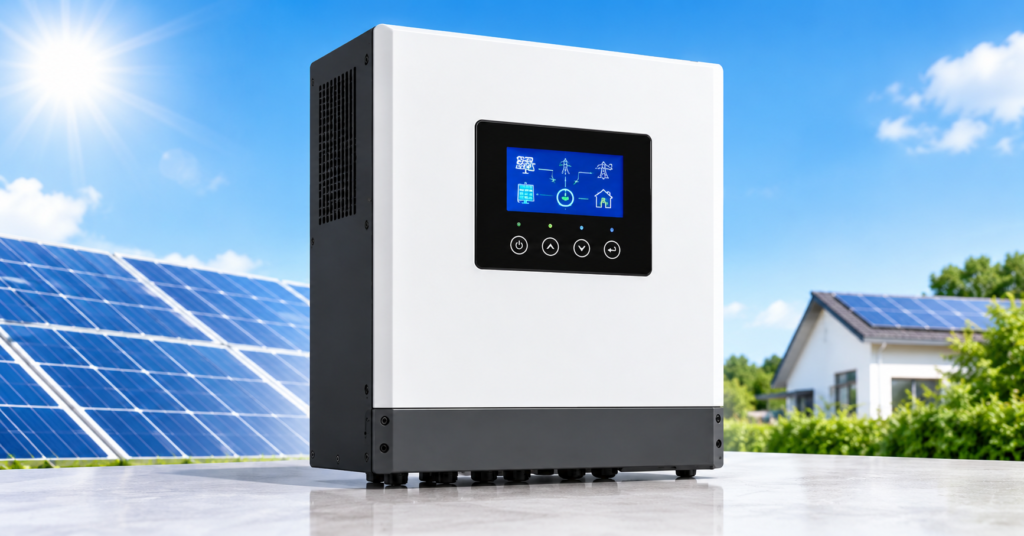
Why the Same “8kW” Label Spans Rs 195,000 to Rs 520,000
An 8kW rating only tells you the maximum output. It says nothing about how the inverter was built, and that’s where most of the price difference actually lives.
IP rating (dust and water protection). IP54- and IP65-rated units are cheaper because they need lighter enclosures and can be mounted in more sheltered locations. IP66-rated inverters are fully dust-tight and can handle direct water jets, which matters if the unit sits outdoors or on an exposed rooftop, and that protection adds real manufacturing cost.
Number of MPPT trackers. Dual-MPPT inverters let you wire panel strings facing two different roof orientations without losing efficiency. Single-MPPT budget models force all your panels onto one string, which underperforms on roofs that aren’t perfectly uniform.
5kW Hybrid Solar Inverter Price in Pakistan (2026 Guide)Battery communication protocol. Cheaper hybrid inverters only support basic lead-acid or generic lithium charging. Higher-end models communicate directly with lithium batteries over CAN bus or RS485, which enables smarter charge cycling, accurate state-of-charge readings, and longer battery life. This feature only matters once you actually add a lithium battery bank.
Brand and import status. Locally assembled brands (Fronus, Ziewnic, some Knox lines) undercut fully imported names (Solis, Solax, Inverex’s premium lines, Tesla, Fronius) by a wide margin, partly because of import duty and partly because of after-sales support networks and R&D overhead baked into the international brands’ pricing.
Warranty depth. A 1-year warranty and a 5-year warranty on paper look like the same product but represent very different manufacturing confidence and spare-parts commitment from the seller.
Is 8kW the Right Size for Your Home?
Before comparing prices further, it’s worth checking whether 8 kW is actually what you need. Oversizing is one of the most common and expensive mistakes Pakistani buyers make.
As a rough guide:
- 3 to 5 kW suits a small household running one inverter AC, lights, fans, a fridge, and a router during load shedding.
- 6 to 8 kW is the sweet spot for a standard Pakistani home running two inverter ACs simultaneously, plus a fridge, motor, and general household load. This is the segment most 8kW inverters are actually sold into.
- 10kW+ is for larger homes with three or more ACs, a water pump, and a heavier simultaneous load, or small commercial setups like clinics and shops.
Before you commit to 8 kW, add up the running wattage of everything you’d want powered at once during an outage, then check the starting (surge) wattage of your largest motor-driven appliance (usually an AC or water pump). Startup surge is what actually trips undersized inverters, not steady-state load.
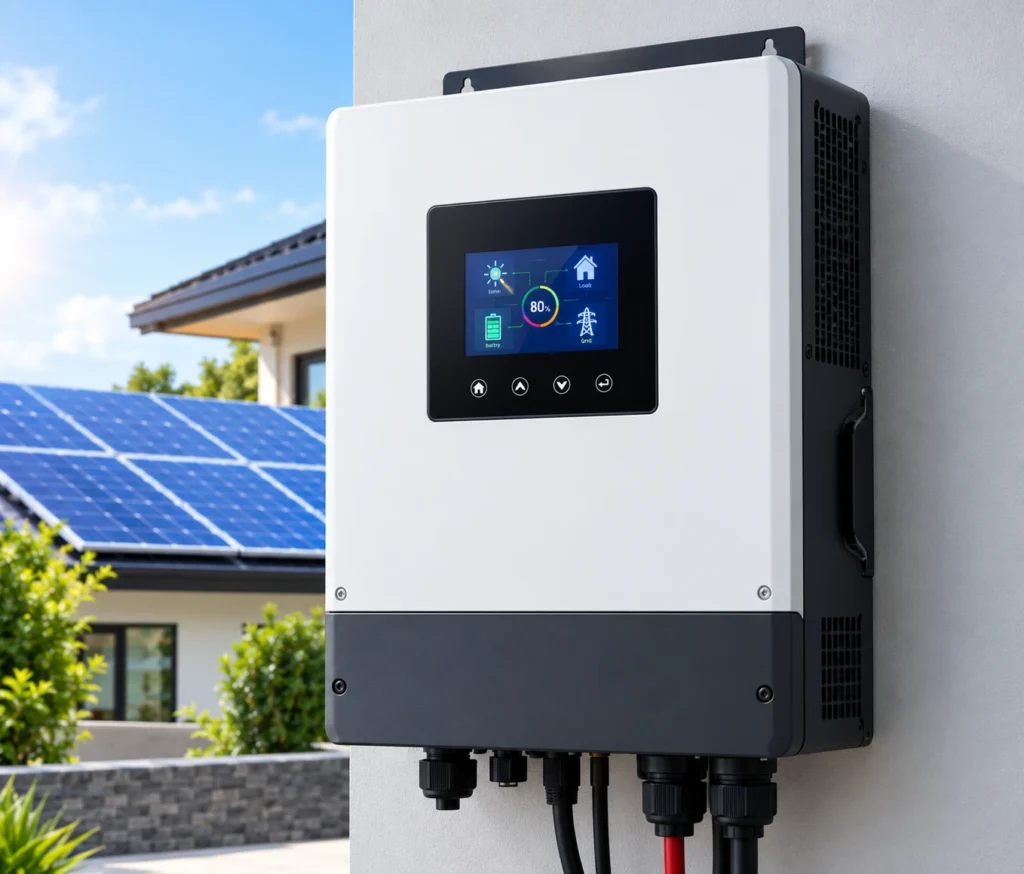
Best 8kW Hybrid Inverter Brands Available in Pakistan
Inverex Nitrox 8kW. One of the most widely stocked hybrid inverters in the country, with dual MPPT, built-in Wi-Fi monitoring, and a large network of local service centres. A safe, well-supported choice if something needs servicing outside a major city.
Knox Zynex / Krypton 8kW. A newer local brand that has gained traction on price-to-feature ratio, with IP65/IP66 variants and solid backup-switching speed.
MaxPower Voltas 8kW H6 IP66. Fully dust- and water-jet protected, positioned as a mid-range workhorse for rooftop installations exposed to Pakistan’s dust and monsoon conditions.
Solis / Solax 8kW. Chinese-manufactured but globally certified brands with strong efficiency ratings (published peak efficiency figures in the high 90s) and better resale/trust value if you plan to sell the property later.
Tesla HLE 8kW (three-phase). Positioned for larger homes or small commercial premises that run three-phase power, at a noticeably higher price point than single-phase residential models.
Fronus PV9200 8kW. The budget entry point. Functional for basic backup needs, but shop carefully on warranty terms at this price tier.
How to Apply for Solar Net Metering in Pakistan (2026 Guide)How Pakistan’s 2026 Net Metering Changes Affect 8kW Buyers
This is the part most price-comparison pages skip, and it directly affects whether an 8kW system still makes financial sense the way it did two years ago.
Through 2025, Pakistan’s net metering buyback rate was cut sharply, from roughly Rs 27 per unit down toward Rs 10 to 11 per unit, as the Economic Coordination Committee revised the framework to ease pressure on grid-only consumers. Then, in February 2026, NEPRA formally replaced net metering with a “net billing” system under the new Prosumer Regulations, ending the old one-to-one unit exchange entirely for new applicants. Under net billing, DISCOs buy your exported solar power at the National Average Energy Purchase Price (around Rs 11/unit) while still charging you Rs 40 to 50+/unit for grid electricity you draw at night. Contract terms for new connections also shrank from seven years to five.
Following public pushback, the government partially rolled the policy back: applications submitted before February 8, 2026 are still processed under the old, more favorable net metering terms, but everyone applying now falls under the new net billing regime.
What this means if you’re sizing an 8kW system in September 2026: the financial case for building a large system to export surplus power has weakened considerably. The smarter move is to size your inverter and panel array closer to your actual daytime and evening consumption, and lean on battery storage to shift solar energy into the hours you actually need it, rather than exporting it for a buyback rate that barely covers a fraction of what you pay to import.
Practically: if your household genuinely runs two ACs plus general load, 8kW with a properly sized lithium battery bank still makes sense as a self-consumption system. If you were sizing 8kW mainly to generate a surplus to sell back to the grid, it’s worth re-running the numbers under the new Rs 11/unit reality before you buy.
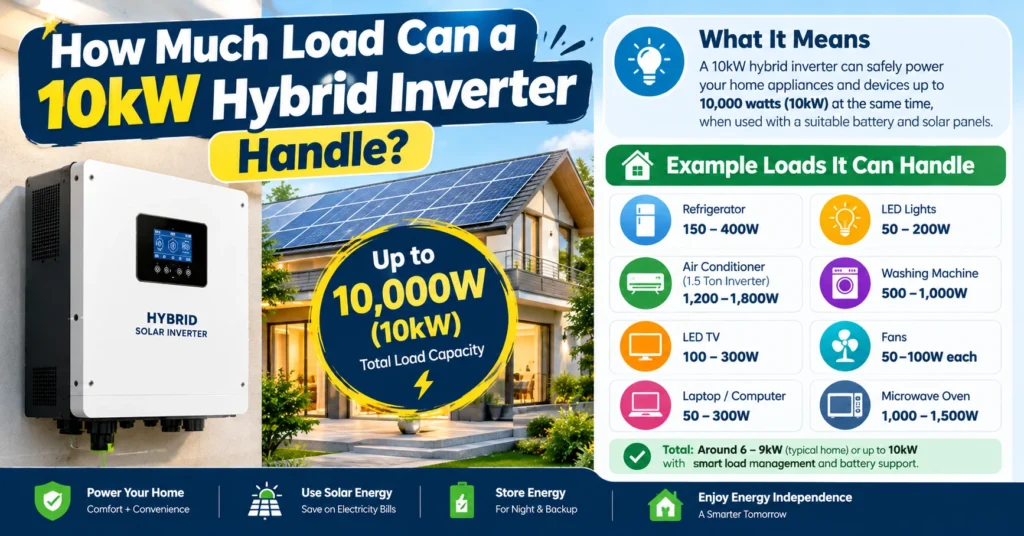
Read More: 10kW Hybrid Solar Inverter Price in Pakistan (2026)
Full 8kW Hybrid System Cost (Not Just the Inverter)
The inverter is only part of the bill. Here’s a realistic full-system estimate for an 8kW hybrid setup in Pakistan:
| Component | Estimated Cost (PKR) |
|---|---|
| 8kW hybrid inverter | 195,000 to 520,000 |
| Solar panels (~10 to 12kW array, oversized for hybrid efficiency) | 700,000 to 1,000,000 |
| Lithium battery bank (10 to 15kWh) | 500,000 to 900,000 |
| Mounting structure, wiring, DB, earthing | 150,000 to 250,000 |
| Installation labor | 50,000 to 100,000 |
| Total (inverter + panels + lithium battery + install) | ~1.6M to 2.8M |
Lead-acid battery systems bring the total down significantly but need replacement every 2 to 3 years, which usually erases the upfront savings over a 5 to 7-year horizon.
How to Choose the Right 8kW Hybrid Inverter
- Match the IP rating to where it’ll be mounted. Outdoor, exposed installation needs IP66. A sheltered indoor or covered spot is usually fine with IP65 and cheaper.
- Check battery protocol compatibility before you buy the battery. If you plan on lithium, confirm CAN/RS485 support now; retrofitting later can mean replacing the inverter.
- Get the warranty in writing, including whether it covers parts, labour, or both, and whether it’s serviced locally or requires shipping back to a distributor.
- Buy from a dealer with a physical service centre, not just an online listing. Inverter faults during peak summer load are common, and turnaround time matters more than a small price saving.
- Size around your actual consumption under the new net billing rules, not around maximising export potential.
Frequently Asked Questions
What is the average 8 kW hybrid solar inverter price in Pakistan in 2026?
Most 8kW hybrid inverters fall between Rs 195,000 and Rs 520,000, with well-known brands like Inverex, Solis, and Solax typically priced at Rs 400,000 and up, and local or budget brands starting near Rs 195,000 to 220,000.
Is an 8kW hybrid inverter enough for a house running two ACs?
Yes. 8 kW is generally sufficient for a home running two inverter ACs plus a standard household load simultaneously, provided the wiring and battery bank are sized to match.
Do I still need net metering if I buy an 8kW system in 2026?
Not necessarily. With buyback rates now around Rs 11/unit under NEPRA’s new net billing rules, many installers recommend sizing for self-consumption with battery storage rather than relying on grid export for returns.
Which brand gives the best value for an 8kW hybrid inverter near me?
For most Pakistani buyers, MaxPower/Voltas and Knox offer strong mid-range value with wide local service coverage, while Inverex and Solis suit buyers prioritising brand reputation and resale value over upfront price.
Can an 8kW hybrid inverter run on lithium batteries?
Most current-generation 8kW hybrid inverters support lithium via CAN or RS485 communication, but always confirm the exact model’s supported battery chemistry before purchase. Older or budget models may only support lead-acid.
How much does a complete 8kW solar system with battery backup cost in Pakistan?
A full 8kW hybrid system, including inverter, panels, lithium battery bank, and installation, typically costs between Rs 1.6 million and Rs 2.8 million depending on battery capacity and panel brand chosen.
Is it cheaper to buy an 8 kW inverter online or from a local dealer?
Prices are often similar, but buying from a local dealer with a physical service centre is generally safer for warranty claims and faster for repairs than an online-only listing.
Get the Right Size, Not Just the Right Price
An 8kW hybrid inverter is one of the most common sizes sold in Pakistan for a reason: it fits the load profile of a typical two-AC household. But with net metering buyback rates down and net billing now the default for new applicants, the smarter starting point is your actual consumption pattern, not the biggest inverter your budget allows. Get a load calculation done, compare at least three dealer quotes on the same model, and confirm battery compatibility in writing before you commit.