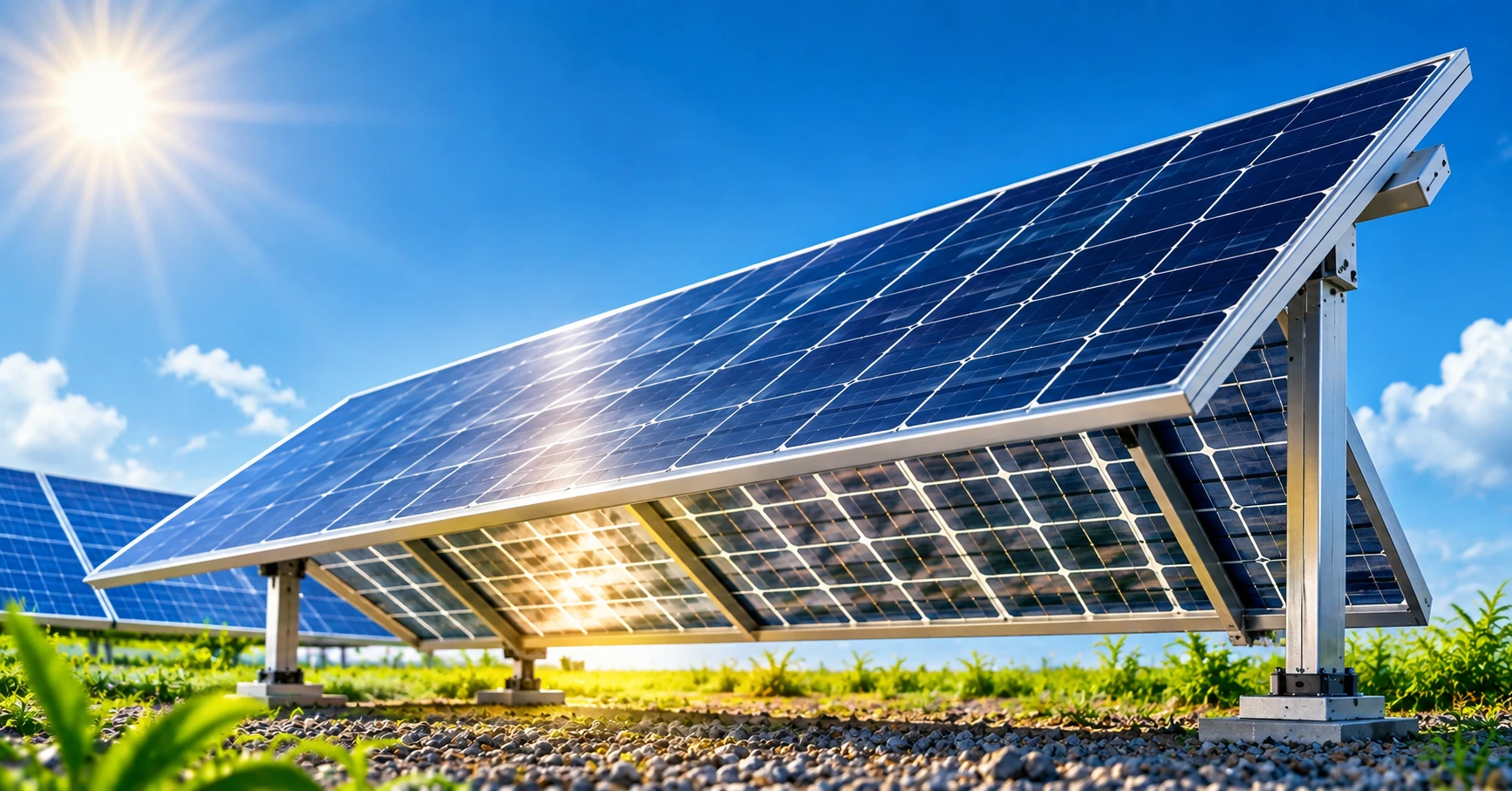
Bifacial Solar Panels Price in Pakistan (2026 Guide)
Currently, A-grade N-type bifacial solar panels cost between Rs. 38 and Rs. 46 per watt in Pakistan, as opposed to Rs. 28 to Rs. 34 per watt for regular monofacial panels. That premium of around Rs. 8 to Rs. 12 per watt will get you a panel that generates electricity from its front and rear surfaces, but whether it’s worth paying for depends heavily on the surface your panels will actually be sitting above.
This guide covers current market pricing by brand and wattage, how bifacial technology works, realistic efficiency gains for Pakistani rooftops specifically, and the one verification step most buyers skip that ends up costing them the most.
How Much Do Bifacial Solar Panels Cost in Pakistan Right Now?
Bifacial solar panel prices in Pakistan currently range from Rs. 38 to Rs. 46 per watt for genuine A-grade, Tier-1 N-type panels, translating to roughly Rs. 22,000 to Rs. 29,000 for a single 580W–615W panel depending on brand and dealer.
| Brand & Model | Wattage | Price per Watt (PKR) | Approx. Panel Price (PKR) |
|---|---|---|---|
| LONGi Hi-MO 7 | 580–585W | 38–43 | 22,000–25,000 |
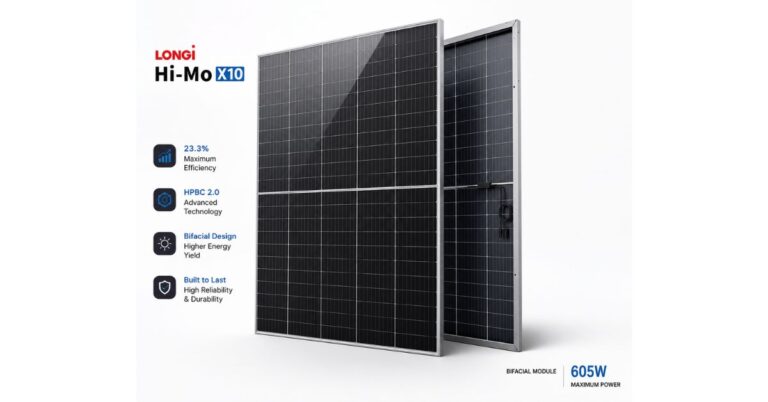
| LONGi Hi-MO X10 | 640W | 42.50–44.40 | 27,200–28,400 |
| Jinko Tiger Neo | 610–615W | 43–45.90 | 26,400–28,200 |
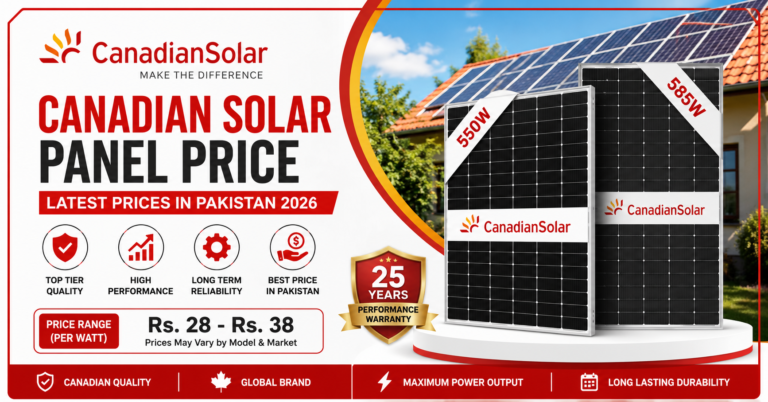
| Canadian Solar TOPCon | 615–655W | 42–45.60 | 26,000–29,900 |
| JA Solar N-Type | 610W | 41.50–41.60 | 25,300–25,400 |
| Trina Vertex N | 585–645W | 38–41 | 22,200–26,400 |
These figures are panel-only costs and move with the rupee-dollar rate, so treat them as a current snapshot rather than a fixed quote. Always confirm same-day rates with an authorized dealer before ordering.
Why Bifacial Panels Cost More Than Monofacial Panels
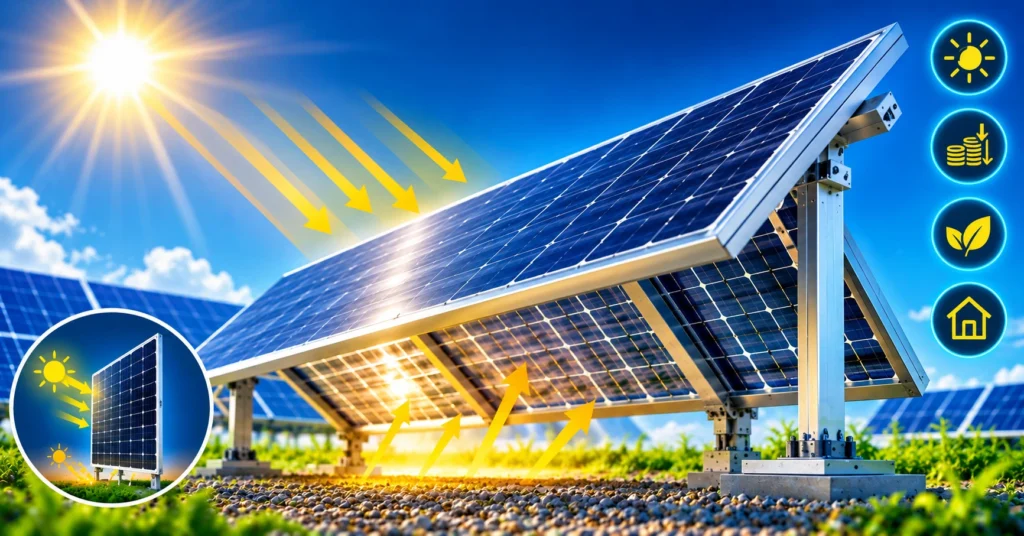
The price difference comes from construction, not from employing a different kind of solar cell. A monofacial panel has a solid, opaque rear backsheet that protects the cells but blocks all light. Instead of a backsheet, a bifacial panel has a transparent layer, or second pane of glass, that exposes the rear cells so reflected light can create a second stream of current.
That structural change adds cost in three places—the glass or transparent rear sheet itself. Frameless or narrow-rail mounting hardware designed to avoid shading the back face. And in genuine N-type models, a more advanced cell architecture that converts rear-side light efficiently. This last bit is what explains most of the actual price difference in Pakistan’s market, and this is also where buyers are most often misled.
Bifacial Solar Panels vs Monocrystalline: Which Is Better?
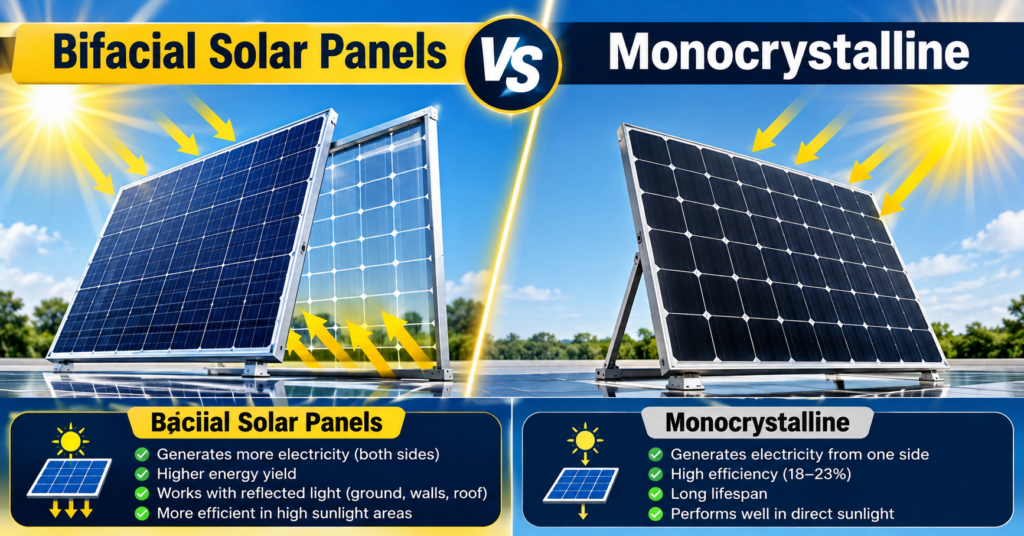
“Monocrystalline” is not referring to whether a panel is bifacial or monofacial but to the silicon cell used. Most bifacial panels being sold in Pakistan are monocrystalline, so the actual comparison is bifacial monocrystalline vs standard monofacial monocrystalline.
| Monofacial Monocrystalline | Bifacial Monocrystalline | |
|---|---|---|
| Generation | Front only | Front and rear |
| Typical price (PKR/watt) | 28–34 | 38–46 |
| Rear backsheet | Solid, opaque | Transparent or dual-glass |
| Best surface | Any, including dark tile | Light-coloured or elevated surfaces |
| Realistic extra yield | — | 3–8% on flush roofs, up to 20%+ elevated/ground-mount |
| Durability | Standard warranty | Often longer, due to dual-glass protection |
In the case of a flush-mounted rooftop over standard dark clay or concrete tiles—the most common residential setup in Pakistan—the efficiency gap shrinks considerably, as there is not much clearance or reflectivity for the rear face to contribute much. Bifacial pulls ahead in a meaningful way for ground-mounted systems, elevated commercial racking, or rooftops with light-colored tile or paint finishes.
How Do Bifacial Solar Panels Work?
The front face works exactly like a standard panel: sunlight strikes the silicon cells and generates direct current. The rear face uses the same principle, but on reflected light instead of direct light, which is known as albedo.
Albedo measures how much light a surface bounces back, on a scale of 0 (fully absorbing) to 1 (fully reflecting).
- White or light-coloured roof paint: roughly 0.5–0.8
- Standard clay or concrete roof tiles: roughly 0.1–0.2
- Dark asphalt or dark concrete: roughly 0.05
A panel mounted with an air gap above a white-painted surface will pick up a lot more rear-side power than the same panel mounted flush against a dark tile. It’s often this one variable, not the panel brand, that determines if the bifacial premium is worth it.
Another spec to look for before buying is the bifaciality factor, expressed as a percentage (usually 65-90% for quality panels), which indicates how efficiently the rear face converts reflected light as compared to the front. Don’t take “bifacial” as a quality signal; ask your dealer for the number on the datasheet.
Bifacial Solar Panel Efficiency: What Extra Output Should You Actually Expect?
Bifacial panels typically produce 5% to 20% more annual energy than an equivalent monofacial panel under real-world conditions, with the top end requiring elevated mounting, a reflective surface underneath, and unshaded rear cells.
On a standard Pakistani rooftop, tiled, flush, or near-flush mounted, a realistic gain is closer to 3% to 8%, not the 20–30% figures sometimes advertised for lab or tracking-system conditions. For a 5kW residential system, that’s the difference between an extra 150–250 units a year on a typical dark-tiled roof versus 400+ units a year on an elevated, ground-mounted array over light gravel or painted concrete.
Bifacial Solar Panels 450W: Is This Wattage Still Relevant?
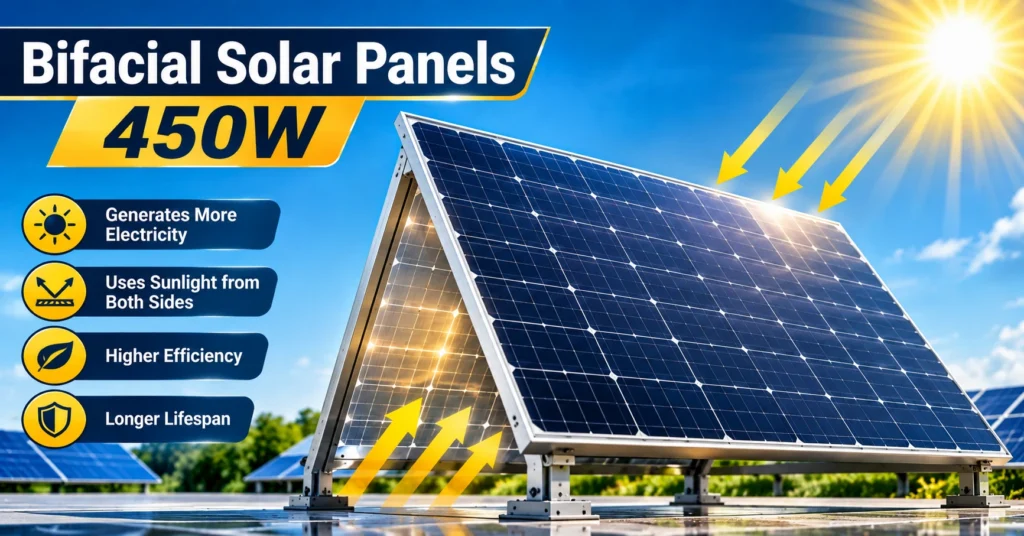
With most of the Tier-1 brands (LONGi, Jinko, Canadian, JA, and Trina) making 580W-650W+ modules as their standard bifacial line, 450W bifacial panels have mostly been phased out of the current market in Pakistan in favor of lower cost per watt. If you’re quoted a 450W bifacial panel today, make sure it’s not old or discontinued inventory. Per-watt pricing for legacy 450W panels is often no cheaper than current 580W+ models, and you’ll need more panels to get to the same system size, adding mounting and wiring costs.
Disadvantages of Bifacial Solar Panels
Bifacial technology isn’t a straightforward upgrade for every roof, and buyers in Pakistan run into a few recurring issues:
- Higher upfront cost—typically Rs. 8–12 more per watt than monofacial, which only pays back with the right mounting conditions.
- Wasted potential on flat roofs—dark tile with little to no rear clearance means the rear face contributes very little, so you pay the premium without getting the gain.
- Counterfeit and mislabeled stock—the most significant risk in the Pakistani market right now is P-type panels sold as N-type bifacial. P-type is older technology with faster degradation, and the difference isn’t visible to the naked eye.
- More demanding installation — proper bifacial gains need elevated racking, wider spacing, and careful attention to rear-side shading from mounting rails and junction boxes, which not every local installer accounts for.
- Marginal gains in low-light or heavily dust-covered conditions — dust accumulation on the rear face specifically (harder to clean than the front) can offset some of the theoretical advantage.
How to Avoid Buying Mislabelled Panels
So every big brand that sells in Pakistan—LONGi, Jinko, JA, Canadian, and Trina—has a serial number or a QR code on the back label, which you can verify from the manufacturer’s official verification portal. Scan or enter this BEFORE you accept delivery, not after installation. This one step removes the number one complaint in bifacial solar panel reviews by Pakistani buyers: paying N-type bifacial prices for a P-type panel with a bifacial-style rear sheet but with none of the efficiency or longevity benefits.
Also confirm AEDB verification for the panel and NEPRA verification for any inverter—both are required for grid-connected systems and for accessing net metering.
When Bifacial Panels Are Worth the Extra Cost in Pakistan
Bifacial makes the strongest financial case for the following:
- Ground-mounted systems, where the surface beneath the array can be chosen or prepared (light gravel, painted concrete)
- Elevated commercial or industrial racking with genuine rear clearance
- Roofs finished in white or light-coloured tile or paint
- Larger systems where a few percentage points of extra yield compound meaningfully over 25 years
It’s a weaker case for the following:
- Standard residential roofs with dark clay or concrete tile, flush-mounted
- Budget-constrained installs where the premium doesn’t have a realistic path to paying itself back through rear-side generation
A quick rule of thumb: if you can’t describe what’s underneath and behind your panels in terms of color and clearance, you’re not yet in a position to know if bifacial is worth the premium for your specific roof.
FAQ SECTION
What is the current bifacial solar panel price in Pakistan?
A-grade Tier-1 N-type bifacial panels currently cost Rs. 38 to Rs. 46 per watt, or roughly Rs. 22,000 to Rs. 29,000 per panel for common 580W–650W models from brands like LONGi, Jinko, Canadian Solar, JA, and Trina.
Is the Longi bifacial solar panel price higher than other brands in Pakistan?
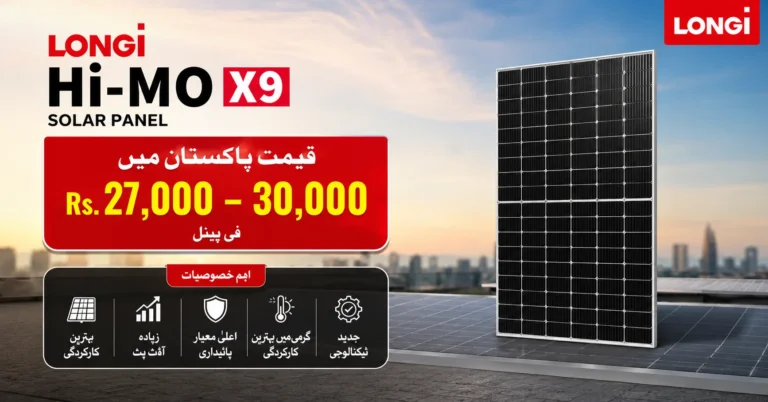
LONGi sits in the mid-premium range, generally priced close to Jinko and slightly below Canadian Solar, with the Hi-MO 7 (580–585W) around Rs. 38–43/watt and the newer Hi-MO X10 around Rs. 42.50–44.40/watt.
Are bifacial solar panels worth it for a normal house roof in Pakistan?
On a flush-mounted roof with standard dark tile, the rear-side gain is usually only 3–8%, which may not offset the higher upfront cost—bifacial pays off far better on elevated, ground-mounted, or light-colored/white-roof installations.
How can I check if a bifacial panel in Pakistan is genuine N-type?
Scan the QR code or serial number on the panel’s rear label and verify it directly on the manufacturer’s official portal (LONGi, Jinko, JA, Canadian, and Trina all provide one) before accepting delivery.
What’s the difference between bifacial solar panels and monocrystalline panels?
Monocrystalline describes the silicon cell type; bifacial describes whether the panel generates power from one side or both. Most bifacial panels sold in Pakistan are monocrystalline, so the real comparison is bifacial monocrystalline against standard monofacial monocrystalline.
Do bifacial solar panels need special installation in Pakistan?
Yes, they perform best with a slight tilt and roughly 20–30 cm of clearance from the roof surface so reflected light can reach the rear cells. Flush mounting largely negates the rear-side advantage.
Are 450W bifacial panels still available and worth buying in Pakistan?
450W bifacial panels are largely outdated; the current market standard is 580W–650W+, which typically offers a better price per watt, so a 450W panel is worth checking for age or discontinued stock before purchase.
2 Comments