

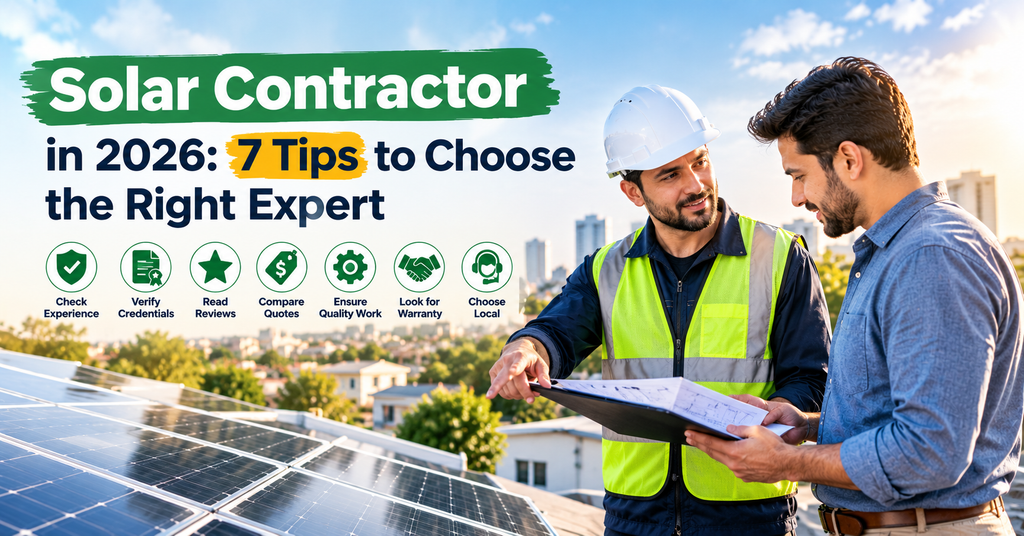
A solar system can run for 25 years or more, but only if it is designed and installed properly. A poor installation can mean roof leaks, weak output, and warranty disputes that last for years. In 2026, there are more installers than ever, which gives you more choice and a bigger gap in quality. These seven tips will help you pick a contractor you can trust.
Key Takeaways
- Verify licence, insurance, and certifications first.
- Compare at least three itemised quotes for the same system size.
- Read the workmanship warranty, not just the panel warranty.
- Talk to real past customers before you sign.
- Never pay a large deposit or sign under pressure.
Read More: Home Energy Audit Before Solar: Measure What You Actually Use
Why Your Choice of Contractor Matters
Panels and inverters come from a handful of manufacturers, so the equipment is often similar across quotes. What differs is the quality of the design, the wiring, the roof work, and the support after installation. Incentives and grid rules also vary by country and utility, and they change often. [VERIFY SOURCE: current incentives and net-metering rules for your region from your energy agency or utility.] A good contractor explains these honestly instead of promising savings they cannot prove.
Tip 1: Verify Licence, Insurance, and Certifications
This is the quickest filter. Ask for:
- A valid business or electrical licence. Requirements differ by location. [VERIFY SOURCE: your local licensing authority.]
- Liability insurance, which covers damage to your property.
- Workers’ compensation insurance, so you are not exposed if someone is hurt on your roof.
- Industry certifications, such as NABCEP in the US or MCS in the UK. [VERIFY SOURCE: schemes that apply in your country.]
Confirm each document with the issuing body. A reputable company will not mind.
Tip 2: Check Experience and Who Does the Work
Years in business help, but the details matter more. Ask how many systems they have installed, whether their own employees or subcontractors do the work, and whether they have handled your roof type (tile, metal, flat, shingle). A team that regularly works on your roof type is less likely to make mounting and waterproofing mistakes.
Red flag: the company avoids questions about subcontractors or cannot name its crew.
Tip 3: Get Three Itemized Quotes
Never accept the first quote. A good quote lists:
- System size in kW
- Panel brand, model, and quantity
- Inverter type (string, micro, or optimizers)
- Mounting and any roof work
- Permit and grid-connection costs
- Expected yearly production and the assumptions behind it
- Total price and payment schedule
Compare price per watt, but do not stop there. A very cheap quote may use weaker components or leave out costs that appear later. If one price is far below the rest, ask what is missing.
Tip 4: Understand the Equipment and Design
You do not need to be an engineer, but you should know what you are buying.
- Degradation rate: panels lose a little output each year. [INSERT VERIFIED STAT: typical annual degradation from a manufacturer datasheet or the National Renewable Energy Laboratory.]
- Inverter lifespan: inverters often need replacing before panels do, so ask about replacement cost.
- Shading analysis: a serious contractor measures shade from trees and buildings instead of guessing.
- Roof condition: if your roof is near the end of its life, replace it before installing panels.
A trustworthy expert explains why they recommend specific equipment rather than pushing one brand.
Tip 5: Read the Warranty Carefully
There are usually three warranties, and contractors sometimes blur them together:
- Product warranty from the panel and inverter makers
- Performance warranty that guarantees minimum output over time
- Workmanship warranty from the contractor, covering installation and roof penetrations
The workmanship warranty is often the most important because installation errors cause many problems. Ask how long it lasts, what happens if the company closes, and who you call for repairs. A warranty backed by insurance or a third party is safer than one backed only by the company’s promise.
Read More: Solar Roof Mounting and Waterproofing: Prevent Avoidable Leaks
Tip 6: Check Reviews and Call References
Read reviews on several platforms, not just the contractor’s website. Notice how the company responds to complaints, and be careful with a sudden burst of generic five-star reviews. [VERIFY SOURCE: your consumer protection agency or business registry for complaint records.]
Then do what most buyers skip: ask for two or three recent customers and call them. Ask whether the project finished on time, whether the final price matched the quote, and how problems were handled. If you can, look at a finished installation to see how neat the wiring and mounting are.
Tip 7: Watch for Red Flags in the Sales Process
Even a good company can have a pushy salesperson. Slow down or walk away if you see:
- “This price expires today” pressure
- Guaranteed savings or “free solar” claims with no written explanation
- A large upfront deposit [VERIFY SOURCE: deposit rules in your region]
- Refusal to put promises in writing
- Vague answers about financing, interest, or fees
Take a few days to read the contract. If a clause is unclear, ask for an explanation or have a qualified person review it.
Common Mistakes to Avoid
- Choosing on price alone. The cheapest installer can become the most expensive after repairs.
- Ignoring financing terms. A low monthly payment can hide high interest and a long term.
- Skipping the roof inspection. Removing and reinstalling panels later is costly.
- Forgetting permits. Confirm who handles permits and grid approval, and who pays.
- Trusting unrealistic savings. Ask to see the assumptions behind every figure.
Quick Checklist Before You Sign
- License and insurance verified
- Three itemized quotes compared
- Equipment and design understood
- Warranty terms confirmed in writing
- References contacted
- Price, payments, and timeline written into the contract
Read More: Solar Monitoring Without Internet: Local Data and Cloud Limits
Frequently Asked Questions
How many quotes should I get?
At least three. This shows you a realistic price range and different design approaches.
Is the cheapest installer a bad choice?
Not always, but a very low price deserves questions about equipment, warranty, and exclusions.
How long does installation take?
The physical work often takes a few days, but permits and grid approval can add weeks or months. [VERIFY SOURCE: typical timelines in your region.]
What if the solar company closes?
Manufacturer warranties usually remain valid, but the workmanship warranty may not. That is why insured or third-party-backed warranties matter.
Conclusion: Solar Contractor in 2026
Choosing a solar contractor takes some homework, but it protects one of the biggest purchases you will make for your home. Verify credentials, compare itemised quotes, read the warranty, and speak to past customers. Your next step: shortlist three licensed contractors and request itemised quotes this week.