
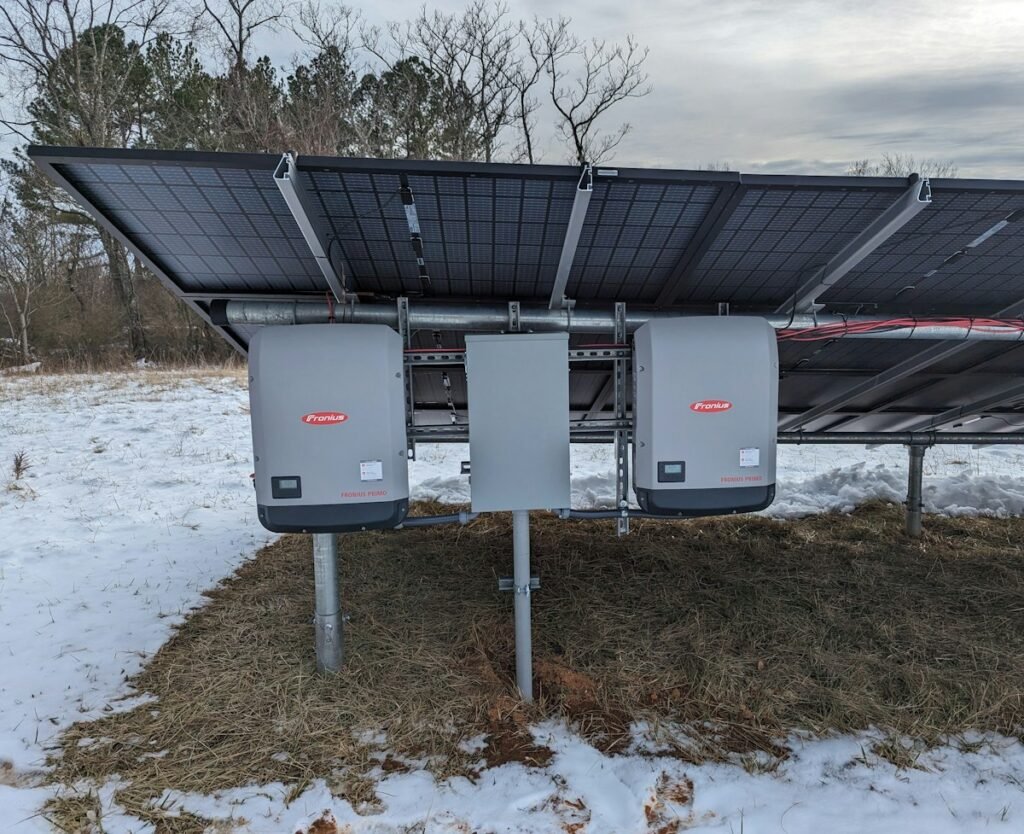
Choosing between a single-phase and a three-phase solar inverter is an important decision for homeowners and businesses in Pakistan. The right inverter depends on your electricity connection, household load, solar system capacity, backup requirements, and the technical conditions of your electricity distribution company.
A single-phase solar inverter is commonly used in homes with a single-phase electricity connection and moderate electricity demand. A three-phase inverter is designed for installations with a three-phase supply, which is often found in larger homes, commercial buildings, factories, and properties operating heavy electrical equipment.
However, inverter selection is not simply about choosing the larger option. We need to understand how each system distributes electricity, supports household appliances, handles solar generation, and interacts with the utility grid.
In this guide, we explain the difference between single-phase vs three-phase solar inverters in Pakistan, including their working principles, installation requirements, costs, advantages, limitations, and the factors to consider before purchasing a solar system.
Single-Phase Inverter
A single-phase solar inverter converts the direct current (DC) electricity produced by solar panels into alternating current (AC) electricity for a single-phase electrical supply.
Many residential properties in Pakistan use single-phase electricity connections. For these properties, a compatible single-phase inverter can supply electricity to household appliances and, where permitted and correctly configured, interact with the utility grid.
A single-phase inverter may be suitable for homes operating appliances such as:
- Ceiling fans
- LED lights
- Refrigerators
- Televisions
- Computers
- Washing machines
- Water pumps within the inverter’s capacity
- Air conditioners within the system’s operating limits
The actual appliances that can operate simultaneously depend on inverter output, starting currents, household wiring, and the available solar or battery power.
Working Mechanism
Solar panels generate DC electricity when exposed to sunlight. The inverter converts this electricity into AC power that compatible household appliances can use.
In a grid-connected system, the inverter can supply the home’s electrical demand and export eligible surplus electricity when the system and connection are configured and approved for that purpose.
In a hybrid system, the inverter may also manage battery charging, battery discharging, and backup loads.
A single-phase inverter generally supplies power through one AC phase and its associated neutral conductor. Its rated output must be suitable for the property’s electrical supply and connected loads.
Three-Phase Inverter
A three-phase solar inverter converts electricity from a solar array into three-phase AC power. It supplies three alternating electrical phases, typically separated by 120 electrical degrees.
Three-phase electricity is commonly used in larger residential properties, commercial buildings, industrial facilities, and installations with significant electrical demand.
It can be particularly useful for properties operating equipment such as:
- Three-phase motors
- Industrial pumps
- Large compressors
- Commercial air-conditioning equipment
- Workshop machinery
- Manufacturing equipment
- Larger commercial electrical loads
Three-phase inverters are also used in some large homes, even when most everyday appliances operate on single-phase circuits.
Three-Phase Mechanism
A three-phase inverter converts the DC electricity from the solar array into AC electricity distributed across three phases.
The system can supply compatible three-phase equipment and, depending on its configuration, support single-phase circuits connected to the building’s distribution board.
In a grid-connected installation, the inverter must be compatible with the property’s three-phase supply and comply with the applicable interconnection requirements.
The total rated output is distributed according to the inverter’s design and the connected loads. A three-phase inverter does not automatically deliver its entire rated capacity to one single-phase appliance.
Key Differences
The main difference is the type of electrical supply each inverter is designed to serve.
| Feature | Single-Phase Inverter | Three-Phase Inverter |
|---|---|---|
| AC output | One phase | Three phases |
| Electrical connection | Single-phase supply | Three-phase supply |
| Typical applications | Many residential systems | Larger homes, commercial and industrial systems |
| Compatible appliances | Single-phase appliances within capacity | Compatible three-phase and single-phase loads |
| Three-phase motors | Not directly supplied as a three-phase source | Can supply compatible three-phase motors |
| Load distribution | One phase | Across three phases |
| System sizing | Depends on load and connection | Depends on total load and phase requirements |
| Installation | Requires compatible single-phase wiring | Requires compatible three-phase wiring |
| Grid connection | Subject to applicable approval | Subject to applicable approval |
| Backup capability | Depends on inverter and battery configuration | Depends on inverter design and backup configuration |
| Cost | Depends on capacity and features | Depends on capacity and features |
| Best selection criteria | Supply type, loads and system design | Supply type, loads and system design |
Neither configuration is automatically more efficient or more economical in every situation. The complete system specifications and installation conditions determine the appropriate choice.
Choosing Suitability
For a Pakistani home, we should begin by checking the existing electricity connection rather than selecting an inverter based only on the property’s size.
Residential Single-Phase
A single-phase inverter may be suitable when:
- The property has a single-phase electricity connection.
- Household demand is within the inverter’s capacity.
- The planned solar array is compatible with the inverter.
- The system does not need to directly supply three-phase equipment.
- The proposed grid connection complies with applicable requirements.
For example, a home with fans, lights, refrigerators, televisions, and a few appropriately sized air conditioners may use a single-phase solar system if the calculated simultaneous load and electrical requirements permit it.
The inverter’s rated capacity alone is not enough to determine suitability. We must also check peak demand, appliance starting currents, and whether the system needs to operate during power outages.
Large Home Inverters
A three-phase inverter may be appropriate when a home already has a three-phase connection and substantial electrical demand.
This can include larger properties with multiple air conditioners, powerful water pumps, lifts, or other equipment that requires a three-phase supply.
A three-phase connection can also help distribute electrical demand across phases. However, the load must be distributed correctly, and the inverter must support the intended configuration.
We should not assume that a larger home automatically requires a three-phase solar inverter. The electrical supply, connected equipment, and approved system capacity should guide the decision.
Cross-Compatibility
A standard three-phase grid-connected inverter generally requires a compatible three-phase grid connection. It should not be treated as a direct replacement for a single-phase inverter on a single-phase supply.
Some specialized equipment supports different operating modes, but compatibility must be verified in the manufacturer’s documentation.
Before purchasing, confirm:
- The property’s incoming electricity supply.
- The inverter’s required AC connection.
- The manufacturer’s permitted operating configuration.
- The utility’s interconnection requirements.
- The installation and protection requirements.
If a three-phase connection is needed, the homeowner may have to arrange a supply upgrade through the relevant electricity distribution company. Approval, technical feasibility, and costs should be confirmed before purchasing the inverter.
Phase Integration
A single-phase inverter may sometimes be installed on one phase of a three-phase property, provided the equipment, electrical installation, and utility requirements allow it.
However, this arrangement requires careful consideration.
The solar inverter’s output is connected to one phase, while household consumption may be distributed across all three phases. Solar production on one phase does not necessarily offset consumption on the other phases in the same way under every metering arrangement.
The treatment of imports and exports depends on the meter configuration, applicable billing rules, and utility approval.
For a property with substantial loads on all three phases, we should compare a single-phase arrangement with a three-phase inverter or an appropriately designed multi-inverter system.
Billing Impact
The relationship between solar generation and electricity consumption is important when selecting an inverter.
Consider a property with a three-phase supply. Its appliances may be distributed as follows:
- Phase A: lighting and bedroom appliances
- Phase B: air conditioning
- Phase C: water pump and kitchen equipment
If a single-phase solar inverter supplies Phase A, it directly serves loads on that phase. The treatment of surplus generation and consumption on other phases depends on the installed meter and applicable billing arrangements.
A three-phase inverter can distribute generation across the three phases, subject to its design and the distribution of loads.
Before selecting either arrangement, we should ask the installer to explain how the proposed system will interact with the property’s meter and how electricity imports and exports will be measured.
Efficiency Comparison
It is not accurate to assume that every three-phase inverter is more efficient than every single-phase inverter.
Conversion efficiency depends on factors such as:
- Inverter model
- Operating load
- DC input voltage
- Temperature
- Power-electronics design
- Standby consumption
- Installation conditions
Some inverters achieve their highest efficiency within a particular operating range. A system that frequently operates at a very low fraction of its rated capacity may behave differently from one operating closer to its optimal range.
When comparing quotations, review the manufacturer’s efficiency specifications and, where available, the efficiency curve rather than relying only on the phase designation.
Capacity Selection
Solar panel capacity and inverter output capacity are related but different measurements.
Panel capacity is normally expressed in kilowatts DC (kW DC), while inverter output capacity is commonly expressed in kilowatts AC (kW AC).
For example, a system may contain 8 kW of solar panels connected to a 6 kW inverter. This arrangement can be acceptable if the inverter’s DC input specifications and other electrical limits are respected.
When comparing single-phase and three-phase systems, verify:
- Total panel capacity
- Inverter AC output rating
- Maximum permitted PV input power
- Maximum DC voltage
- MPPT voltage range
- Input current limits
- Number of MPPTs
- String configuration
- Applicable grid-connection limits
The correct inverter size should be determined from the proposed solar array, household demand, and technical requirements—not from the phase type alone.
Battery Backup
Backup requirements can significantly influence inverter selection.
A single-phase hybrid inverter may provide backup to a designated group of household circuits when the grid fails, provided a suitable battery is installed and the system is configured for backup operation.
A three-phase hybrid inverter may support three-phase backup, but not every model can provide backup to all three phases. Some models have specific backup output limits, phase-balancing restrictions, or different operating modes when the grid is unavailable.
Before buying a hybrid inverter, ask:
- Does the inverter provide backup during a grid outage?
- Does backup cover one phase or all three phases?
- Which circuits are connected to the backup output?
- What is the maximum continuous backup power?
- What is the surge rating?
- Can three-phase motors operate during backup?
- What battery voltage and chemistry are supported?
- Can the battery supply the expected load for the required duration?
A three-phase inverter should not be assumed to provide full three-phase backup unless the manufacturer explicitly supports that functionality.
Backup Estimation
We can estimate required usable battery capacity by adding the energy consumption of the appliances that need backup.
For example, if essential loads consume an average of 800 watts for five hours:
Required energy = 0.8 kW × 5 hours = 4 kWh
The battery’s nominal capacity may need to be higher to account for permitted depth of discharge, inverter losses, and operating reserves.
This estimate should be refined using the actual load profile and the battery manufacturer’s specifications.
Inverter Costs
The cost of a solar inverter in Pakistan depends on more than the number of phases.
Important factors include:
- Inverter capacity
- Brand and model
- Hybrid or grid-connected functionality
- Battery compatibility
- MPPT configuration
- Monitoring features
- Backup capabilities
- Warranty
- Import and distribution costs
- Installation complexity
Three-phase inverters may cost more than some single-phase alternatives, particularly when comparing equipment with similar capacities and features. However, prices vary widely, and the comparison is not always direct.
A complete quotation should include the inverter, protection equipment, wiring, installation labor, any required electrical upgrades, and applicable fees.
We should obtain current written quotations for the exact models being compared instead of relying on generic price estimates.
Utility Requirements
In Pakistan, grid-connected solar installations must be assessed against the requirements applicable to the relevant electricity distribution company and the current regulatory framework.
The relevant utility may depend on the property’s location and connection. Requirements can affect:
- Permitted inverter specifications
- Interconnection approval
- Metering arrangements
- Export capability
- System capacity
- Protection requirements
- Documentation
- Inspection and commissioning
Rules and procedures can change, so homeowners should verify the current requirements before purchasing equipment or assuming that surplus electricity can be exported under a particular arrangement.
A quotation that includes grid-connection assistance should specify the exact services provided and any government, utility, or third-party charges that remain separate.
Common Mistakes
Choosing an Inverter Without Checking the Electricity Supply
The inverter must be compatible with the property’s single-phase or three-phase supply.
Selecting an Inverter Based Only on Kilowatts
Two inverters with the same capacity may have different PV input limits, backup features, MPPT configurations, and phase requirements.
Assuming Three-Phase Means More Solar Generation
Three-phase output does not automatically increase the energy produced by a given solar array. Generation depends primarily on the array, sunlight, system losses, and equipment performance.
Ignoring Load Distribution
A three-phase property may have uneven consumption across its phases. Load balancing and the way solar generation interacts with metering should be reviewed during system design.
Assuming Every Hybrid Inverter Supports Three-Phase Backup
Backup capabilities vary by model. The manufacturer must confirm the exact configuration.
Ignoring Future Electrical Requirements
If the homeowner plans to add air conditioners, pumps, workshops, or other equipment, those expected loads should be included in the design.
Overlooking Warranty and Local Support
An inverter’s warranty, service arrangements, replacement process, and availability of technical support are important parts of the purchase decision.
Practical Checklist
Before finalizing a solar installation, we should verify the following:
- ☐ Confirm whether the property has a single-phase or three-phase electricity connection.
- ☐ Record the major household appliances and their rated power.
- ☐ Identify any three-phase motors or equipment.
- ☐ Calculate the expected simultaneous load.
- ☐ Decide whether battery backup is required.
- ☐ Identify the circuits that must remain powered during outages.
- ☐ Confirm the required inverter AC capacity.
- ☐ Confirm compatibility with the solar panel array.
- ☐ Verify the maximum DC voltage and current limits.
- ☐ Check the number of MPPTs and supported string arrangements.
- ☐ Verify phase-balancing and backup limitations.
- ☐ Confirm the current utility interconnection requirements.
- ☐ Compare warranties and local service support.
- ☐ Obtain a complete installed-cost quotation.
- ☐ Request the exact inverter model and datasheet before paying.
Frequent Questions
Is a single-phase or three-phase solar inverter better for a home in Pakistan?
The appropriate choice depends on the property’s electricity connection, appliances, total load, solar system capacity, and backup requirements. Many homes can use a compatible single-phase inverter, while properties with three-phase supplies and substantial three-phase loads may require a different configuration.
Can a single-phase inverter run a three-phase motor?
A standard single-phase inverter cannot directly supply a conventional three-phase motor with three-phase AC power. A suitable motor drive or other specifically designed solution may be required, depending on the motor and application.
Does a three-phase inverter produce more electricity?
Not automatically. A three-phase inverter distributes AC power across three phases, but the energy generated still depends on the solar array, sunlight, and overall system performance.
Is a three-phase solar system necessary for a large house?
Not necessarily. The correct configuration depends on the existing electricity connection, the loads, and the utility requirements. A large house may have substantial demand without requiring every appliance to operate on three phases.
Can a three-phase inverter run single-phase appliances?
A three-phase installation can generally supply compatible single-phase appliances through properly configured distribution circuits. The inverter’s design, phase-current limits, and installation requirements must be checked.
Which inverter is better for battery backup?
Neither phase type is automatically better. We should compare the available backup output, battery compatibility, surge capability, phase support, and the specific appliances that must remain operational.
Is a three-phase inverter more expensive in Pakistan?
It can be, but the price depends on capacity, brand, features, and warranty. Compare quotations for specific models and include any electrical upgrades or installation costs.
Can I upgrade from a single-phase to a three-phase solar system later?
Potentially, but the upgrade may require a utility supply change, new inverter equipment, revised wiring, protection changes, and updated approvals. Future expansion should be considered before the initial system is installed.
Final Conclusion
The choice between single-phase and three-phase solar inverters in Pakistan should begin with the property’s electrical connection and actual power requirements.
A single-phase inverter may suit a home with a compatible single-phase supply and manageable household loads. A three-phase inverter may be appropriate for a property with a three-phase connection, three-phase equipment, or a requirement to distribute solar generation across multiple phases.
Neither option automatically guarantees lower electricity bills, higher efficiency, or greater solar generation. Those outcomes depend on the complete system design, electricity consumption, metering arrangement, equipment specifications, and applicable utility requirements.
Before making a purchase, confirm the electricity connection, calculate the expected load, check the inverter datasheet, review backup requirements, and verify the current grid-interconnection rules.
The right solar inverter is the one that matches your electrical supply, supports your actual loads, meets the applicable requirements, and delivers the performance you need without unnecessary equipment costs.
Related solar guides and reference documents
Continue with our solar inverter buying guide, solar system sizing guide, safe panel cleaning guide and battery backup calculation guide.
Reference: SMA example: three-phase battery-backup function. Use the exact model and regional documents for your equipment. Grid-connected designs must meet the current requirements of the relevant electricity distribution company.
Featured stock photo: Virtue Solar / Unsplash. The image is illustrative and does not identify a Pakistani installation or a recommended equipment model.