

Solar water pump sizing in Pakistan should begin with the required water service. The system needs to deliver an appropriate daily volume against the actual hydraulic duty, using the available solar resource and supported pump equipment. Selecting panels from motor horsepower alone can miss the most important design inputs.
Define the daily water requirement
Estimate how much water is needed for irrigation, livestock, household use or another purpose. State the season, operating days and any variation in demand. Crop area alone is insufficient without the irrigation method and relevant water requirement.
Document the available source and any restrictions on extraction. The proposal should describe where water is drawn from, where it is delivered and how demand is managed. For agricultural decisions, use locally appropriate water-management advice rather than assuming solar pumping makes unlimited extraction sustainable.
Measure the hydraulic conditions
The designer needs relevant elevations, source conditions, delivery pressure and the proposed pipe route. Dynamic water level, friction and fittings can affect the duty. A borehole’s total depth is not automatically the same as the pumping head during operation.
Arrange appropriate measurements and a qualified hydraulic assessment. Ask which assumptions were used and how seasonal source changes were allowed for. A quotation without these inputs cannot establish the flow that the pump will deliver at the actual site.
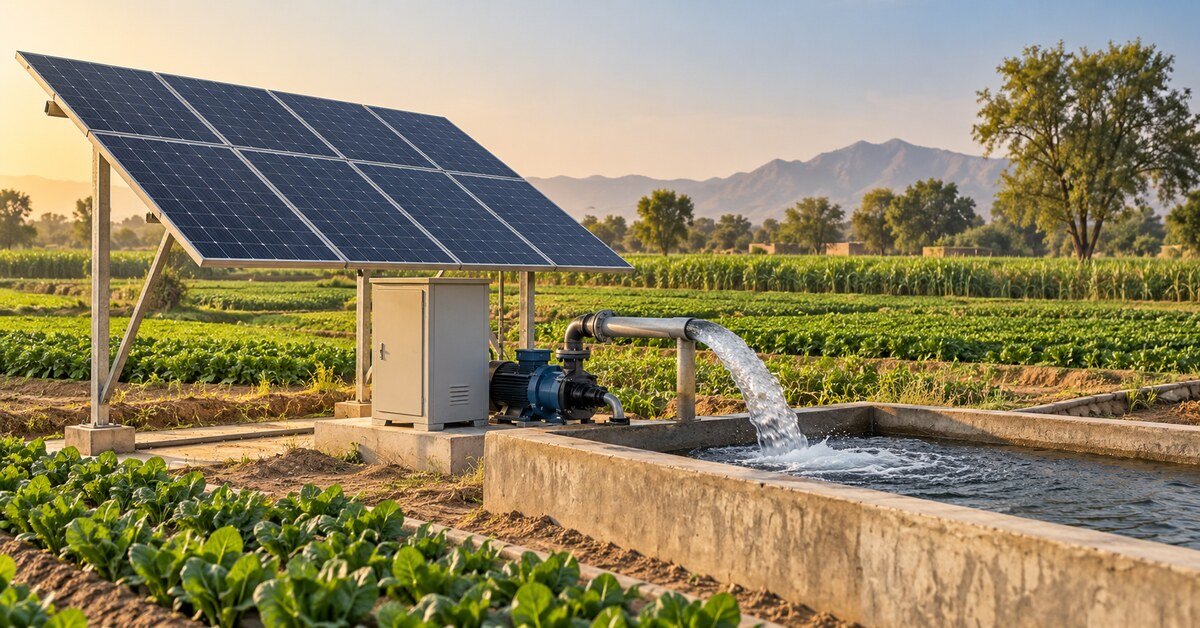
Select a pump using its performance data
Review the pump’s documented flow and head relationship for the intended operating conditions. The chosen duty should be within the supported range. Motor size is one characteristic, while delivered water depends on the complete pump and hydraulic arrangement.
Suppose a hypothetical application needs 20 cubic metres per day. If the available operating period were five effective hours, the average delivery requirement would be four cubic metres per hour. That arithmetic does not select a pump: head, varying solar conditions, operating limits and losses still require assessment.
Match solar supply and controller
Use manufacturer-supported array and controller requirements for the selected equipment. Check the electrical operating window, maximum inputs and relevant design conditions. A controller labelled MPPT does not establish compatibility with every pump or array.
Our MPPT and PWM guide explains the broader controller distinction. For pumping, use the exact product’s documentation and sizing process. The qualified designer should verify the proposed array, motor and control combination instead of improvising from unrelated household equipment specifications.
Compare water storage and battery storage
Where the application permits, a water tank can help separate pumping time from water-use time. Its volume, structural support, hygiene and hydraulic arrangement need assessment. Stored water and stored electricity solve different parts of the operating problem.
If pumping is required at night or during low solar output, identify the supported supply strategy. Our off-grid system guide provides context for standalone planning, but a pump-specific design is still necessary. Do not add batteries automatically without comparing the actual service objective and supported equipment.
Include protection and source safeguards
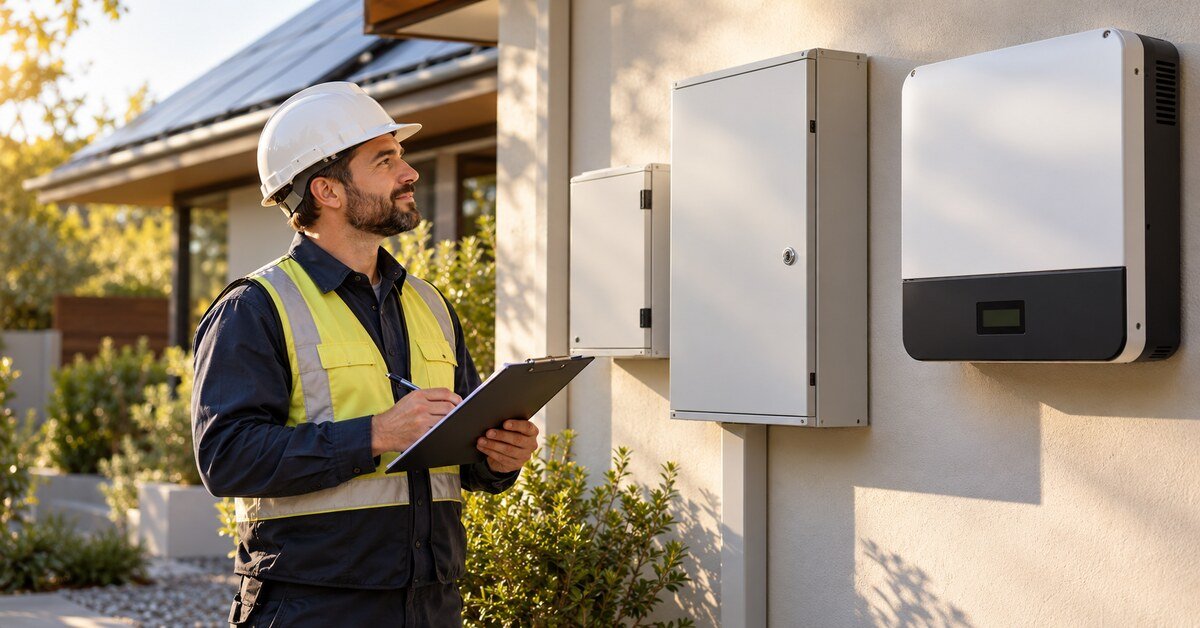
Ask what supported functions address dry running, low source level, inappropriate operating conditions and other relevant faults. The requirements depend on the pump and source. Protective equipment should be described in the quotation and tested through the commissioning process.
Installation work should include appropriate electrical protection, environmental suitability and safe access. Do not bypass a dry-run or other protective function to extend pumping time. A recurring restriction should lead to diagnosis of the source, equipment or configuration.
Use seasonal solar and water scenarios
Compare water demand and solar availability across relevant seasons. Peak irrigation demand may not coincide with the same operating conditions used in a simple sales example. Source levels and required delivery pressure can also change.
Our system sizing guide reinforces the need for measured demand. Request a conservative scenario showing lower production or a less favourable source condition. A useful proposal explains which daily water target can be supported and what contingency is required when it cannot be met.
Evaluate the complete installation cost
Include pump, controller, array, mounting, piping, fittings, protection, labour, testing and water storage where required. Clarify whether drilling, source development and distribution works are included. Compare complete scope rather than panel cost alone.
Use the quotation checklist to record exclusions and responsibilities. Ask who supports the pump, controller and hydraulic system after installation. A fault can involve several parts of the project, so service coordination should be clear before purchase.
Commission against the agreed water duty
Request documented checks of delivered flow, operating conditions and supported protective functions. Record the test date, solar conditions and relevant water levels. A brief demonstration of water at the outlet cannot establish the promised daily volume under every season.
Keep pump model, serial information, manuals and service records with the installation documents. Agree on a monitoring routine for changing flow, alarms and source conditions. Early evidence makes later diagnosis more useful than a vague report that pumping seems weak.
Frequently asked questions
Can I size panels from horsepower alone?
No. The pump duty, controller requirements, solar conditions and intended daily water volume are also needed. Request a complete supported sizing assessment.
Does solar pumping require batteries?
It depends on when water must be pumped and whether water storage can serve demand. Compare supported options for the actual application rather than assuming one arrangement fits every farm.
Will a larger array always produce more water?
Equipment limits, source availability and hydraulic conditions still apply. Expansion requires verification of the controller, pump and installation. Extra nominal watts do not remove those constraints.
Sizing a solar pump starts with your daily water demand, not the pump’s nameplate. Work backwards from the litres you actually need, then match the pump, array and storage to that figure — and have your supplier confirm the head and flow calculations in writing.