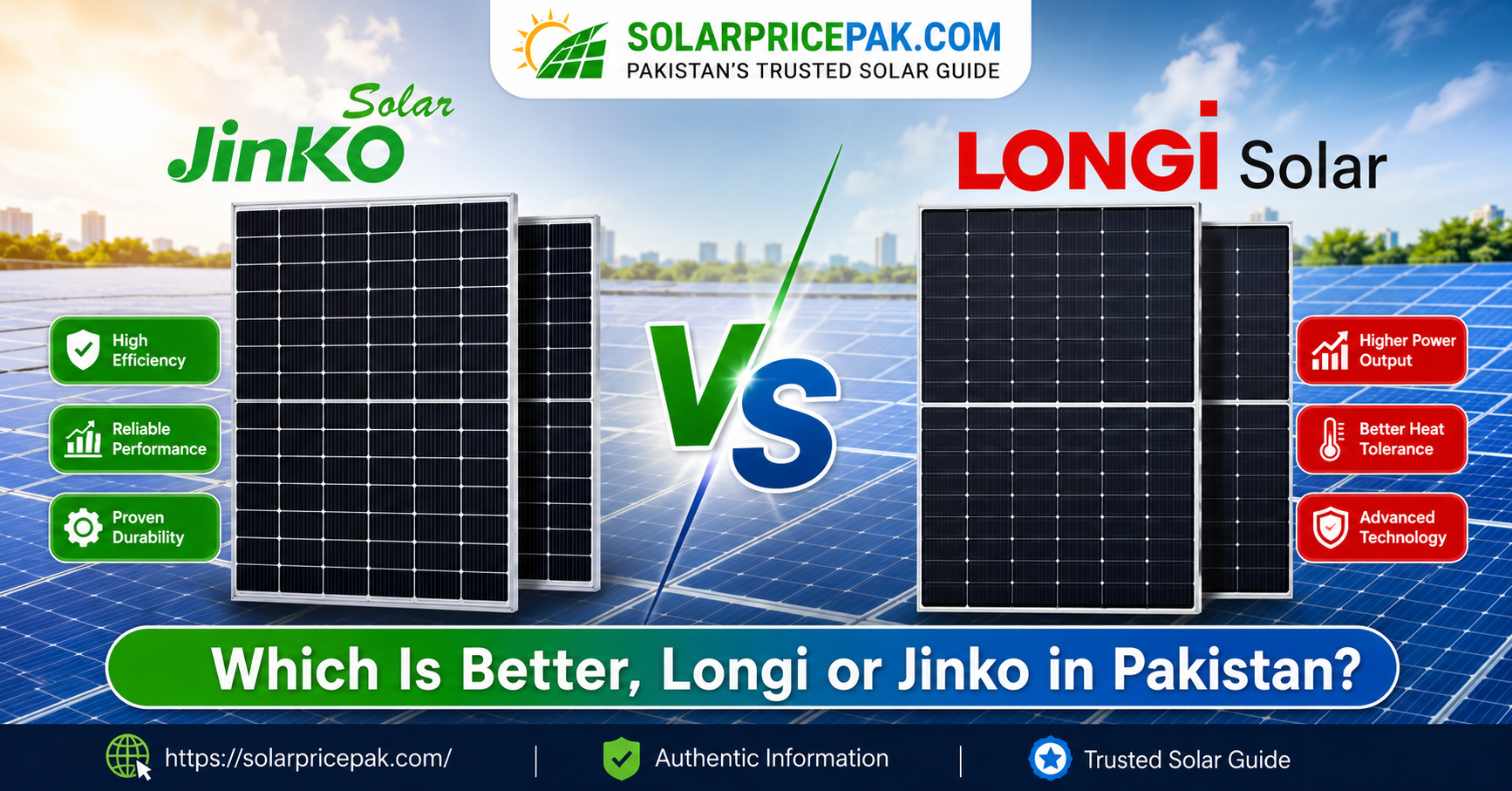
Longi vs Jinko Solar Panels in Pakistan 2026: Which Is Better?
Ask five different installers “LONGi or Jinko?” and you’ll probably get five confident answers, all slightly different, all delivered like it’s obvious. That’s kind of the running joke with this comparison.
Both brands are Tier-1, both are used everywhere from Karachi to Peshawar, and both will genuinely serve most households well. So instead of pretending there’s one clear winner, let’s just go through what actually separates them and let you decide based on what matters to you.
AGS Battery Price in Pakistan 2026 – Full Model-Wise List
Where Each Brand Stands
LONGi is the world’s largest producer of monocrystalline silicon — that’s not marketing fluff, it’s just where the company sits in the industry. In Pakistan specifically, the Hi-MO series has become something close to a default recommendation. Ask around, and you’ll hear the same reasoning over and over: it’s consistent, it’s stocked everywhere, and warranty claims don’t come up much, which builds trust fast.
Jinko takes the crown for largest panel manufacturer by shipment volume worldwide. Its Tiger Neo line runs on N-Type TOPCon cells, which right now is about as good as commercial panel tech gets. And distribution-wise, Jinko rarely runs into stock issues, even outside the big cities.
The Tech Difference: HPBC vs TOPCon
This is really the one spot where the two brands genuinely part ways. LONGi’s Hi-MO 7 uses its own HPBC design — Hybrid Passivated Back Contact, if you want the full name — which pushes the electrical contacts to the rear of the cell instead of the front. Practically, that means no visible busbars up front, a cleaner look, and slightly less shading loss.
Jinko went a different route and stuck with N-Type TOPCon, adding a thin tunneling oxide layer that reduces recombination losses and nudges efficiency upward. It’s become close to an industry default for a reason — it just works.
Honestly though? The efficiency gap between the two, in real numbers, is small enough that it rarely tips a buying decision on its own. We’re talking fractions of a percent.
How They Handle Pakistani Heat
This matters more here than it would somewhere with a mild climate. Summer surface temperatures on rooftop panels in Pakistan regularly cross 60°C, sometimes more, and that heat eats into output if the panel isn’t built for it.
LONGi’s Hi-MO 7 runs around 22.8% efficiency, and the newer Hi-MO X10 pushes that up to roughly 23.3%. Jinko’s Tiger Neo sits in a comparable range, and in several comparisons edges out slightly on temperature coefficient and long-term degradation.
Neither one has a real advantage in low light. Both cope reasonably well with the heat if you want the absolute best thermal performance regardless of cost, that’s really a conversation about premium HJT panels from other brands, not this comparison.
Warranty: The One Real Point of Difference
Here’s where things actually diverge in a measurable way. Jinko generally backs its panels with a 30-year performance warranty, guaranteeing around 87% output at that mark. LONGi’s warranty typically runs 25 years, guaranteeing closer to 85% by year 25.
Five extra years on paper is a real difference. Whether it changes anything for you probably comes down to how long you plan on staying in the house, or holding onto the system at all.
Price — And Why It’s Genuinely Confusing
Per-watt pricing for both brands moves around a lot, depending on who you ask, which city you’re in, and honestly what day of the week it is. LONGi tends to sit somewhere between Rs. 28 and Rs. 63 per watt depending on the specific model, though the popular Hi-MO panels usually land closer to Rs. 33–45 per watt in practice. Jinko runs a bit higher on average — figure Rs. 28.5 to Rs. 48 per watt broadly, with the Tiger Neo N-Type models usually sitting around Rs. 40–47 per watt.
Here’s a real example of why you shouldn’t trust any single number too much: someone comparing “LONGi” quotes from three different dealers in Rawalpindi got three completely different prices in one afternoon — Rs. 28, Rs. 38, and something in between with a brochure thrown in that nobody bothered explaining properly. The issue is there are multiple LONGi series, and dealers aren’t always upfront about which one they’re actually quoting. Confirm the exact model number before you agree to anything.
LONGi Hi-MO X9 Solar Price in Pakistan (2026 Guide): Watt Rate, Specs & Buying Advice
What a Full System Actually Costs
Per-watt pricing is useful for comparison, but it’s not what you’ll actually be handing over. Most homes end up looking at a 5kW to 10kW system, and that number covers a lot more than just the panels — you’re also paying for the inverter, mounting structure, cabling, and labor.
For a fairly standard 5kW setup using either LONGi or Jinko panels, total installed cost usually falls somewhere between Rs. 700,000 and Rs. 1,100,000, depending on the exact panels chosen, inverter brand, and installer rates in your city. Go up to 10kW and you’re generally looking at something closer to Rs. 1.3 million to Rs. 1.8 million all-in, though this shifts constantly with currency movement and local labor costs.
Net metering changes the math too. With WAPDA buying back surplus units at a decent rate, a lot of households report payback periods somewhere in the two-to-four-year range, assuming consumption and export patterns stay reasonably consistent.
After that, you’re mostly just banking savings for the rest of the panel’s working life which, for either brand, realistically stretches into the 25-to-30-year territory.
Availability
Both brands are easy enough to source through authorized dealers in the major cities. Jinko probably has a slight edge in raw distribution — stock shortages are rarer compared to some competitors. LONGi isn’t far behind, though certain wattages can be harder to find depending on shipment timing.
So Which One Should You Pick?
For most people buying for a home in Pakistan, either brand is a reasonably safe bet — not the most exciting answer, but it’s the honest one. That said, a few situations do tip the scales one way. If your budget’s tight and you want proven reliability, LONGi Hi-MO 7 usually costs a little less.
If a longer warranty on paper matters to you, Jinko’s 30-year backing is genuinely hard to argue with. If you’re buying somewhere with fewer dealer options, Jinko’s stronger distribution network might just make life easier.
And if you care about how the panel actually looks on the roof, LONGi’s HPBC design gives it a cleaner front with no visible busbar lines.
Today’s Solar Panel Price in Pakistan 2026 Updated Rates & Complete Buying Guide
One Thing Worth Watching Out For
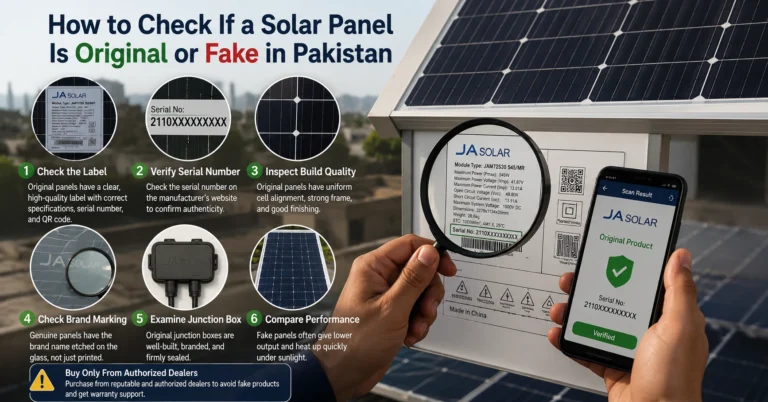
Both brands get counterfeited or mislabeled often enough in the local market that it’s worth staying alert. Ask for real documentation, buy only from authorized dealers, and check that the frame, labeling, and serial numbers actually match what the manufacturer publishes.
If a price looks unusually low, that’s rarely good news — it’s usually a sign something’s off with the panel’s origin.
Technology (N-Type vs P-Type)
Both manufacturers now heavily promote N-Type technology.
Benefits include:
| Feature | Longi | Jinko |
|---|---|---|
| Cell Technology | N-Type HPBC / Advanced Mono | N-Type TOPCon |
| Higher Efficiency | Yes | Yes |
| Lower Degradation | Excellent | Slightly Better |
| Better Low-Light Performance | Excellent | Excellent |
Jinko’s latest N-Type modules generally show slightly slower annual degradation according to current market comparisons.
Performance in Pakistan’s Climate
Pakistan experiences extremely hot summers, making temperature coefficient an important consideration. Both brands perform exceptionally well under high temperatures, although Longi has earned a particularly strong reputation for stable performance during prolonged heat exposure. Jinko panels also maintain impressive output under cloudy conditions and during early morning or late afternoon sunlight.
Warranty & Reliability
Both companies typically offer:
- Product Warranty: 12–15 years
- Performance Warranty: Up to 25–30 years
Both remain trusted Tier-1 manufacturers with proven global reliability.
Price Comparison in Pakistan (2026)
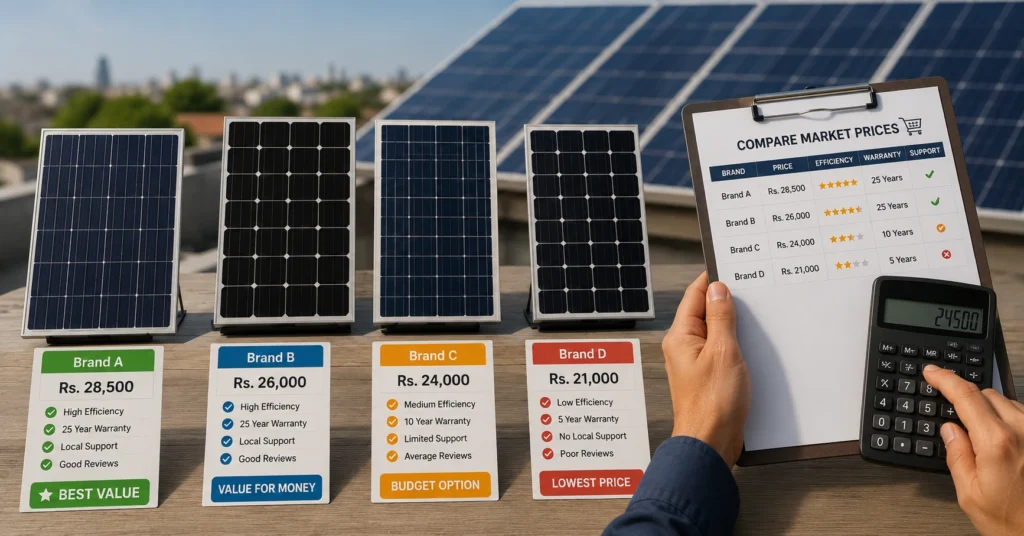
Although prices fluctuate due to exchange rates and imports, market data suggests that the price gap between Longi and Jinko is relatively small.
| Brand | Approximate Starting Price (PKR) |
|---|---|
| Jinko | 19,760 |
| Longi | 20,900 |
Prices vary depending on wattage, technology, and supplier.
Cost per Watt
Longi often provides slightly better value for budget-conscious buyers, while Jinko may command a small premium for its latest N-Type technology.
Value for Money
If maximum energy generation is your priority, the slightly higher upfront investment in Jinko may deliver greater lifetime savings. Buyers focused on balancing performance and affordability may find Longi the stronger value.
Which Brand is Best for Different Users?
Residential Homes
Choose Jinko if:
- Roof space is limited.
- You want maximum efficiency.
- You prioritize long-term energy production.
Choose Longi if:
- You want premium quality at a competitive price.
- Your roof has sufficient installation space.
- You prefer proven long-term performance.
CM Punjab Free Solar Panel Scheme 2026: Eligibility, Registration & What You Actually Get
Commercial Projects
Commercial systems often prioritize long-term operating costs. Both brands perform exceptionally well, but many EPC contractors choose based on project pricing, availability, and procurement timelines.
Off-Grid Systems
Both brands integrate well with hybrid inverters and battery storage. For remote installations where every watt counts, Jinko’s high-efficiency N-Type modules provide a slight advantage.
Buying Tips Before Choosing Solar Panels
Never purchase solar panels based solely on price. Verify that the panels are genuine by checking serial numbers, requesting the manufacturer’s flash test report, and buying only from authorized dealers. Counterfeit or B-grade panels remain a concern in many markets. Industry experts also recommend choosing Tier-1 manufacturers with strong warranty support and matching your panel selection with a compatible inverter and properly designed installation.
Before making a purchase, compare total system cost rather than panel cost alone. A well-designed installation with quality mounting structures, wiring, protection devices, and professional installation will often outperform a cheaper system built with premium panels but poor workmanship.
Final Verdict
There is no universal winner because both manufacturers produce world-class solar modules.
| Category | Winner |
|---|---|
| Overall Efficiency | Jinko |
| Price | Longi |
| Heat Performance | Longi |
| Low-Light Performance | Jinko |
| Long-Term Value | Tie |
| Reliability | Tie |
For homeowners seeking the highest possible output from limited roof space, Jinko Tiger Neo is an excellent choice. Buyers looking for outstanding performance, competitive pricing, and proven durability should confidently consider Longi Hi-MO panels.
Conclusion
Longi and Jinko continue to dominate Pakistan’s premium solar market in 2026 for good reason. Both brands offer exceptional efficiency, advanced N-Type technology, long warranties, and dependable performance. The choice ultimately depends on your installation requirements, available budget, and long-term energy goals. If every percentage point of efficiency matters, Jinko holds a slight edge.
If you want premium quality while keeping costs slightly lower, Longi remains one of the smartest investments available today. Either option represents a reliable, future-ready solution that can deliver decades of clean electricity when installed correctly.
FAQs: Longi vs Jinko Solar
1. Which solar panel is better, Longi or Jinko?
Both are excellent Tier-1 brands. Jinko generally offers slightly higher efficiency, while Longi is often more affordable.
2. Which brand performs better in hot weather?
Both perform well, but Longi has a particularly strong reputation for heat resistance.
3. Are Longi and Jinko suitable for net metering?
Yes. Both are widely used in residential and commercial net-metering installations.
4. Which panel lasts longer?
Both provide performance warranties of up to 25–30 years, depending on the model.
5. Is Jinko worth paying extra for?
If you have limited roof space and want maximum electricity generation, the additional investment can be worthwhile.