
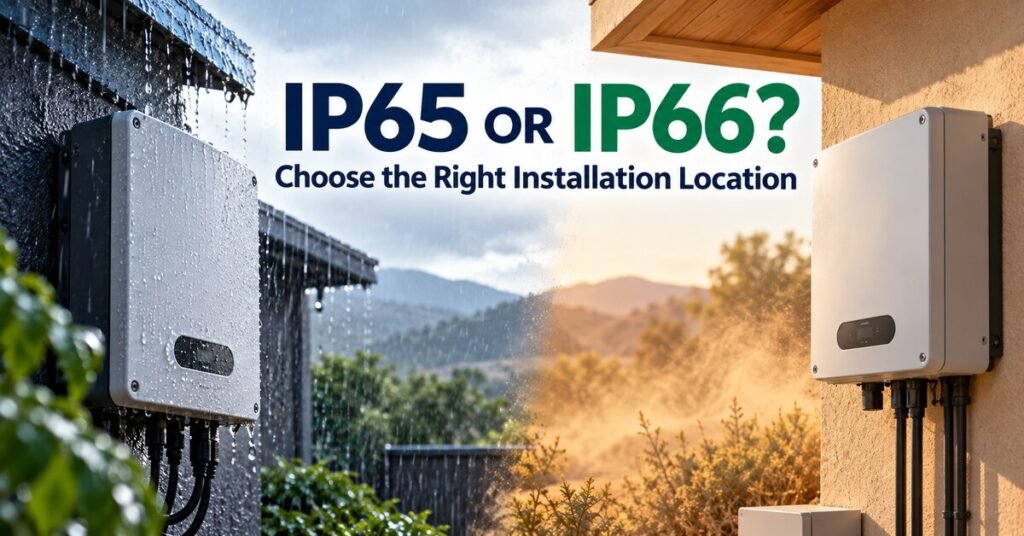
Comparing IP65 vs IP66 solar inverters helps assess enclosure protection, but the rating does not decide the installation location by itself. Environmental conditions, manufacturer instructions, cable entries, heat and service access still matter. Choose the exact inverter and its mounting arrangement together rather than treating a higher-looking code as complete weather immunity.
Understand the two-digit IP code
The IP code describes defined enclosure protection characteristics. Its first numeral concerns protection against solid-object ingress, while the second concerns water ingress under specified tests. IP65 and IP66 share the same first numeral and differ in the second.
In these codes, the first numeral 6 indicates dust-tight protection under the relevant classification. The water numeral 5 relates to water jets, while 6 relates to powerful water jets under defined conditions. Those distinctions are test classifications, not permission to expose equipment to every form of water or dust indefinitely.
For how this compares with a lower indoor rating, see IP65 vs IP21 solar inverters.
Do not interpret the rating as immersion protection
IP65 and IP66 should not be presented as an unrestricted waterproof claim. Immersion uses different classifications, and the complete product instructions determine supported use. Flooding or standing water is a separate installation risk that a jet-protection rating does not resolve.
Ask how the chosen location avoids foreseeable water accumulation and inappropriate exposure. A sheltered site with suitable access can be valuable even where an inverter has a documented outdoor rating. The product must still be installed as instructed.
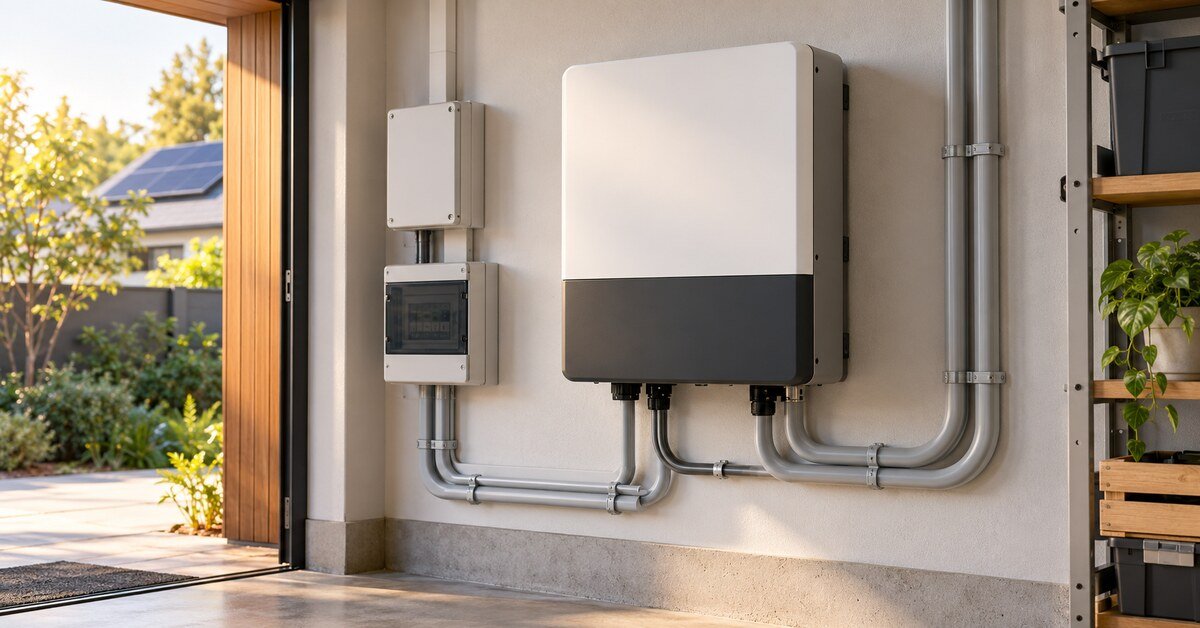
Verify the exact model and document
Check the official datasheet and manual for the unit being supplied. Different models or variants within one brand can have different protection and location requirements. A photograph or a seller’s generic description is insufficient when the quotation names another product.
Our inverter comparison guide helps organise exact-model checks. Keep the document version and identify any restrictions involving mounting orientation, environment or accessories. Resolve a discrepancy between the quotation and official documentation before purchase.
Consider heat and ventilation separately
An ingress-protection rating does not establish the inverter’s permitted temperature range or output at high temperature. Review operating limits, derating information and required clearances. Direct sun, confined spaces and nearby heat sources can affect the suitability of a location.
The hybrid inverter guide helps compare supported operating functions. Choose a position that satisfies the complete product instructions. Avoid enclosing equipment in a decorative cabinet if that arrangement interferes with its documented cooling or service needs.
Check the completed installation details
Cable entries, connectors, covers and fitted accessories can affect the finished enclosure’s protection. The installer should use the specified components and methods. A printed enclosure rating cannot certify a poorly completed cable entry or an incorrectly fitted cover.
Request inspection of those details through the professional installation process. Homeowners should not apply improvised sealant or drill extra holes to improve a location. Changes can undermine the supported product arrangement and complicate later service.
Assess the actual environment
Consider rain exposure, dust, humidity, corrosion risk, insects and potential flooding as relevant to the property. Each condition may have product-specific requirements beyond the basic IP code. A coastal or unusually dusty site deserves an assessment based on documented suitability.
Ask the supplier to explain why the selected location meets the product requirements. The answer should consider the finished building and mounting arrangement. An IP rating alone does not establish resistance to corrosion, ultraviolet exposure or every environmental contaminant.
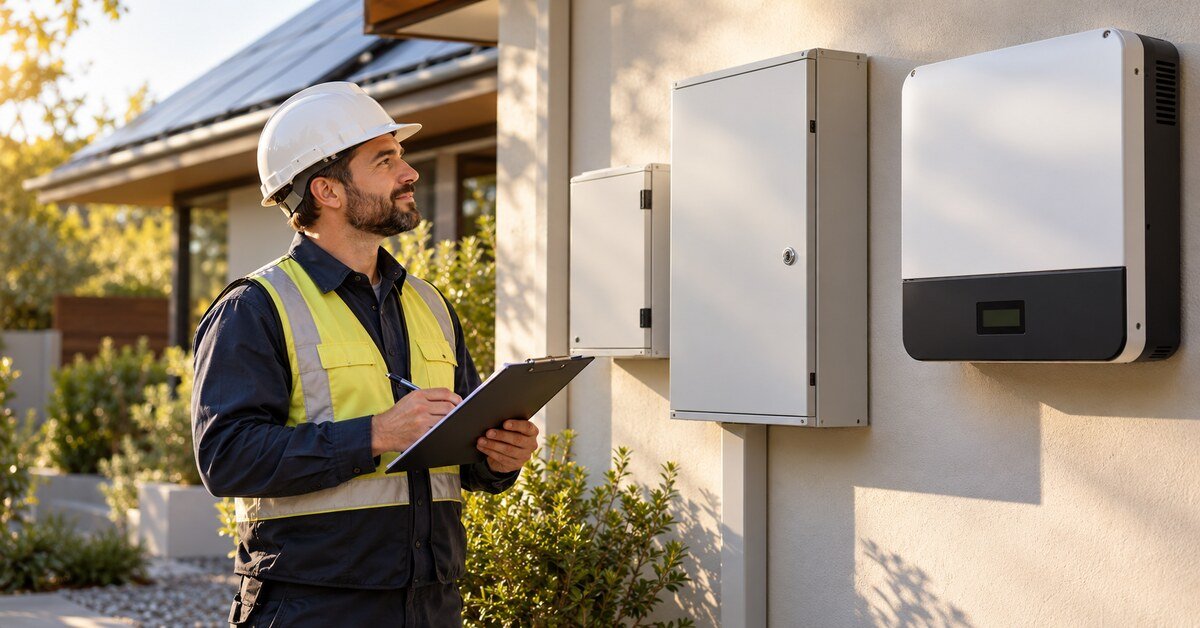
Preserve service access and safe observation
Retain clear access for qualified maintenance and ensure the owner can view supported indicators safely. Avoid placing equipment where ordinary inspection requires climbing over obstacles or standing in an unsafe position. Access planning should include future repair or replacement.
Our maintenance checklist helps record visible damage, alarms and changes in condition. Report suspected water ingress or concerning electrical symptoms through the service process. Do not open the inverter to inspect inside simply because its external rating appears robust.
Compare installed value rather than one code
IP protection is one comparison item alongside compatibility, electrical limits, efficiency information, support and warranty terms. A higher water numeral does not make an otherwise unsuitable inverter the right choice. Match the product to the system and installation environment.
Use our quotation checklist to record mounting, protection and any location-related works. Compare complete scope with the same environmental assumptions. A suitable shelter or revised mounting position may be part of the required installation rather than an optional cosmetic addition.
Questions to ask the installer
- What IP rating is documented for this exact model?
- Which outdoor or environmental restrictions apply?
- How are heat, clearances and direct exposure addressed?
- Which cable-entry and accessory requirements will be followed?
- How is flooding or water accumulation avoided?
- What inspection, maintenance and warranty conditions apply?
Retain the answers and final location photographs with the handover records. If building work later changes the exposure or airflow, reassess the location instead of assuming the original rating covers the new conditions automatically.
Frequently asked questions
Is IP66 always the better purchase?
It indicates a different water-jet protection classification, but overall suitability depends on the complete product and installation. Compare documented requirements and support rather than one numeral alone.
Can I pressure-wash an IP65 or IP66 inverter?
Do not infer a cleaning method from the rating. Follow the manufacturer’s maintenance instructions and use qualified service where required. A test classification is not a general cleaning authorisation.
Does outdoor protection remove the need for clearances?
No. Thermal, mounting and service requirements remain. The chosen location should satisfy all applicable product instructions, including those unrelated to ingress protection.
Choosing between IP65 and IP66 comes down to where your inverter will actually live, not which number looks stronger. Match the documented rating to the real exposure at your site, and confirm the mounting and clearance details with your installer before you buy.